The Great Blizzard of 1899 in Washington, D.C.
1899 · Washington, D.C., United States
The worst blizzard in recorded history in Washington, D.C. caused heavy snow, severely disrupting communications and transportation.
October 29, 1888
A blizzard starts in Rawlins, Wyoming that will later become known as the Great Blizzard of 1888, impacting areas of the United States with severe weather.
Rawlins, United States
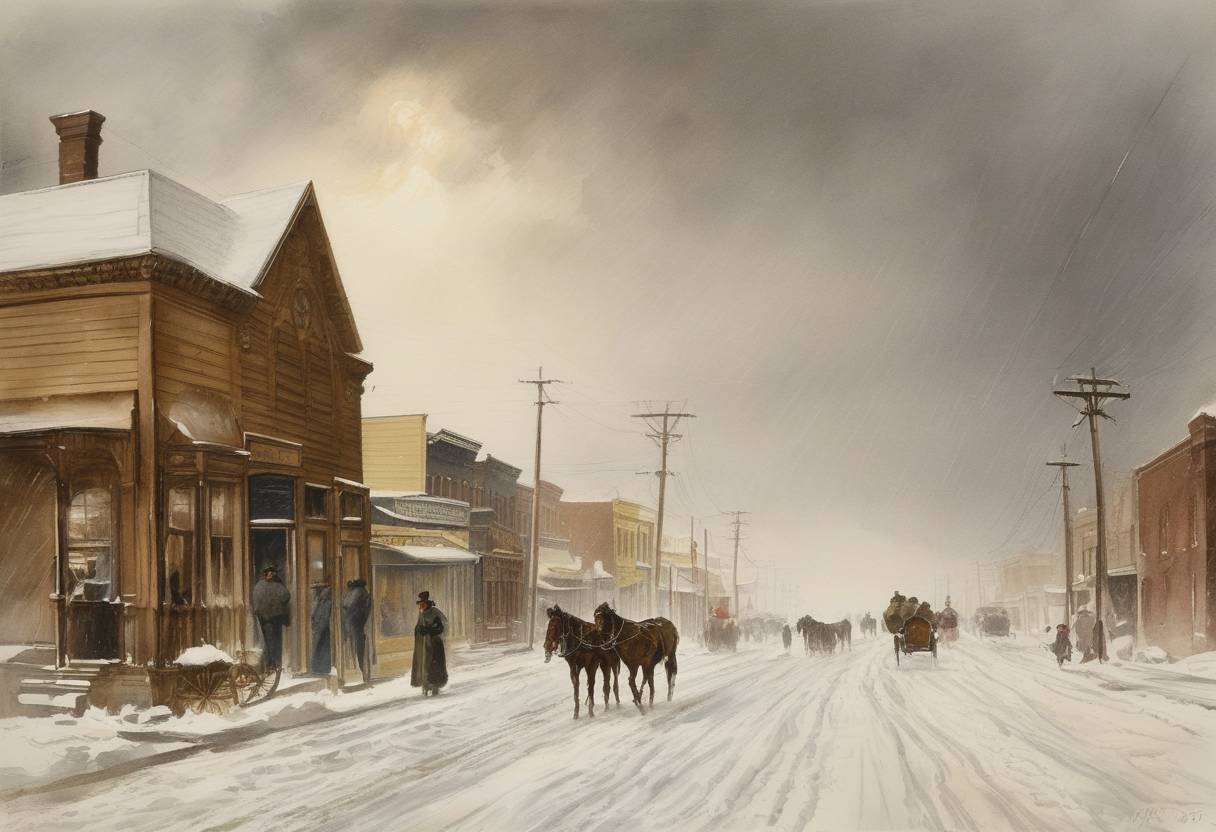
On October 29, 1888, a powerful blizzard began to take shape in Rawlins, Wyoming. This marked the precursor to what would later be recognized as the Great Blizzard of 1888, one of the most severe winter storms to affect the United States.
The blizzard developed under conditions typical for the late fall in the Great Plains, characterized by rapidly dropping temperatures and a surge in low-pressure systems. Located in Carbon County, Rawlins was no stranger to harsh weather, yet the severity of this storm would catch residents and authorities alike off guard.
Initial Impact: In Rawlins, the storm initially brought heavy snowfall and strong winds, severely impacting visibility and grounding transport. Livestock losses were significant as ranchers were unprepared for the early storm.
Progression: The storm quickly intensified, moving eastward across the plains and toward the East Coast over the following days. This movement was fueled by a robust cold front moving south from Canada.
While the initial flurries began in Wyoming, the Great Blizzard later engulfed much of the northeastern United States. Its reach and severity made it a critical incident in weather history, remembered for the following:
Infrastructure Disruption: Towering snowdrifts and freezing temperatures paralyzed cities and rural areas. Train services were disrupted, and telegraph lines were downed as the storm ravaged the region.
Human and Economic Consequences: The blizzard claimed hundreds of lives and resulted in widespread economic hardship. It brought about increased awareness of the need for better weather predictions and emergency preparedness.
The Great Blizzard of 1888 is a landmark event in American meteorological history, illustrating the vulnerability of late 19th-century society to severe weather events. Its trajectory from Rawlins highlights how interconnected weather systems can have far-reaching impacts, laying the groundwork for future advancements in weather forecasting and emergency management infrastructure.
Source: www.weather.gov