The Enactment of Japan's Post-War Constitution
1947 · Tokyo, Japan
The new post-war Constitution of Japan went into effect, establishing a parliamentary system and renouncing war.
November 3, 1946
Emperor Hirohito proclaims the new Constitution of Japan, which significantly diminishes the role of the emperor, promoting democracy and peace.
Tokyo, Japan | Japanese Government
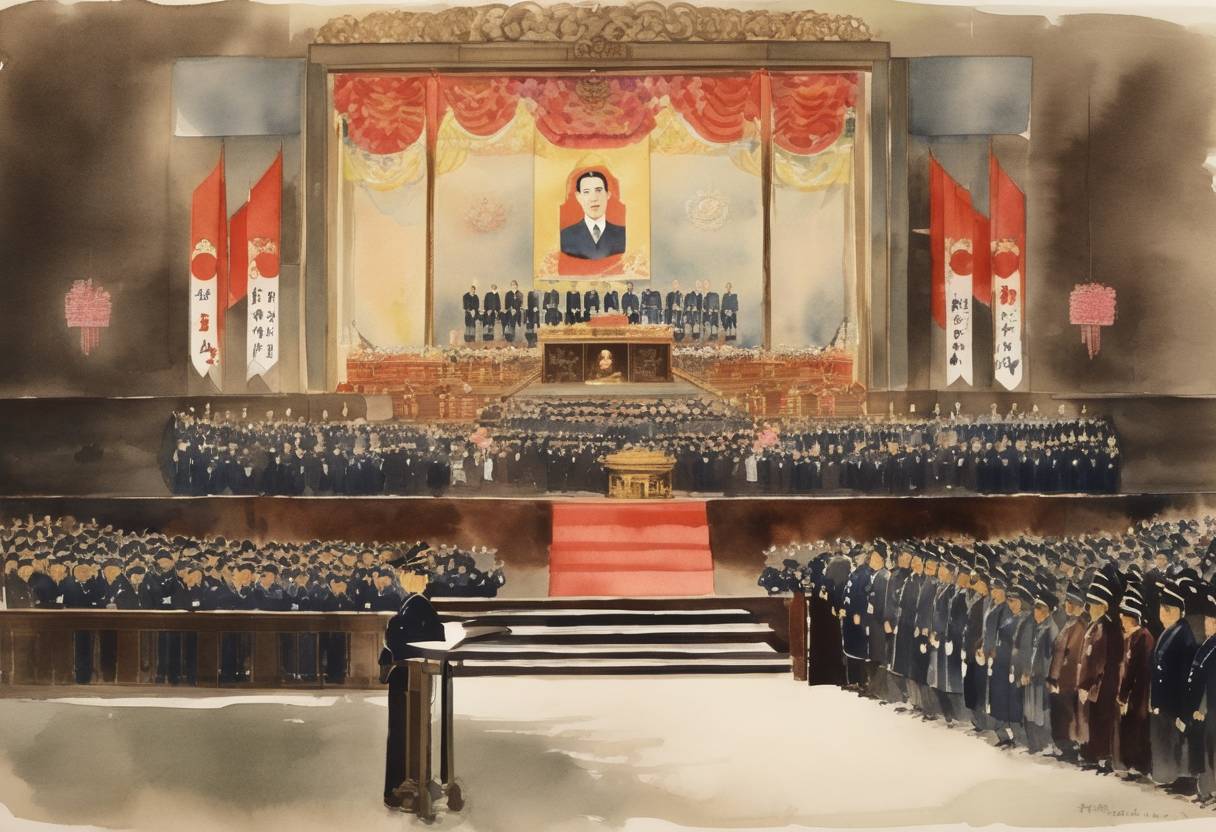
On November 3, 1946, Emperor Hirohito formally proclaimed the new Constitution of Japan, marking a pivotal transformation in the nation’s governance and political landscape. The event signified a fundamental shift from imperial sovereignty to popular sovereignty, aligning Japan towards democratic governance and pacifism in the aftermath of World War II.
Following Japan’s defeat in World War II, the Allied Powers, led by the United States, occupied Japan and undertook extensive reforms to dismantle its militaristic structures and promote democratic principles. The drafting of a new constitution was a cornerstone of these efforts, primarily guided by the Supreme Commander for the Allied Powers (SCAP) under General Douglas MacArthur.
The new constitution was designed to replace the Meiji Constitution of 1889, which granted significant powers to the Emperor and limited the political freedoms of the Japanese people. The emphasis was placed on establishing democratic institutions, ensuring human rights, and renouncing war as a means of settling international disputes.
Sovereignty of the People: The preamble underscored the position that sovereignty resides with the people of Japan, a stark departure from the previous establishment where the Emperor was sovereign.
Emperor’s Role: Article 1 defined the Emperor’s role as “the symbol of the State and of the unity of the people,” removing any governing powers and acknowledging a purely ceremonial and symbolic status.
Pacifism: Article 9 famously denounced war, stipulating that Japan would forever renounce war as a sovereign right and would not maintain military forces for purposes of warfare, significantly impacting Japan’s defense policies and international relations henceforth.
Fundamental Rights: The constitution guaranteed fundamental civil liberties such as freedom of speech, assembly, and religion, expanding rights and protections unprecedented in Japan’s history.
Government Structure: The constitution established a parliamentary system with a bicameral legislature called the National Diet. It empowered an elected Prime Minister, representing a shift towards a more representative and accountable government form.
The promulgation of the new constitution paved the way for a drastic reorientation of Japanese society and politics. It came into force on May 3, 1947, reinforcing democratic institutions and contributing to the United States and Japan’s evolving post-war relationship.
The constitution has endured since its enactment, playing an instrumental role in shaping modern Japan’s identity as a peaceful, democratic nation. Despite various debates over certain articles, including interpretations of Article 9, it remains a cornerstone of Japan’s post-war experience and continues to impact Japanese legal and political discourse profoundly.
Source: www.ndl.go.jp