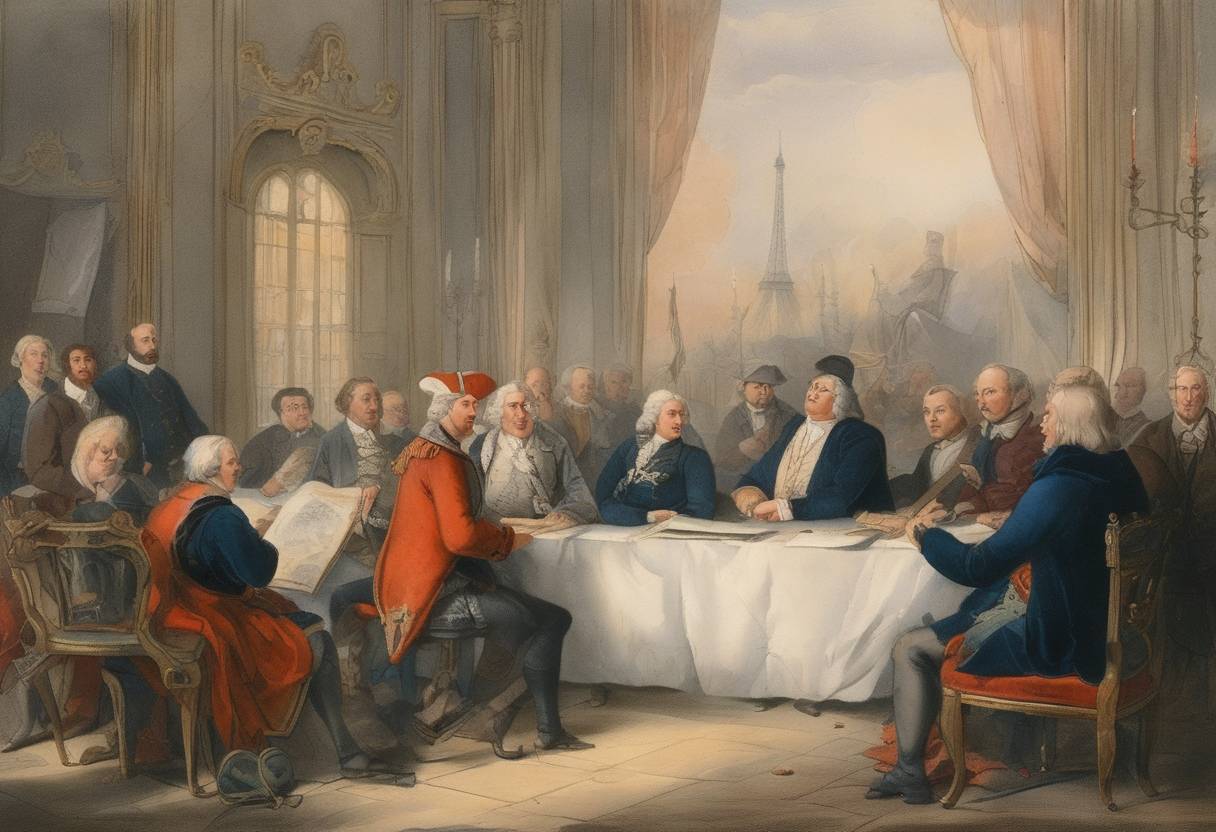
Treaty of Paris (1323)
The Treaty of Paris, signed on March 5, 1323, was a significant diplomatic agreement that concluded hostilities between the Kingdom of France and the County of Flanders. This treaty marked the end of a period of tension and conflict that had characterized the relationship between the two regions for decades.
Historical Context
The County of Flanders, located in what is today parts of Belgium and France, was a wealthy and strategically important region during the Middle Ages. Its economic prosperity was largely based on the textile industry and trade, making it an attractive area for control by larger powers like France.
Leading up to the treaty, the Franco-Flemish wars in the early 14th century had intensified the struggle for regional dominance. The Battle of the Golden Spurs in 1302 was a famous Flemish victory that emboldened their independence movements, yet conflicts persisted, compelling both parties towards negotiation.
Key Terms
- Recognition of Independence: The Treaty of Paris formally recognized the County of Flanders as independent from French sovereignty. This was a major concession by the French crown and a diplomatic victory for Flanders.
- Territorial Adjustments: The treaty delineated clear boundaries between French and Flemish territories, reducing areas of dispute that often led to skirmishes and instability.
- Feudal Obligations: While recognizing the independence of Flanders, the treaty maintained certain feudal allegiances and obligations, typical of the era’s complex vassalage system, ensuring nominal ties to the French realm without infringing upon Flemish autonomy.
Consequences and Significance
The Treaty of Paris (1323) had lasting implications for European politics and economics:
- Stabilization: It brought a period of relative peace and stability to the region, allowing both France and Flanders to focus on internal development and trade.
- Economic Growth: With formal recognition, Flanders could further develop its lucrative textile industry, bolstering economic ties across Europe.
- Precedent for Diplomacy: The treaty exemplified medieval diplomatic practices in resolving regional conflicts through negotiation rather than prolonged warfare, setting a precedent for future treaties.
This treaty highlighted the shifting power dynamics of medieval Europe, where smaller, economically prosperous regions could assert significant autonomy from powerful neighbors, reshaping their political affiliations through strategic diplomacy rather than force alone.