The End of the Salem Witch Trials: October 12, 1692
1692 · Salem, United States
The Salem witch trials are ended by a letter from Massachusetts Governor William Phips.
July 19, 1692
Five women were executed by hanging after being convicted of witchcraft in the Salem witch trials.
Salem, Colonial America | Court of Oyer and Terminer
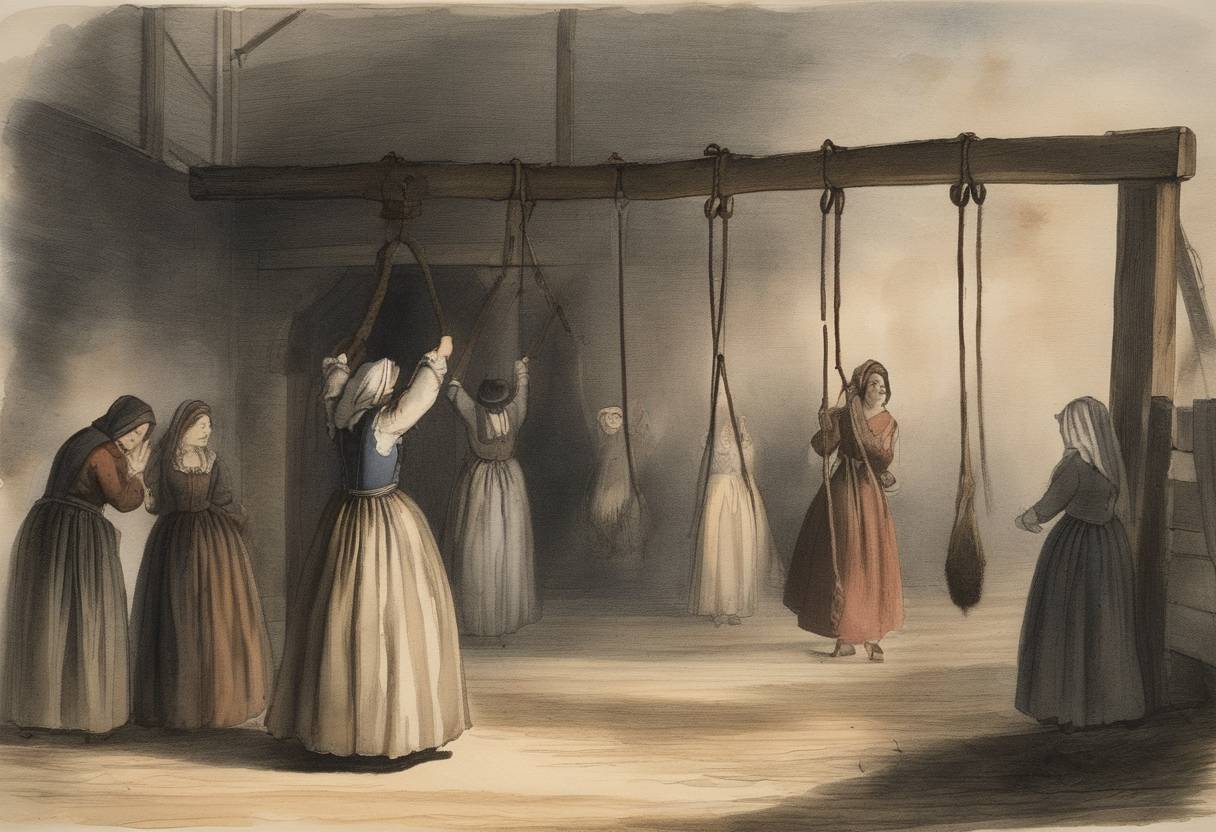
On July 19, 1692, five women were executed by hanging in Salem, Massachusetts, marking a grim episode within the notorious Salem Witch Trials. These trials were a series of hearings and prosecutions of people accused of witchcraft in colonial Massachusetts between February 1692 and May 1693.
The Salem Witch Trials were fueled by a combination of religious fervor, local politics, and social tensions. The widespread belief in the supernatural and the devil at the time, combined with the Puritanical view of a society under spiritual siege, set a fertile ground for accusations of witchcraft. Initial fits and strange behavior by young girls in Salem Village were attributed to witchcraft, prompting a hunt for those deemed responsible.
The five women executed on July 19, 1692, were:
Sarah Good: Known for her caustic demeanor, she was often at odds with her neighbors. Good was one of the first few women to be accused, largely due to her low social status and poverty.
Elizabeth Howe: She was from Topsfield and had previous run-ins with accusations of witchcraft prior to 1692. Howe’s reputation was marred by disputes with neighbors, leading to her uneasy standing in the community.
Susannah Martin: A widow from Amesbury, Martin had been accused of witchcraft before 1692. Her defiance and failure to conform to societal norms made her a target for suspicion.
Rebecca Nurse: A well-respected elder in Salem Village, Nurse’s conviction shocked the community. Despite her standing, she fell victim to the widespread hysteria and fear that gripped the town.
Sarah Wildes: Known for a past as a “scandalous woman,” Wildes had prior offenses that made her an easy target for accusations driven by local animosities.
These women were tried and convicted in the context of a legal system that heavily relied on spectral evidence, which consisted of testimony that the accused’s spirit or spectral shape appeared to the witness in a supernatural manner. This type of evidence was notoriously unreliable and later discredited.
The trial proceedings were hasty and poorly conducted, with the accused having little opportunity to defend themselves. On July 19, they were taken to Proctor’s Ledge at Gallows Hill, a site still noted for its tragic historical significance, and hanged.
The executions on July 19 were only a part of a larger series of trials and executions that continued into the fall of 1692. Eventually, public opinion turned against the trials, leading to the dissolution of the court involved and the release of those still imprisoned.
In the years following the trials, the Massachusetts colonial government admitted the trials were a mistake and compensated the families of those who were convicted. The Salem Witch Trials remain a prominent example of mass hysteria and injustice, often studied as a cautionary tale about the perils of religious extremism and the importance of due process.
Source: en.wikipedia.org