Thomas Edison Patents the Phonograph
1878 · Menlo Park, United States
Thomas Edison patented the phonograph, a device for the mechanical recording and reproduction of sound.
August 15, 1877
Thomas Edison wrote to the president of the Telegraph Company in Pittsburgh, proposing the use of the phonograph for entertainment and education.
Menlo Park, United States | Edison Manufacturing Company
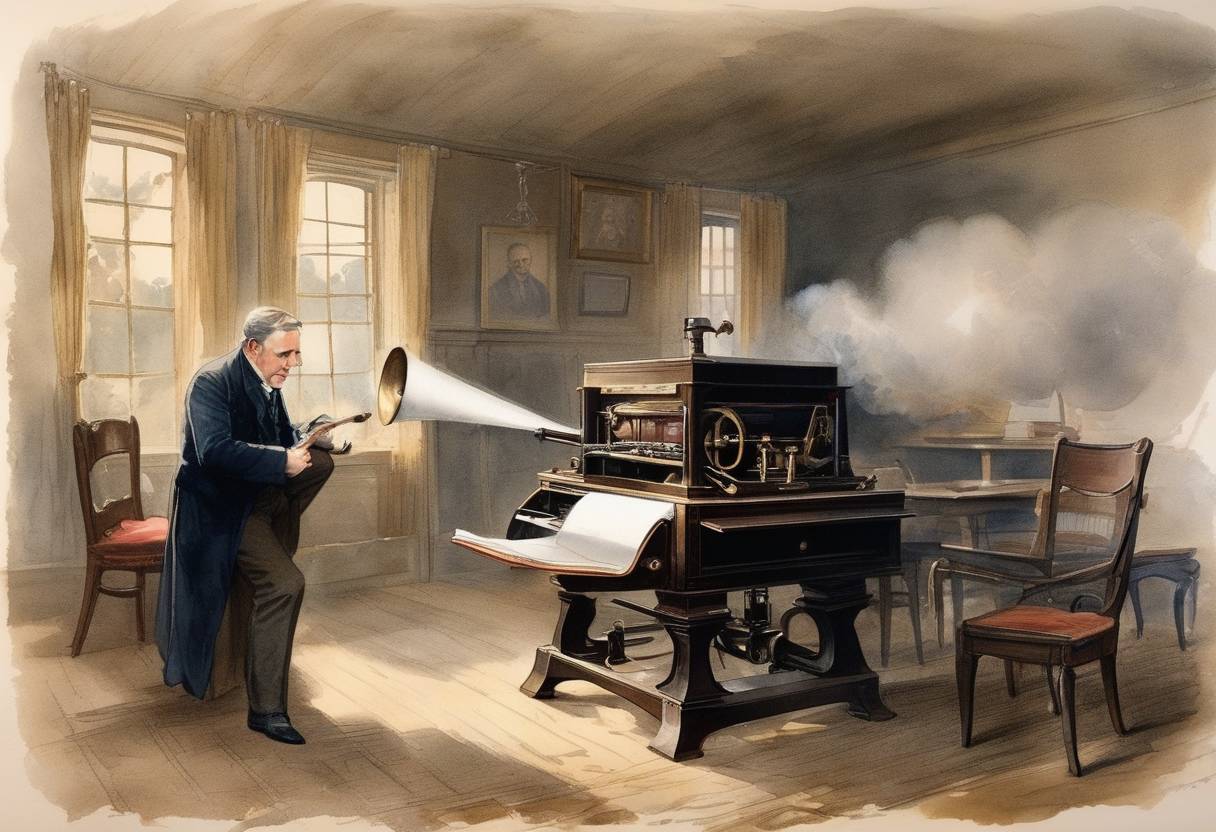
On August 15, 1877, Thomas Alva Edison wrote a significant letter to the president of the Telegraph Company in Pittsburgh, outlining a visionary proposal involving his latest invention, the phonograph. This communication marked a pivotal moment in the history of sound recording and playback technology.
Edison, already a prolific inventor with numerous patents to his name, had conceived the phonograph earlier that year as part of his work on telegraph and telephone technology. The ability of the phonograph to record and reproduce sound was revolutionary, capturing public and commercial interest. Prior to this, sound could not be preserved or replayed; the phonograph transformed this dynamic.
In his letter, Edison proposed the use of the phonograph not only as a communication tool but also as an instrument for entertainment and education. He articulated a vision that included a variety of applications for the phonograph such as:
Music Playback: Enabling the phonograph to play pre-recorded music, potentially transforming the music industry by allowing people to experience live music performances without the need for live musicians.
Educational Use: Suggesting the phonograph could be utilized in educational settings, allowing students to replay lectures or have access to information and literature in audio form.
Preservation of Voices: Proposing the phonograph as a means to preserve the voices of important figures for posterity, an idea that underscored its historical significance.
Edison’s vision for the phonograph set the stage for its development as a central technology in the fields of entertainment and education. The phonograph’s subsequent commercial success would lead to the birth of the recording industry and radically change how people consumed music and information.
The proposal highlighted Edison’s foresight and innovative thinking, envisioning a broad range of uses for the phonograph that extended beyond its original communication-driven purpose. This letter not only reflected Edison’s entrepreneurial spirit but also illustrated his capacity to foresee and shape future societal trends through technology.
Source: www.edisonmuckers.org