Storming of the Tuileries Palace - August 10, 1792
1792 · Paris, France
The Tuileries Palace was stormed by the National Guard and the sans-culottes, marking a turning point in the French Revolution.
July 14, 1789
The Storming of the Bastille occurred in Paris, marking a pivotal event in the French Revolution.
Paris, France | French Revolutionaries
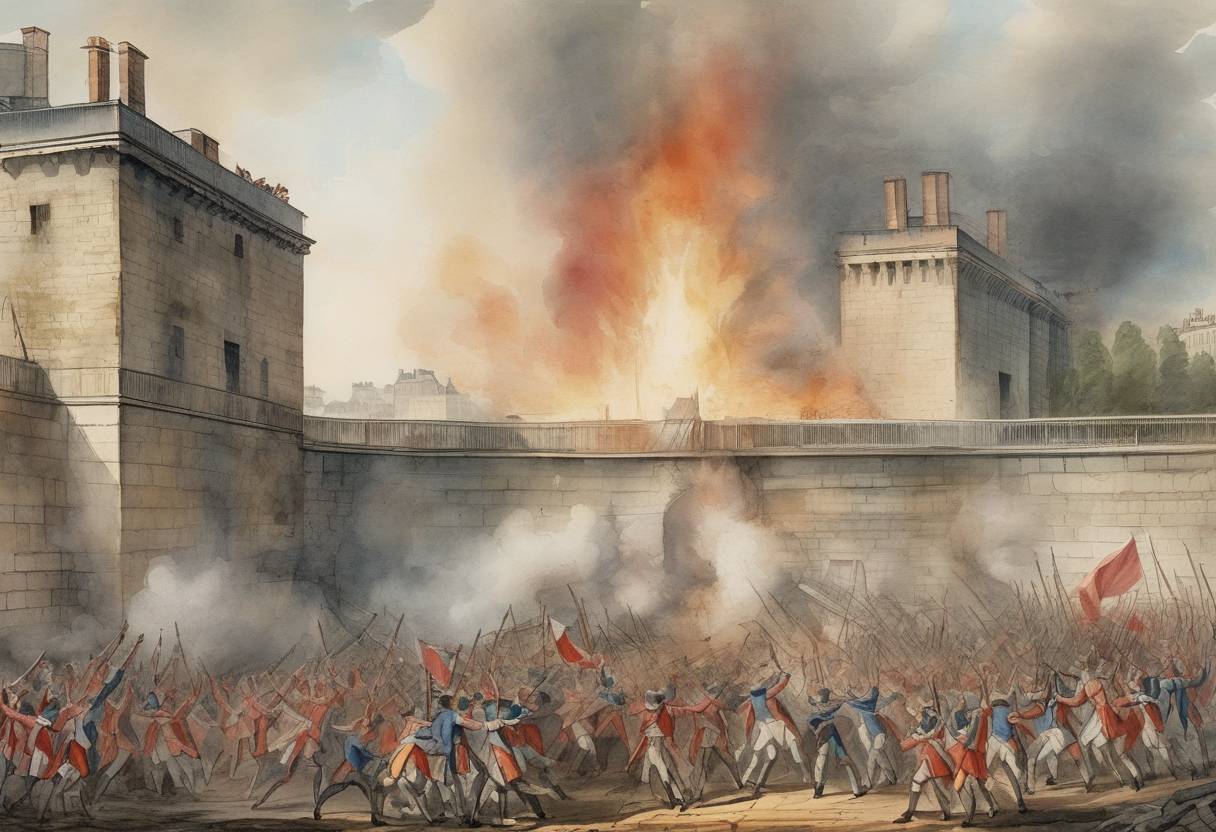
The Storming of the Bastille on July 14, 1789, stands as a defining moment in the French Revolution, symbolizing the end of the king’s absolute power and the birth of the people’s sovereignty. This event is celebrated annually in France as Bastille Day, a national holiday.
Economic Hardship: France was facing severe economic difficulties in the late 1780s, exacerbated by costly involvement in the American Revolutionary War and extravagant spending by the monarchy. This led to widespread poverty and discontent among the populace.
Political Tensions: King Louis XVI’s attempts to impose new taxes to address the financial crisis were met with resistance. The Estates-General was convened in May 1789 for the first time since 1614, but disagreements between the estates (clergy, nobility, and commoners) led to the formation of the National Assembly by the Third Estate, representing the common people.
Rise of Revolutionary Sentiment: Enlightenment ideas promoting liberty, equality, and fraternity were gaining traction. The National Assembly’s Tennis Court Oath in June 1789, pledging not to disband until a new constitution was established, further fueled revolutionary fervor.
The Bastille: The Bastille was a medieval fortress and prison in Paris, symbolizing royal tyranny. Although it held only a few prisoners at the time, its fall was of immense symbolic importance.
The Assault: On the morning of July 14, 1789, a crowd of Parisians, angered by the king’s dismissal of the popular finance minister Jacques Necker and the presence of royal troops in Paris, gathered around the Bastille. They demanded the surrender of the fortress and the release of its arms and gunpowder.
The Siege: Negotiations failed, and the crowd, now armed, stormed the Bastille. After several hours of fighting, the governor of the Bastille, Bernard-René de Launay, surrendered. The revolutionaries captured the fortress, freeing the prisoners and seizing the weapons.
Symbol of Revolution: The fall of the Bastille became a powerful symbol of the people’s triumph over oppression and the beginning of the French Revolution. It demonstrated the power of popular protest and the vulnerability of the monarchy.
Spread of Revolution: The event sparked widespread revolutionary activity across France, leading to the establishment of revolutionary communes and the eventual abolition of the feudal system.
Impact on the Monarchy: King Louis XVI’s authority was significantly weakened. The storming of the Bastille forced the king to acknowledge the National Assembly and marked the decline of absolute monarchy in France.
Legacy: Bastille Day is celebrated as a national holiday in France, commemorating the unity and strength of the French people in their quest for liberty and democracy.
The Storming of the Bastille remains a pivotal event in world history, symbolizing the fight against tyranny and the pursuit of freedom and equality.
Source: en.wikipedia.org