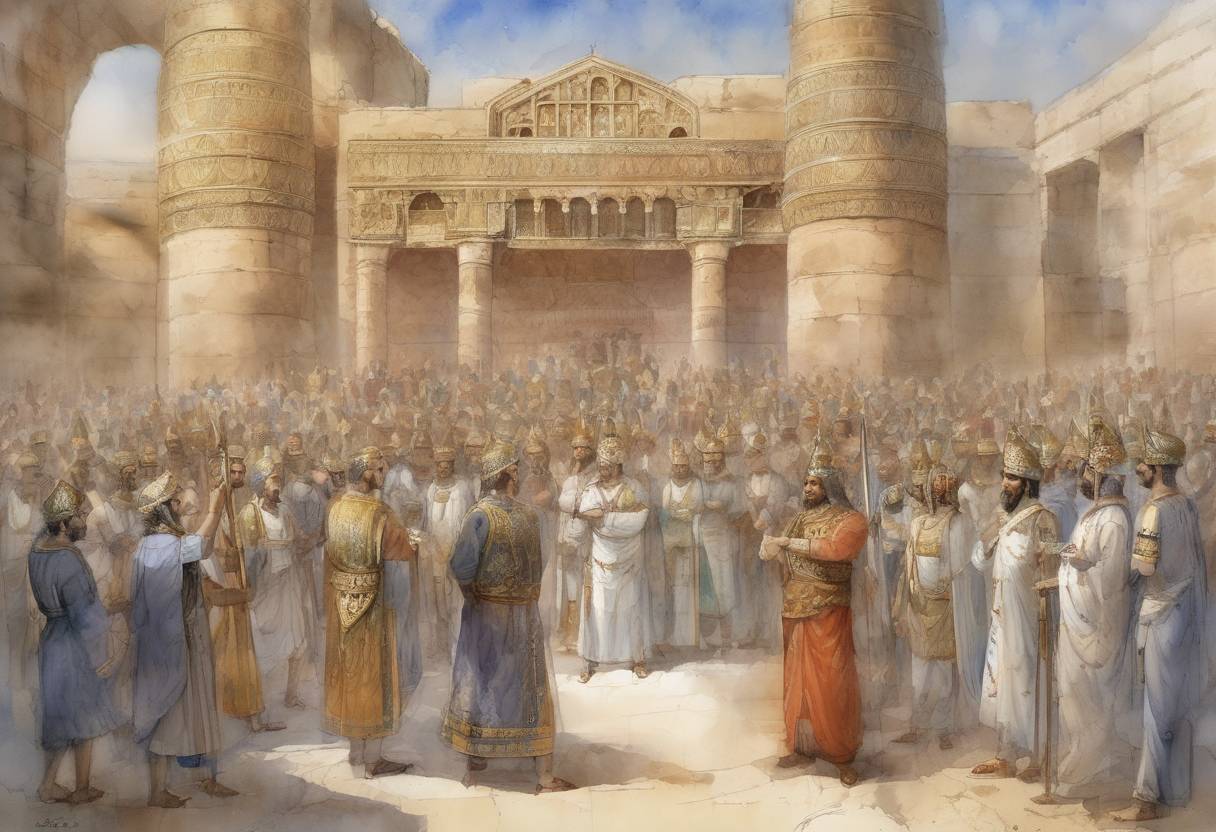
Shahrbaraz Crowned as King of the Sasanian Empire on April 27, 629
On April 27, 629, Shahrbaraz, a prominent military leader, was crowned as the king of the Sasanian Empire. His ascension marked a period of significant instability and rapid succession within the empire, reflecting the broader turmoil that characterized the late Sasanian period.
Background
The Sasanian Empire, one of the leading powers of the ancient world, was experiencing a tumultuous phase during the early 7th century. The empire had been embroiled in a protracted and exhausting conflict with the Byzantine Empire, known as the Byzantine-Sasanian War (602–628). This war had drained the empire’s resources and destabilized its political structure.
Khosrow II, the Sasanian king during much of this period, was overthrown and executed in 628, leading to a power vacuum and a series of rapid successions. His death triggered a period of internal strife, with various factions vying for control of the throne.
Shahrbaraz’s Rise to Power
Shahrbaraz, originally named Farrukh Hormizd, was a distinguished general who had played a crucial role in the Sasanian military campaigns against the Byzantines. His military prowess and influence made him a key figure in the power struggles following Khosrow II’s death.
In the chaotic aftermath, Shahrbaraz seized the opportunity to claim the throne. His rise was facilitated by his control over the military and his ability to navigate the complex political landscape of the time. On April 27, 629, he was crowned as the king, albeit his reign would be short-lived.
Reign and Challenges
Shahrbaraz’s reign was marked by continued instability. His rule lasted only a few months, as he faced opposition from other powerful factions within the empire. The rapid succession of rulers during this period reflected the deep-seated divisions and the weakening of central authority.
Despite his military background, Shahrbaraz struggled to consolidate power and address the internal challenges facing the empire. His inability to secure a stable rule led to his assassination later in 629, further exacerbating the empire’s instability.
Aftermath and Historical Significance
The brief reign of Shahrbaraz was part of a larger pattern of rapid successions and political fragmentation that plagued the Sasanian Empire in its final years. This period of instability weakened the empire significantly, making it vulnerable to external threats.
The internal chaos and weakened state of the Sasanian Empire eventually contributed to its downfall. In the following decades, the empire would face the rise of the Islamic Caliphate, which would ultimately lead to the Sasanian Empire’s collapse in the mid-7th century.
Shahrbaraz’s brief rule is a testament to the challenges faced by the Sasanian Empire during its decline, highlighting the complex interplay of military power, political intrigue, and the broader historical forces that shaped the region during this era.