Accession of Mustafa II as Ottoman Sultan on January 27, 1695
1695 · Constantinople, Ottoman Empire
Mustafa II becomes Ottoman Sultan following the deposition of Ahmed II.
April 24, 1915
The Armenian Genocide began with the arrest of Armenian intellectuals and community leaders in Constantinople.
Constantinople, Ottoman Empire | Ottoman Empire
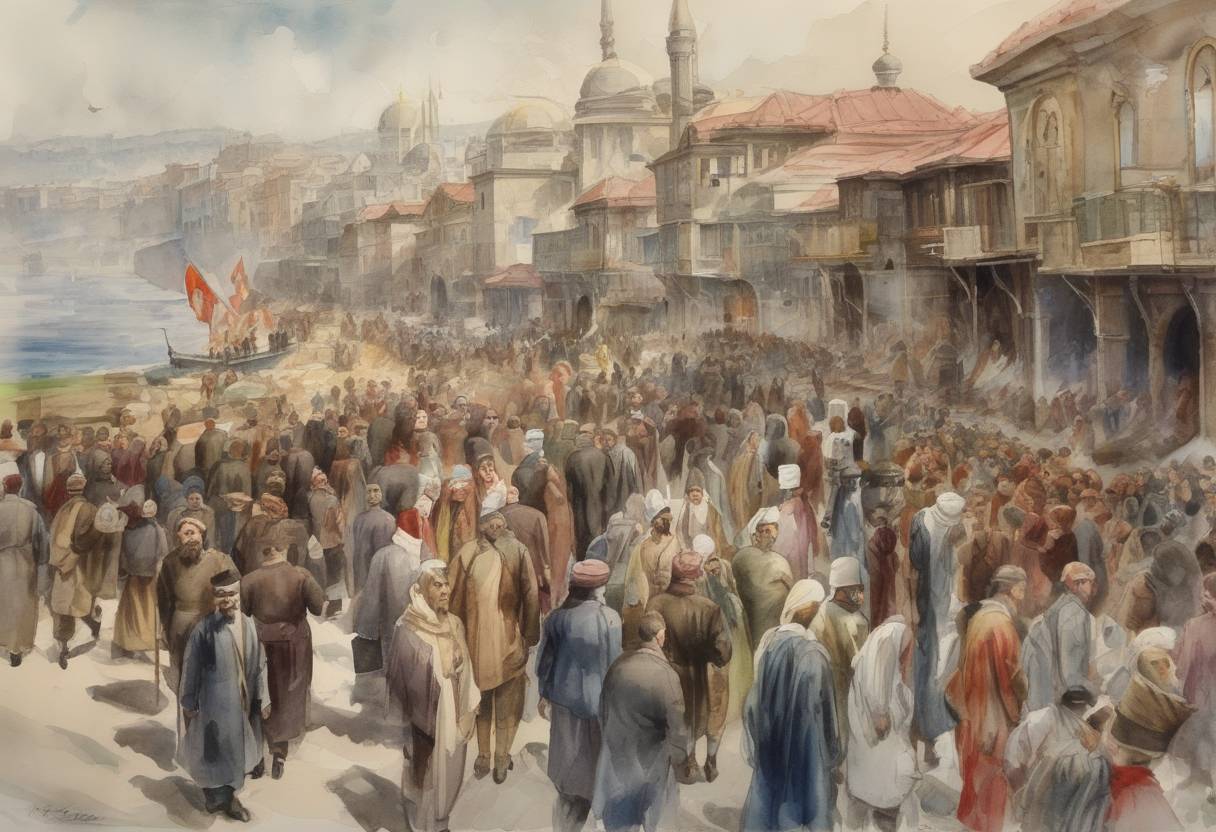
On April 24, 1915, a significant and tragic event marked the beginning of the Armenian Genocide, a systematic campaign of extermination carried out by the Ottoman Empire against its Armenian population during World War I. This date is now commemorated as Armenian Genocide Remembrance Day.
The Ottoman Empire, which had been in decline for decades, entered World War I on the side of the Central Powers. Amidst the war, the Ottoman government, led by the Committee of Union and Progress (CUP), perceived the Armenian population as a potential threat due to their Christian faith and alleged sympathies with the empire’s enemies, particularly Russia.
Tensions between the Ottoman authorities and the Armenian community had been escalating for years, fueled by nationalist movements and demands for reform and autonomy by Armenians. The outbreak of World War I exacerbated these tensions, leading to increased suspicion and hostility towards Armenians.
On the night of April 24, 1915, the Ottoman government initiated a coordinated plan to arrest Armenian intellectuals and community leaders in Constantinople (modern-day Istanbul). This operation was intended to decapitate the Armenian leadership and prevent any organized resistance.
The arrests on April 24, 1915, marked the beginning of a broader campaign of extermination against the Armenian population in the Ottoman Empire. Over the following years, it is estimated that 1.5 million Armenians perished through mass killings, forced marches, and starvation.
April 24 is commemorated annually as Armenian Genocide Remembrance Day, honoring the victims and raising awareness about the atrocities. The events of 1915 have had lasting implications for international law and human rights, influencing the development of the concept of genocide and efforts to prevent similar atrocities in the future.
The Armenian Genocide serves as a somber reminder of the consequences of intolerance and the importance of historical memory in fostering reconciliation and understanding.
Source: en.wikipedia.org