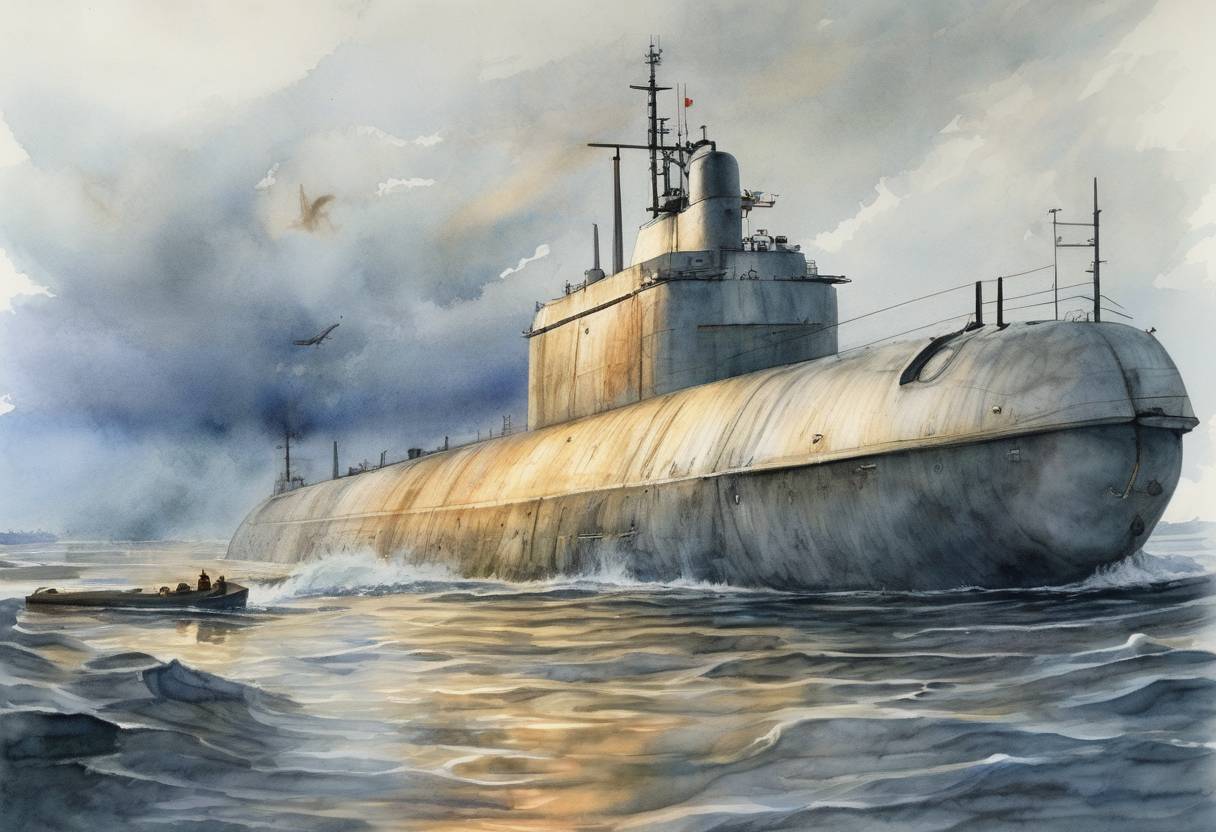
The Sinking of the Russian Submarine Kursk
Overview
On August 12, 2000, the Russian submarine Kursk sank in the Barents Sea during a naval exercise, resulting in the tragic loss of all 118 crew members on board. This incident marked one of the most significant naval disasters in post-Soviet Russia and had profound implications for the Russian military and government.
Background
The Kursk was an Oscar II-class nuclear-powered cruise missile submarine, one of the largest attack submarines ever built. Commissioned in 1994, it was part of the Russian Northern Fleet and was considered a symbol of Russian naval power.
The Naval Exercise
- Exercise Details: The Kursk was participating in a major naval exercise involving the Northern Fleet, which included several ships and submarines. The exercise was intended to showcase the capabilities of the Russian Navy.
- Location: The exercise took place in the Barents Sea, a region known for its strategic importance and challenging conditions.
The Incident
Explosion and Sinking
- Initial Explosion: At 11:28 AM local time, a massive explosion occurred in the forward torpedo room of the Kursk. This was followed by a second, more powerful explosion two minutes later, which was detected by seismographs as far away as Alaska.
- Sinking: The explosions caused catastrophic damage, leading to the rapid sinking of the submarine to the seabed, approximately 108 meters (354 feet) below the surface.
Rescue Efforts
- Delayed Response: Initial rescue efforts were delayed due to a lack of immediate communication and the Russian Navy’s reluctance to accept international assistance.
- International Offers: Several countries, including the United States, the United Kingdom, and Norway, offered assistance. However, Russia initially declined these offers, citing national security concerns.
- Final Attempts: By the time international help was accepted, it was too late. All crew members were confirmed dead, with some surviving for several days in the aft compartments before succumbing to carbon monoxide poisoning and hypothermia.
Aftermath
Investigation and Findings
- Cause of Explosion: Investigations concluded that the initial explosion was likely caused by the failure of a hydrogen peroxide-fueled torpedo, which ignited and triggered the subsequent explosion.
- Criticism: The Russian government’s handling of the disaster faced widespread criticism, both domestically and internationally, for its lack of transparency and slow response.
Impact on Russian Military
- Reforms: The disaster prompted calls for reforms within the Russian Navy, highlighting issues such as outdated equipment, inadequate safety protocols, and the need for modernization.
- Public Perception: The incident damaged public confidence in the Russian military and government, leading to increased scrutiny and demands for accountability.
Broader Historical Significance
The Kursk disaster underscored the challenges faced by the Russian military in the post-Soviet era, including the struggle to maintain its naval capabilities amidst economic difficulties. It also highlighted the importance of international cooperation in maritime rescue operations and the need for transparency in government responses to crises.
In summary, the sinking of the Kursk remains a poignant reminder of the human cost of military accidents and the ongoing need for vigilance and reform in naval operations.