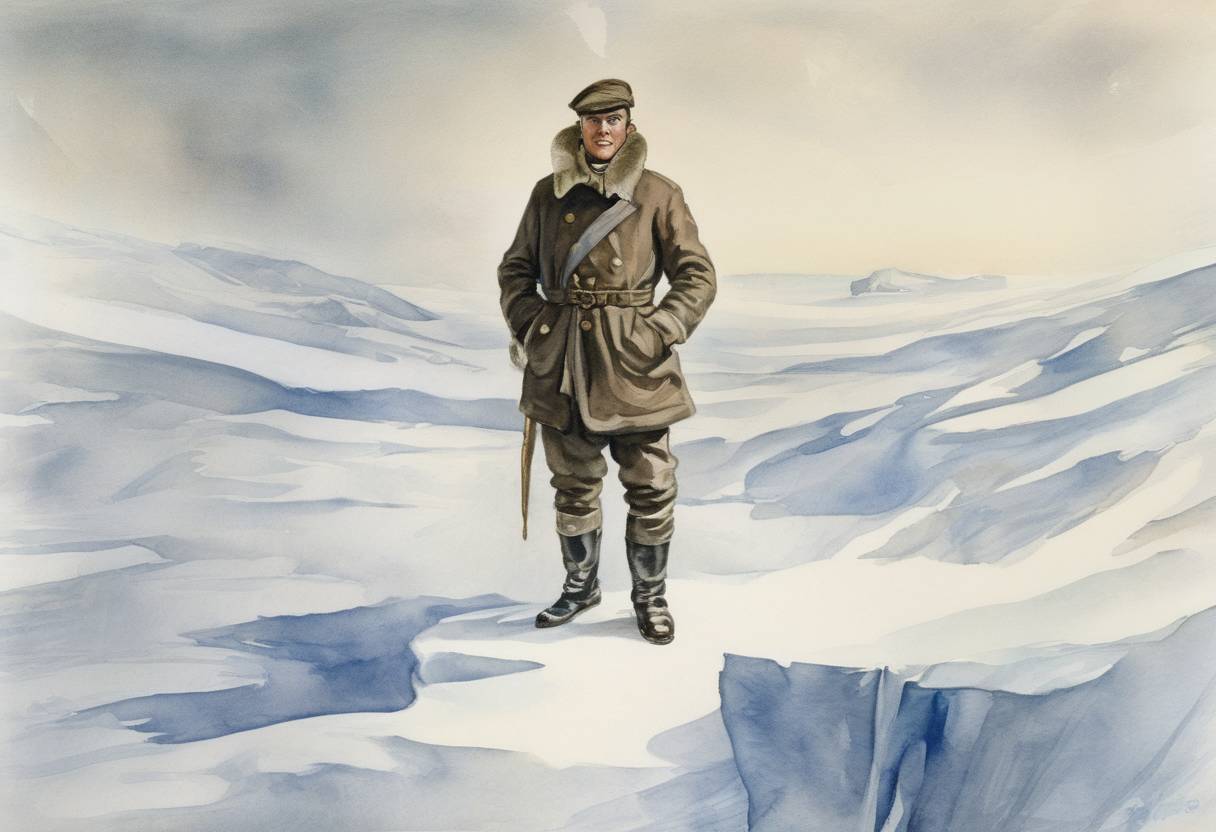
Robert Falcon Scott Reaches the South Pole - January 17, 1912
On January 17, 1912, British explorer Robert Falcon Scott and his team reached the South Pole, only to find that Norwegian explorer Roald Amundsen had beaten them by 34 days. This event marked a significant moment in the history of polar exploration, highlighting the intense competition and perilous conditions faced by explorers of the era.
Background
The early 20th century was a period of intense exploration, with the South Pole being one of the last uncharted territories on Earth. Two main expeditions vied for the honor of being the first to reach the Pole:
Roald Amundsen’s Expedition: Amundsen, a seasoned Norwegian explorer, initially planned to explore the North Pole. However, upon learning that Robert Peary had claimed that achievement, Amundsen secretly redirected his efforts towards the South Pole. He set sail on the Fram and established a base camp at the Bay of Whales in Antarctica.
Robert Falcon Scott’s Expedition: Scott, a British naval officer, led the Terra Nova Expedition with the goal of scientific research and reaching the South Pole. His team set up their base at Cape Evans on Ross Island.
The Race to the Pole
Amundsen’s Strategy: Amundsen’s approach was characterized by meticulous planning and reliance on dogsleds, which were well-suited to the harsh Antarctic conditions. His team departed for the Pole on October 19, 1911, and successfully reached it on December 14, 1911.
Scott’s Journey: Scott’s expedition faced numerous challenges, including harsh weather, difficult terrain, and logistical issues. His team used a combination of motor sledges, ponies, and man-hauling, which proved less effective than Amundsen’s methods.
Reaching the Pole
Upon reaching the South Pole on January 17, 1912, Scott and his team discovered a tent left by Amundsen, along with a letter addressed to King Haakon VII of Norway. The realization that they had been beaten to the Pole was a devastating blow to Scott and his men.
Aftermath
The return journey for Scott’s team was fraught with difficulties. Exhaustion, malnutrition, and extreme weather conditions took a severe toll. Tragically, Scott and his four companions perished on the return trip. Their bodies were discovered by a search party eight months later, along with Scott’s diary, which provided a detailed account of their journey and hardships.
Historical Significance
Amundsen’s Achievement: Amundsen’s successful expedition was celebrated as a triumph of planning and execution, establishing him as one of the greatest polar explorers.
Scott’s Legacy: Despite the tragic outcome, Scott’s expedition is remembered for its scientific contributions and the heroic endurance of its members. The story of Scott’s journey has become emblematic of the human spirit’s resilience in the face of adversity.
The race to the South Pole remains a poignant chapter in the history of exploration, illustrating both the triumphs and tragedies of human endeavor in the most extreme environments on Earth.