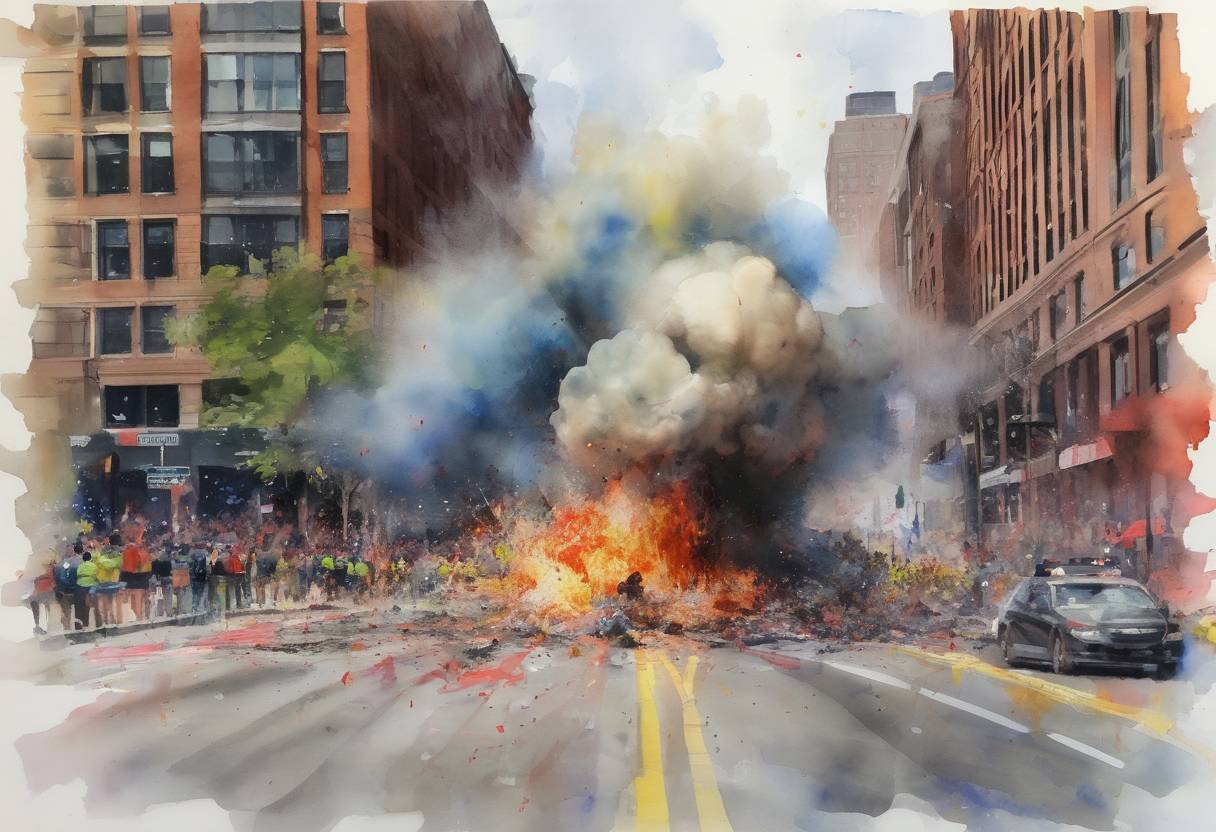
Boston Marathon Bombing - April 15, 2013
On April 15, 2013, during the annual Boston Marathon, two bombs exploded near the finish line on Boylston Street, resulting in a tragic and shocking act of terrorism. This event marked one of the most significant attacks on American soil since September 11, 2001.
The Attack
Time and Location: The first bomb detonated at 2:49 PM, followed by a second explosion approximately 12 seconds later, about 210 yards away. Both bombs were placed near the marathon’s finish line, targeting the dense crowd of spectators and participants.
Casualties: The bombings resulted in the deaths of three individuals:
- Martin Richard, an 8-year-old boy.
- Krystle Campbell, a 29-year-old restaurant manager.
- Lingzi Lu, a 23-year-old Chinese graduate student.
Over 260 others were injured, with many suffering severe injuries, including limb amputations.
Perpetrators
Tamerlan and Dzhokhar Tsarnaev: The attack was carried out by two brothers of Chechen descent. Tamerlan Tsarnaev, aged 26, and Dzhokhar Tsarnaev, aged 19, were identified as the primary suspects.
Motivation: The brothers were motivated by extremist Islamic beliefs and were reportedly influenced by online propaganda. Their actions were intended as a form of retaliation against U.S. military actions in Muslim countries.
The Manhunt and Aftermath
Manhunt: Following the bombings, a massive manhunt ensued, leading to a citywide lockdown in Boston. On April 18, the brothers killed an MIT police officer, Sean Collier, during their attempt to evade capture.
Tamerlan’s Death: Tamerlan was killed in a shootout with police in Watertown, Massachusetts, on April 19.
Dzhokhar’s Capture: Dzhokhar was captured later that day, hiding in a boat in a residential backyard. He was taken into custody after a standoff with law enforcement.
Legal Proceedings
- Trial and Sentencing: Dzhokhar Tsarnaev was charged with 30 federal offenses, including the use of a weapon of mass destruction. In 2015, he was found guilty on all counts and sentenced to death. However, in July 2020, his death sentence was overturned by a federal appeals court, citing issues during jury selection. The U.S. Supreme Court later reinstated the death penalty in March 2022.
Broader Impact
Security Measures: The bombings led to increased security measures at public events across the United States. It also sparked discussions about domestic terrorism and the radicalization of individuals within the country.
Community Response: The resilience and solidarity of the Boston community were highlighted in the aftermath, encapsulated by the phrase “Boston Strong,” which became a symbol of the city’s unity and strength.
The Boston Marathon bombing remains a poignant reminder of the impact of terrorism and the importance of vigilance and community resilience in the face of such threats.