February 13, 2012

The European Space Agency (ESA) successfully launched the Vega rocket on its maiden flight from the Guiana Space Centre in French Guiana. The Vega is designed to launch small payloads to low Earth orbit.


Kourou, French Guiana | European Space Agency
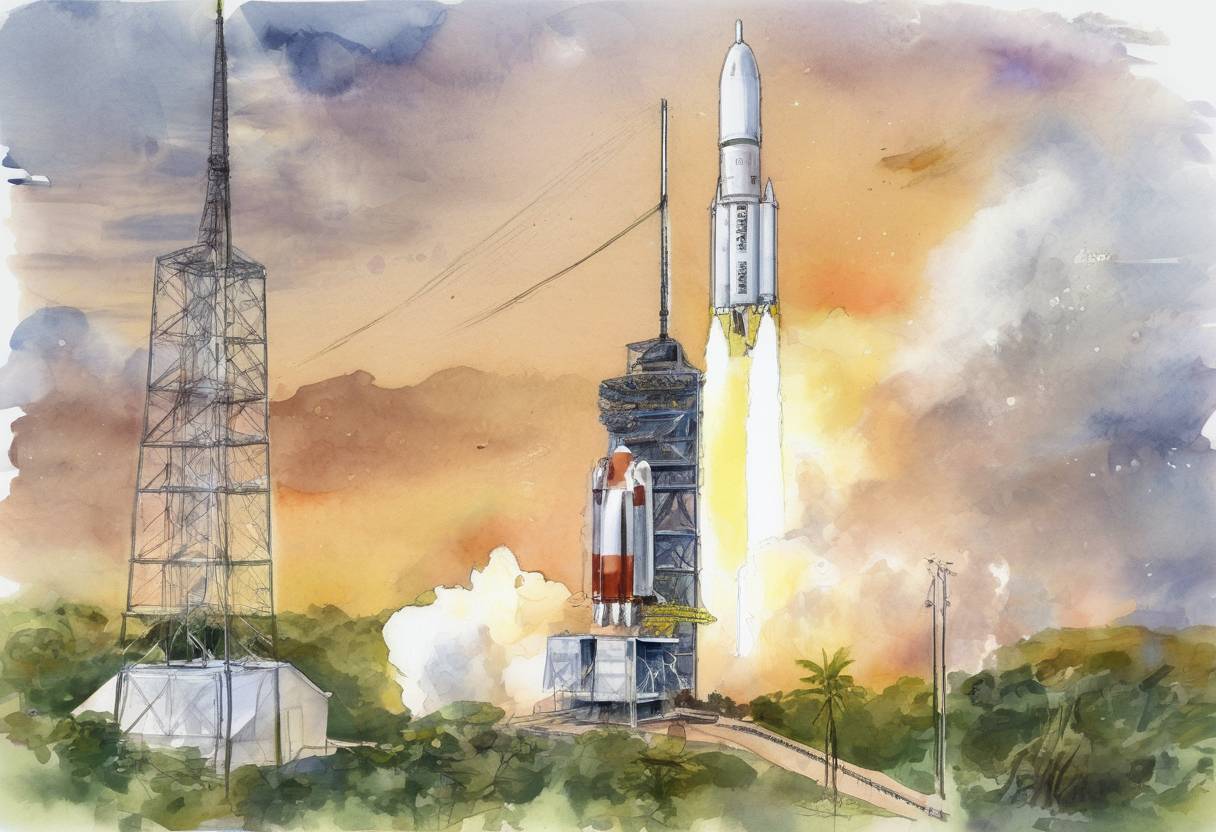
Watercolor painting based depiction of The European Space Agency (ESA) successfully launched the Vega rocket on its maiden flight from the Guiana Space Centre in French Guiana. The Vega is designed to launch small payloads to low Earth orbit. (2012)

Vega Rocket’s Maiden Flight by the European Space Agency

On February 13, 2012, the European Space Agency (ESA) successfully launched the Vega rocket on its maiden flight from the Guiana Space Centre in French Guiana. This event marked a significant milestone in ESA’s capabilities to launch small payloads into low Earth orbit.

Background

The Vega rocket was developed to complement ESA’s existing launch vehicles, the Ariane 5 and the Soyuz, by providing a cost-effective solution for launching smaller payloads. The development of Vega began in the late 1990s, with the aim of capturing a share of the growing market for small satellite launches.

Key Features of the Vega Rocket

  • Design Purpose: Vega is specifically designed to carry small to medium-sized payloads, typically ranging from 300 kg to 2,500 kg, to low Earth orbit (LEO).
  • Configuration: The rocket is a four-stage vehicle, with three solid rocket stages and a liquid-fueled upper stage, known as the AVUM (Attitude and Vernier Upper Module).
  • Flexibility: Vega’s design allows it to accommodate a variety of payload configurations, making it suitable for launching multiple small satellites in a single mission.

The Maiden Flight

  • Date and Location: The inaugural launch took place on February 13, 2012, from the Guiana Space Centre in Kourou, French Guiana.
  • Mission Name: The mission was designated VV01.
  • Payload: The maiden flight carried nine satellites, including the LARES (Laser Relativity Satellite), which was the primary payload, and several CubeSats from European universities.

Significance and Aftermath

  • Success: The successful launch demonstrated Vega’s capabilities and reliability, establishing it as a key player in the small satellite launch market.
  • Impact on ESA: With Vega, ESA expanded its launch service offerings, providing more flexibility and options for European and international customers.
  • Market Influence: Vega’s introduction helped ESA compete in the growing market for small satellite launches, which has continued to expand with the increasing demand for Earth observation, scientific research, and commercial applications.

The successful maiden flight of the Vega rocket was a testament to ESA’s commitment to innovation and its ability to adapt to the evolving needs of the space industry. This launch paved the way for subsequent missions, solidifying Vega’s role in ESA’s launch vehicle fleet.

Source: www.esa.int