1968 · Various, Vietnam
The Tet Offensive begins during the Vietnam War as North Vietnamese and Viet Cong forces launch a series of surprise attacks against American and South Vietnamese forces.
May 7, 1954
The Battle of Dien Bien Phu ended with a decisive victory for the Viet Minh over French forces, leading to the end of French colonial rule in Indochina and the Geneva Conference.
Dien Bien Phu, Vietnam | Viet Minh
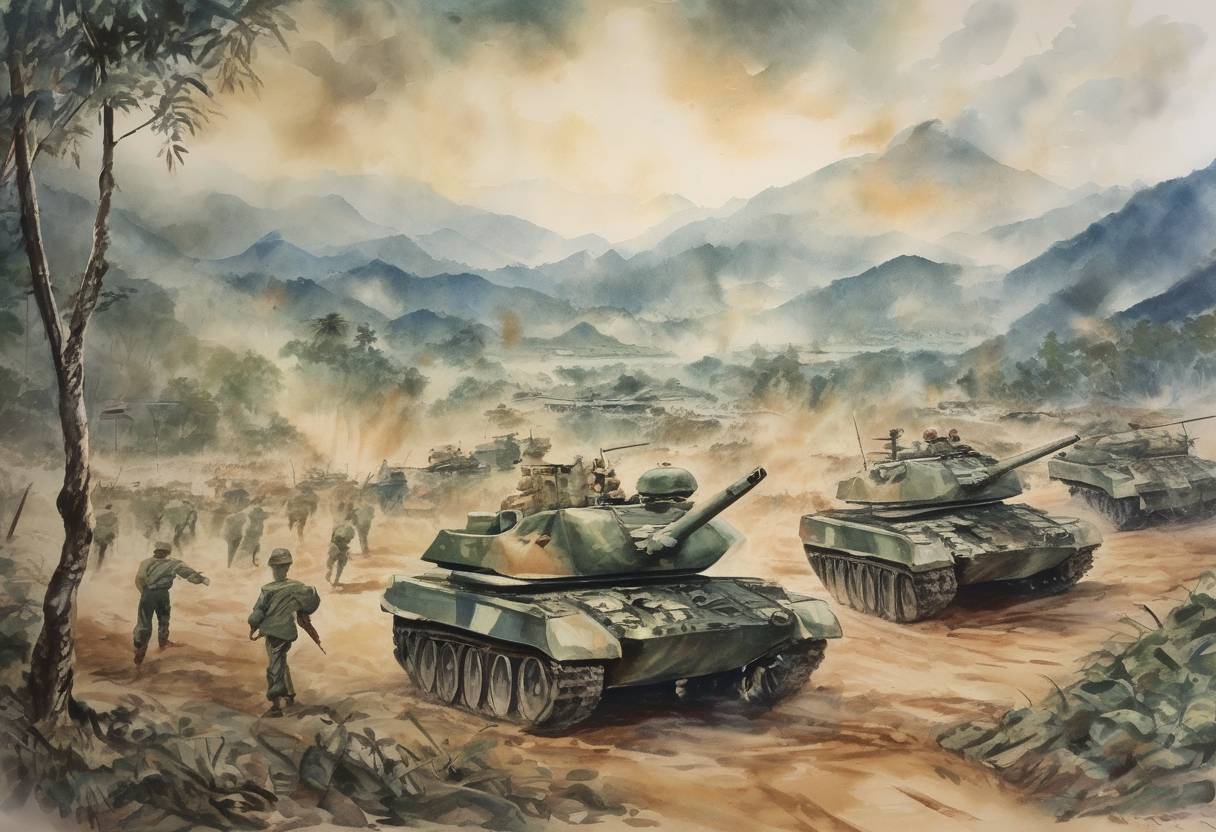
The Battle of Dien Bien Phu was a pivotal confrontation in the First Indochina War between the French Union’s French Far East Expeditionary Corps and the Viet Minh communist-nationalist revolutionaries. The conflict was rooted in the broader struggle for Vietnamese independence from French colonial rule, which had been ongoing since the end of World War II.
French Strategy: The French aimed to cut off Viet Minh supply lines into Laos and draw the Viet Minh into a set-piece battle where they believed their superior firepower would prevail. They fortified a base at Dien Bien Phu, a remote valley in northwestern Vietnam.
Viet Minh Strategy: Under the leadership of General Vo Nguyen Giap, the Viet Minh opted for a siege strategy. They transported heavy artillery through difficult terrain and positioned it in the surrounding hills, effectively encircling the French forces.
Commencement: The battle began on March 13, 1954, when the Viet Minh launched a massive artillery bombardment on the French positions.
Siege Warfare: Over the next 56 days, the Viet Minh systematically overran the French outposts. The French forces, numbering around 13,000, were besieged and cut off from reinforcements and supplies.
Decisive Victory: On May 7, 1954, the Viet Minh forces captured the central French position, leading to the surrender of the remaining French troops. This victory was a significant morale booster for the Viet Minh and a devastating blow to French colonial ambitions in Indochina.
End of French Colonial Rule: The fall of Dien Bien Phu marked the end of French colonial rule in Indochina. It was a catalyst for the Geneva Conference, which began shortly after the battle ended.
Geneva Conference: The conference led to the Geneva Accords, which temporarily divided Vietnam at the 17th parallel, with the North controlled by the Viet Minh and the South by the State of Vietnam, a French-backed government. This division set the stage for the Vietnam War.
Impact on Global Politics: The battle and subsequent accords highlighted the decline of European colonialism in Asia and the rise of nationalist movements. It also underscored the growing Cold War tensions, as the United States increased its involvement in Vietnam to counter the spread of communism.
The Battle of Dien Bien Phu is often regarded as a classic example of how a well-organized and motivated insurgent force can defeat a technologically superior colonial power. It remains a symbol of Vietnamese resilience and determination in their struggle for independence.
Source: en.wikipedia.org