686 · Khaybar, Arabian Peninsula
The Battle of Khaybar took place, where Muslim forces led by the Prophet Muhammad captured the Jewish oasis of Khaybar in the Arabian Peninsula.
February 17, 0624
The Battle of Badr, a key battle in early Islamic history, takes place. It is the first major battle between the Muslims and the Quraysh of Mecca, resulting in a decisive Muslim victory.
Badr, Saudi Arabia | Muslim forces
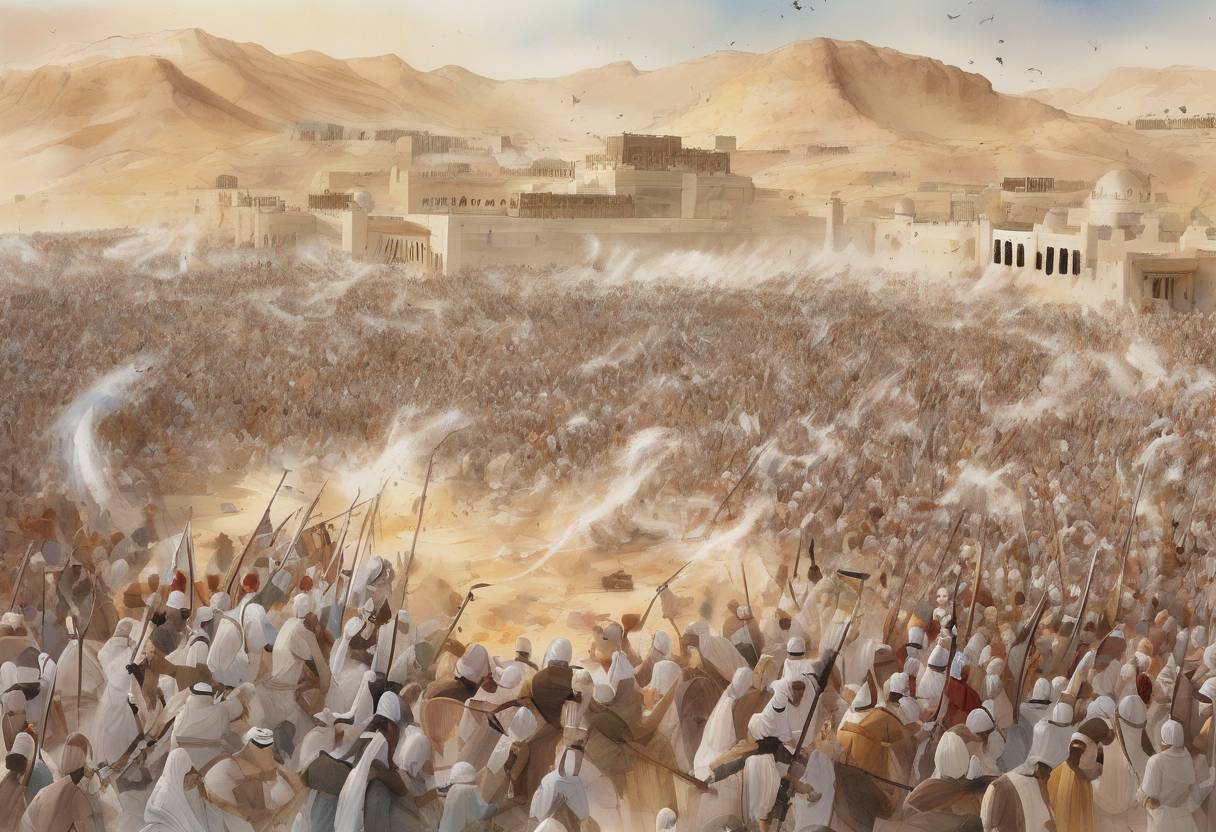
The Battle of Badr, fought on February 17, 624 CE (17 Ramadan, 2 AH in the Islamic calendar), stands as a pivotal moment in early Islamic history. It marked the first major military confrontation between the nascent Muslim community of Medina and the Quraysh tribe of Mecca.
The roots of the conflict lay in the socio-political and religious tensions between the Muslims, led by the Prophet Muhammad, and the Quraysh, the dominant tribe in Mecca. After enduring years of persecution, Muhammad and his followers migrated from Mecca to Medina in 622 CE, an event known as the Hijra. This migration not only marked the beginning of the Islamic calendar but also set the stage for escalating hostilities.
The Quraysh viewed the growing influence of Muhammad and his followers as a direct threat to their economic and religious hegemony. Tensions further intensified as the Muslims began intercepting Quraysh caravans, which were vital to Mecca’s economy.
The Battle of Badr occurred near a well at Badr, approximately 80 miles southwest of Medina. The Muslim forces, numbering around 313 men, were significantly outnumbered by the Quraysh, who fielded about 1,000 warriors. Despite this disparity, the Muslims were strategically positioned and motivated by their faith and the leadership of Muhammad.
The victory at Badr had profound implications:
The Battle of Badr is remembered not only for its immediate military success but also for its lasting impact on the spread of Islam and the consolidation of the Muslim state. It set the stage for subsequent conflicts and the eventual Muslim conquest of Mecca.
Source: en.wikipedia.org