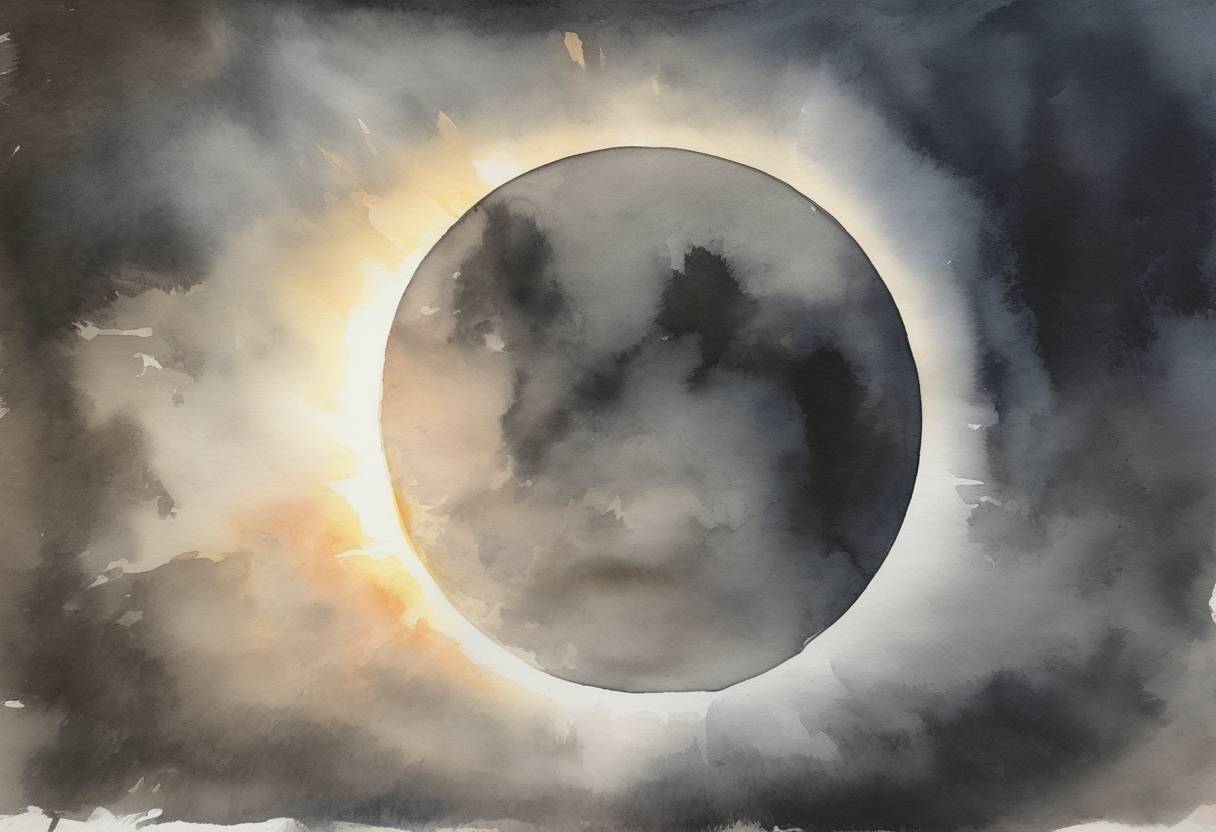
The Great American Eclipse: August 21, 2017
On August 21, 2017, a total solar eclipse, famously dubbed the “Great American Eclipse,” traversed the contiguous United States, marking the first such event since June 8, 1918. This celestial phenomenon captivated millions across the nation, as it provided a rare opportunity to witness the moon completely obscuring the sun along a path of totality stretching from the Pacific to the Atlantic.
Path of Totality
The path of totality, where the moon entirely covered the sun, spanned approximately 70 miles wide and crossed 14 states, from Oregon on the west coast to South Carolina on the east coast. Key cities within this path included Salem, Oregon; Idaho Falls, Idaho; Casper, Wyoming; Lincoln, Nebraska; Kansas City, Missouri; Nashville, Tennessee; and Charleston, South Carolina. Observers within this narrow band experienced total darkness for up to 2 minutes and 40 seconds, depending on their location.
Significance and Impact
The Great American Eclipse was significant for several reasons:
Scientific Research: The eclipse provided a unique opportunity for scientists to study the sun’s corona, the outermost part of its atmosphere, which is usually obscured by the bright light of the sun itself. Researchers conducted experiments to better understand solar winds and the sun’s magnetic field.
Public Engagement: The event garnered widespread public interest, with an estimated 215 million American adults viewing the eclipse either directly or through media coverage. It sparked a surge in public engagement with astronomy and science, with many educational institutions and organizations hosting viewing events and workshops.
Economic and Cultural Impact: The eclipse had a notable economic impact, as millions of people traveled to locations within the path of totality, boosting local economies. It also inspired a range of cultural expressions, from art and music to literature, reflecting the awe and wonder associated with such a rare natural event.
Historical Context
The last time a total solar eclipse was visible across the entire contiguous United States was in 1918. The 2017 eclipse was part of a series of solar eclipses, with the next total solar eclipse visible from the contiguous United States occurring on April 8, 2024. This event reinforced the importance of eclipses in both scientific research and cultural history, highlighting humanity’s enduring fascination with celestial phenomena.
Conclusion
The Great American Eclipse of 2017 was a landmark event that brought together people from diverse backgrounds to share in the wonder of the natural world. It served as a reminder of the intricate dance of celestial bodies and the opportunities such events provide for scientific discovery and cultural reflection.