Muhammad's Farewell Sermon - March 6, 632
632 · Mecca, Arabian Peninsula
Muhammad, the founder of Islam, delivered his Farewell Sermon during his final pilgrimage to Mecca, outlining key principles of the faith.
January 1, 0630
Prophet Muhammad and his followers set out to conquer Mecca, an event that would lead to the city's surrender and its conversion to Islam.
Mecca, Arabian Peninsula | Muslim community
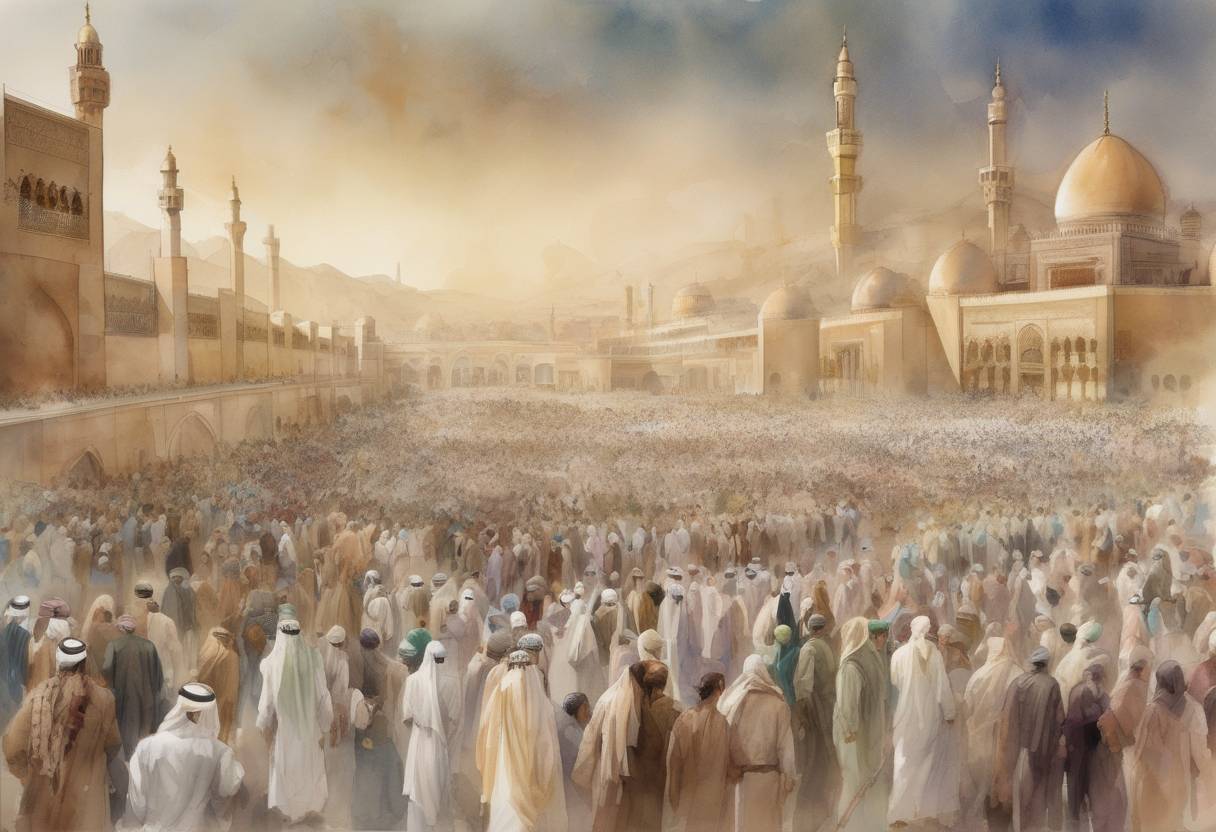
The event of Prophet Muhammad and his followers setting out to conquer Mecca is a pivotal moment in Islamic history, marking the transition of Mecca into a center of Islamic faith. This event, which occurred on January 1, 630, is known as the “Conquest of Mecca” and is significant for its relatively peaceful nature and its profound impact on the spread of Islam.
The roots of the conquest can be traced back to the Treaty of Hudaybiyyah, signed in 628 between the Muslims of Medina and the Quraysh tribe of Mecca. This treaty established a ten-year truce and allowed Muslims to perform the pilgrimage to Mecca. However, tensions remained, and the truce was broken when an ally of the Quraysh attacked a tribe allied with the Muslims.
In response to the breach of the treaty, Prophet Muhammad decided to take decisive action. On January 1, 630, he set out from Medina with an army of approximately 10,000 followers. The march to Mecca was strategic and well-planned, with the aim of minimizing bloodshed and achieving a peaceful surrender.
As the Muslim forces approached Mecca, many of the city’s inhabitants, including key leaders of the Quraysh, realized the futility of resistance. The Prophet’s reputation for mercy and justice preceded him, encouraging many to consider surrender. Upon entering the city, Muhammad declared a general amnesty, sparing the lives of most of his former adversaries.
The peaceful conquest of Mecca was a turning point in Islamic history. It not only solidified Muhammad’s leadership but also facilitated the rapid spread of Islam across the Arabian Peninsula. The event demonstrated the power of strategic diplomacy and mercy, setting a precedent for future Islamic governance.
The conversion of Mecca into a Muslim city laid the foundation for its emergence as the spiritual center of Islam, a status it retains to this day. The conquest also marked the beginning of the end for the tribal conflicts that had long plagued the region, as many tribes began to embrace Islam and unite under its banner.
In summary, the Conquest of Mecca was a landmark event that reshaped the religious and political landscape of Arabia, highlighting the themes of forgiveness, unity, and the transformative power of faith.
Source: en.wikipedia.org