William McKinley Defeats William Jennings Bryan: The 1896 U.S. Presidential Election
1896 · Washington, D.C., United States
William McKinley defeated William Jennings Bryan in the United States presidential election, becoming the 25th President.
February 9, 1825
After no presidential candidate received a majority of electoral votes, the United States House of Representatives elected John Quincy Adams as President.
Washington, D.C., United States | United States House of Representatives
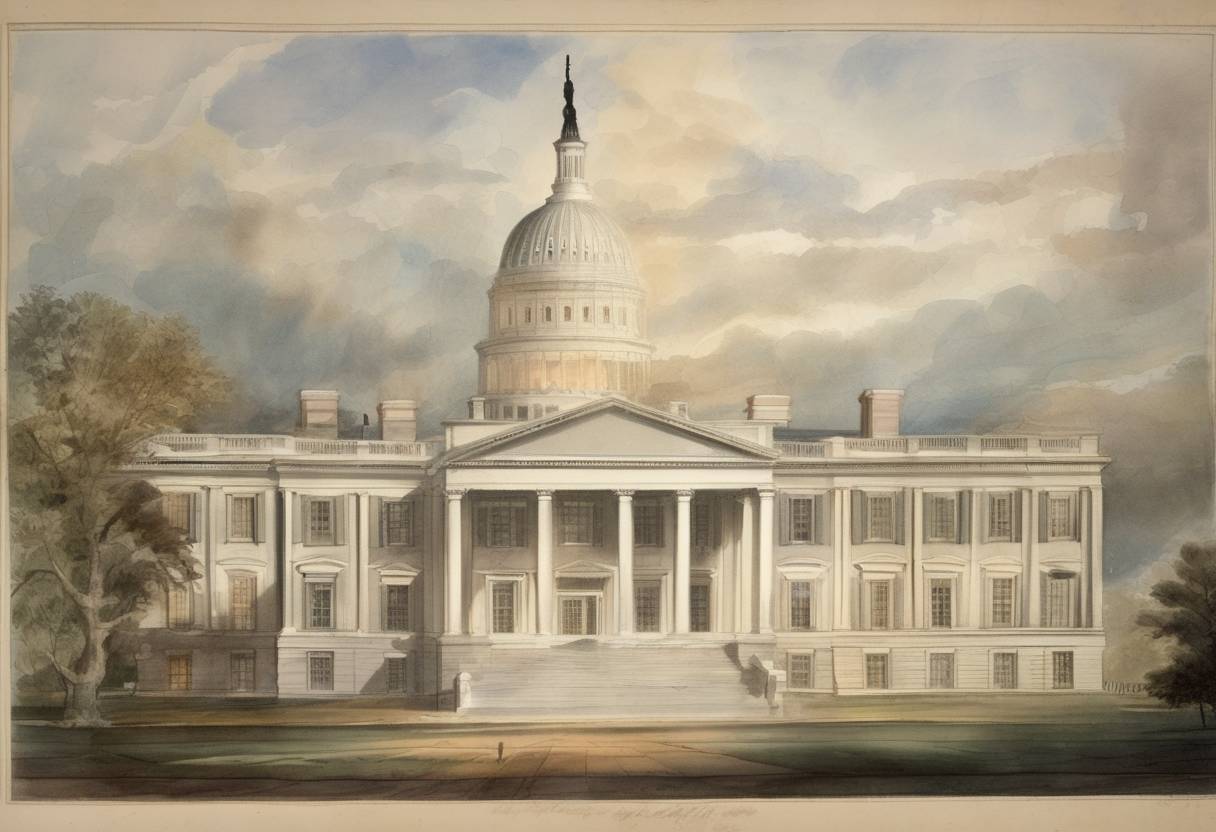
On February 9, 1825, the United States House of Representatives elected John Quincy Adams as the sixth President of the United States. This event marked a significant moment in American political history, as it was the first time the House had to decide a presidential election due to the absence of a majority in the Electoral College.
The presidential election of 1824 was one of the most contentious and complex in U.S. history. Four major candidates vied for the presidency:
The election was characterized by regional divisions and the absence of a clear party system, as the Federalist Party had largely dissolved, leaving the Democratic-Republican Party as the dominant political force.
In the election, Andrew Jackson received the most popular and electoral votes but failed to secure a majority in the Electoral College. The final electoral vote tally was:
According to the 12th Amendment to the U.S. Constitution, if no candidate receives a majority of the electoral votes, the decision is made by the House of Representatives, with each state delegation having one vote. Only the top three candidates in the electoral vote count were considered, excluding Henry Clay.
The House of Representatives convened on February 9, 1825, to resolve the election. Henry Clay, who was influential as Speaker of the House, played a crucial role in the outcome. Despite being excluded from the final decision, Clay threw his support behind John Quincy Adams, swaying many representatives to vote for Adams.
The House voted by state delegation, and John Quincy Adams was elected President on the first ballot, receiving the votes of 13 states, while Andrew Jackson received 7, and William H. Crawford received 4.
The election of John Quincy Adams by the House had several significant consequences:
“Corrupt Bargain” Allegations: Andrew Jackson and his supporters accused Adams and Clay of striking a “corrupt bargain,” as Clay was subsequently appointed Secretary of State by Adams. This accusation fueled political animosity and contributed to the formation of the Democratic Party under Jackson.
Political Realignment: The election highlighted the need for a more organized party system, leading to the eventual emergence of the Second Party System, with the Democratic Party and the Whig Party as major political entities.
Adams’ Presidency: John Quincy Adams’ presidency was marked by ambitious plans for national development, but he faced significant opposition in Congress, limiting his effectiveness.
The election of 1824 and its resolution in 1825 underscored the complexities of the American electoral process and set precedents for future contested elections.
Source: en.wikipedia.org