The Great Baltimore Fire of 1904
1904 · Baltimore, United States
The Great Baltimore Fire began, lasting for over 30 hours and destroying over 1,500 buildings in Baltimore, Maryland.
May 31, 1889
The Johnstown Flood occurred in Pennsylvania, United States, when the South Fork Dam collapsed, killing over 2,200 people and causing widespread destruction.
Johnstown, United States | South Fork Fishing and Hunting Club
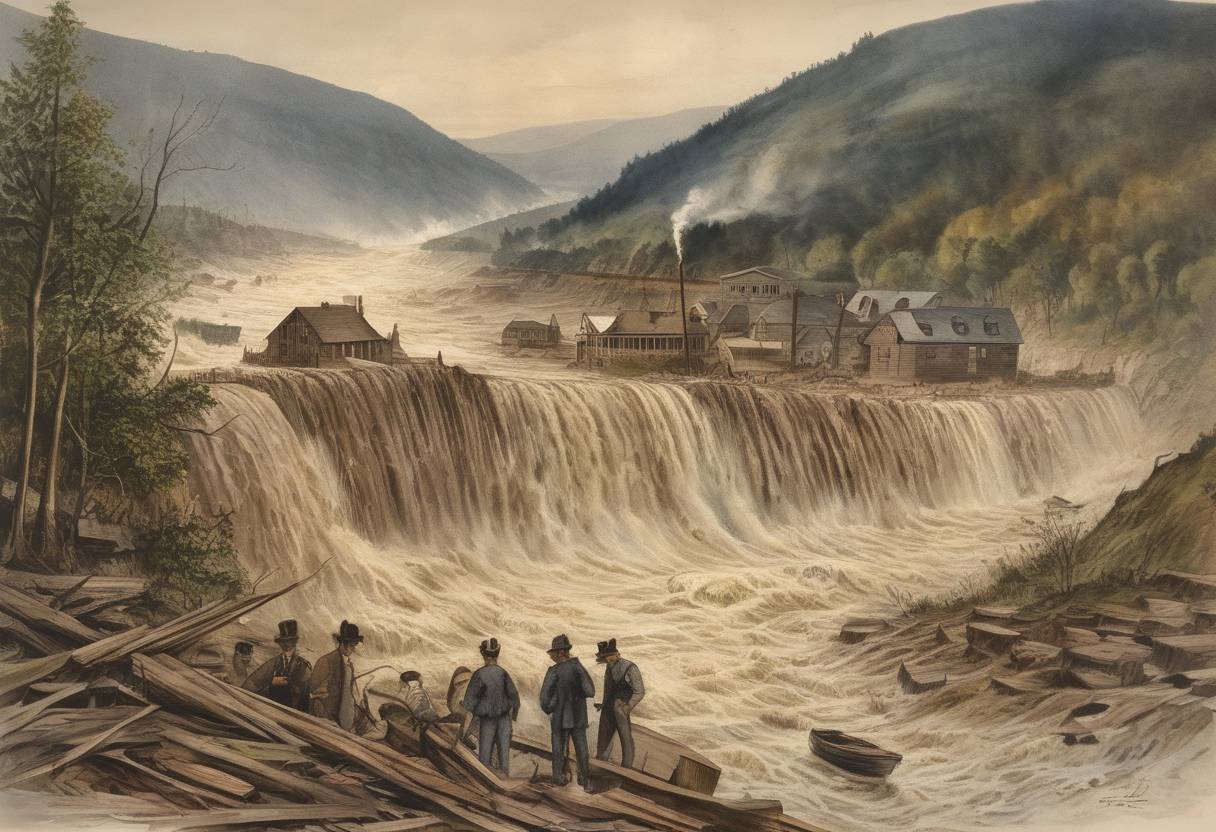
The Johnstown Flood, also known as the Great Flood of 1889, was a catastrophic event that occurred on May 31, 1889, in Johnstown, Pennsylvania. This disaster was one of the deadliest in American history, resulting in the deaths of over 2,200 people and causing widespread destruction.
The flood was precipitated by the collapse of the South Fork Dam, which was located approximately 14 miles upstream of Johnstown. The dam was originally constructed in the 1850s as part of a canal system but was later acquired by the South Fork Fishing and Hunting Club, a private resort for wealthy industrialists, including Andrew Carnegie and Henry Clay Frick.
Dam Construction and Maintenance: The South Fork Dam was poorly maintained and had undergone several modifications that compromised its structural integrity. The club had lowered the dam to accommodate a road and installed fish screens that clogged the spillway, preventing proper water drainage.
Heavy Rainfall: In the days leading up to the disaster, the region experienced exceptionally heavy rainfall, which caused the water level in Lake Conemaugh, the reservoir held back by the dam, to rise dramatically.
Warnings Ignored: Despite concerns about the dam’s condition, warnings were largely ignored or downplayed by the club’s management and local authorities.
On the afternoon of May 31, 1889, the South Fork Dam gave way under the immense pressure of the swollen reservoir. An estimated 20 million tons of water surged down the Conemaugh Valley at speeds of up to 40 miles per hour, obliterating everything in its path.
The Johnstown Flood highlighted the consequences of industrial negligence and the lack of regulatory oversight in infrastructure projects. It prompted public outrage and led to changes in dam safety standards and engineering practices.
The Johnstown Flood is remembered as a tragic event that reshaped the community and influenced future policies on infrastructure safety and disaster response.
Source: en.wikipedia.org