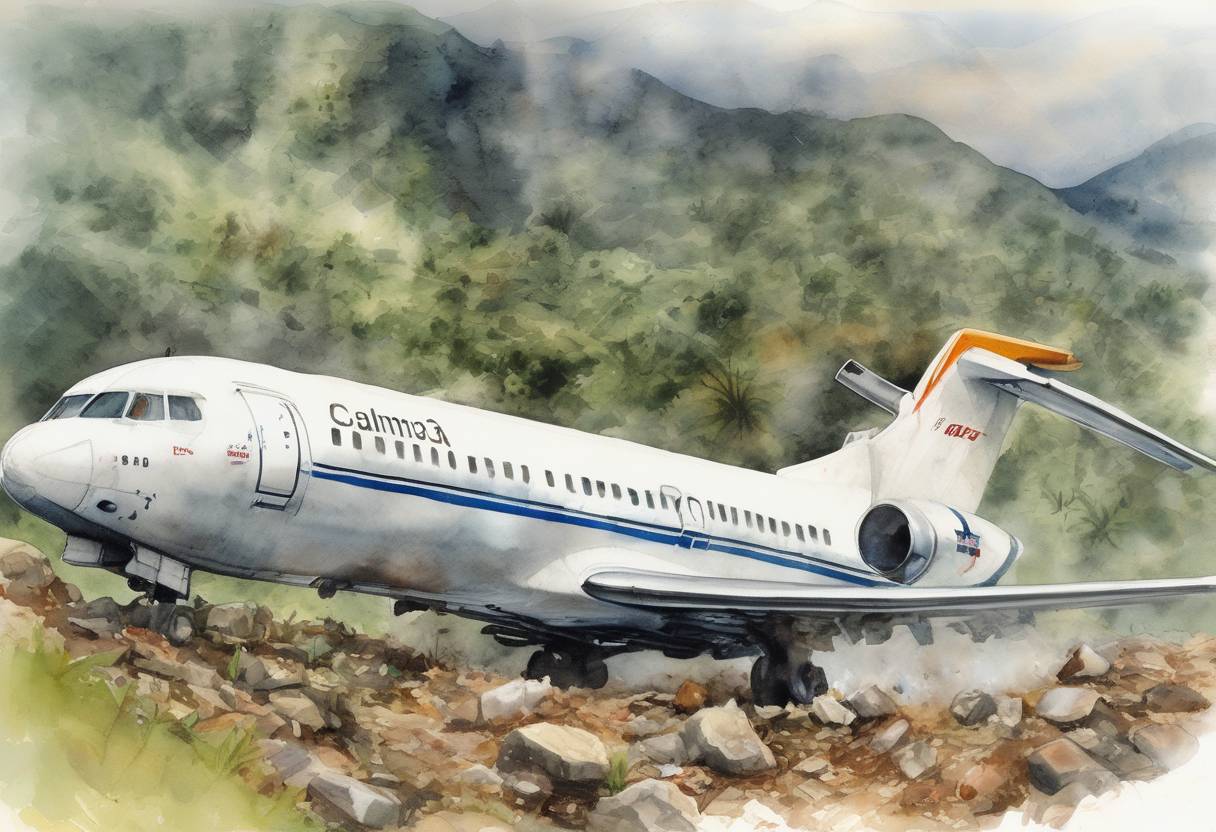
TAME Flight 120 Crash: January 28, 2002
On January 28, 2002, TAME Flight 120, a Boeing 727-100, tragically crashed in the Andes mountains in Colombia, resulting in the loss of all 92 people on board. This incident remains one of the deadliest aviation disasters in Ecuadorian history.
Background
- Aircraft: The aircraft involved was a Boeing 727-100, a model known for its trijet configuration and popularity in the 1960s and 1970s. It was operated by TAME, the national airline of Ecuador.
- Flight Route: The flight was a scheduled passenger service from Quito, Ecuador, to Cali, Colombia.
The Crash
- Date and Time: The crash occurred on January 28, 2002.
- Location: The aircraft went down in the Andes mountains, specifically in the Cumbal Volcano region, near the border between Ecuador and Colombia.
- Casualties: All 92 individuals on board, including passengers and crew, perished in the crash.
Investigation and Findings
- Weather Conditions: The region is known for its challenging weather conditions, which can include fog and rain, potentially contributing to the difficulty of navigating the mountainous terrain.
- Pilot Error and Navigation: Initial investigations suggested that pilot error and issues with navigation might have played a role. The aircraft was reportedly off course when it struck the mountain.
- Communication and Coordination: The investigation also highlighted possible lapses in communication and coordination between the flight crew and air traffic control.
Aftermath
- Safety Measures: The crash prompted a review of safety protocols and navigation procedures for flights operating in mountainous regions.
- Impact on TAME: As Ecuador’s national airline, TAME faced scrutiny and pressure to enhance its safety standards and operational procedures following the disaster.
Broader Significance
The crash of TAME Flight 120 underscored the inherent risks of flying in challenging terrains like the Andes and highlighted the critical importance of rigorous navigation and communication protocols in aviation safety. It also served as a somber reminder of the potential consequences of human error in aviation.
This tragic event remains a significant chapter in the history of aviation in South America, prompting ongoing efforts to improve flight safety in the region.