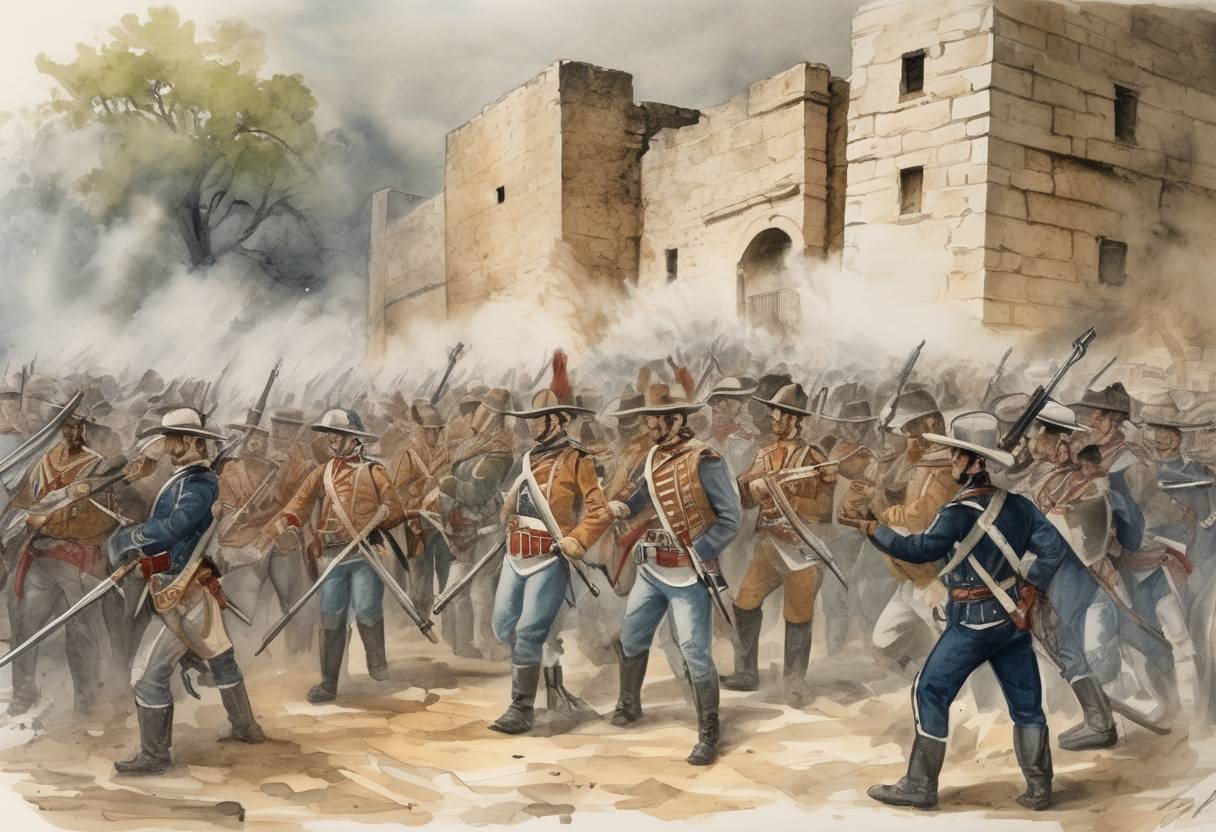
The Battle of the Alamo Begins
Date: February 23, 1836
Context and Background
The Battle of the Alamo was a pivotal event during the Texas Revolution, a rebellion of colonists from the United States and Tejanos (Mexican Texans) against the Mexican government. The conflict was rooted in tensions over cultural differences, governance, and the centralization policies of Mexican President Antonio López de Santa Anna. By 1835, these tensions had escalated into open rebellion.
Key Events Leading Up to the Battle
- Texas Revolution: The revolution began in October 1835, with Texan forces capturing the Mexican garrison at San Antonio de Béxar in December 1835. This victory left the Alamo, a former mission turned military fort, in Texan hands.
- Strategic Importance: The Alamo was strategically significant due to its location on the route to the interior of Texas. Its defense was crucial for the Texan cause.
The Siege Begins
- February 23, 1836: General Antonio López de Santa Anna, leading a large Mexican force, arrived in San Antonio and laid siege to the Alamo. The Texan defenders, numbering between 180 and 250, were commanded by James Bowie and William B. Travis, with notable figures like Davy Crockett among them.
- The Defenders: Despite being vastly outnumbered, the defenders were determined to hold the fort. Travis famously wrote a letter seeking reinforcements, declaring, “I shall never surrender or retreat.”
The Siege and Assault
- Duration: The siege lasted for 13 days, with Mexican forces bombarding the Alamo and cutting off supplies.
- Final Assault: On March 6, 1836, Santa Anna launched a pre-dawn assault. The Mexican troops breached the walls, and after fierce fighting, all of the Alamo’s defenders were killed.
Aftermath and Significance
- Impact on the Texas Revolution: The fall of the Alamo became a rallying cry for Texan forces, encapsulated in the phrase “Remember the Alamo!” It galvanized support for the Texan cause and inspired many to join the fight against Mexican rule.
- Battle of San Jacinto: The sacrifice at the Alamo set the stage for the decisive Battle of San Jacinto on April 21, 1836, where Texan forces, led by Sam Houston, defeated Santa Anna’s army, securing Texas independence.
Broader Historical Significance
The Battle of the Alamo is remembered as a symbol of resistance and sacrifice. It highlights the complexities of the Texas Revolution and the broader struggles for control and identity in the region. The event remains a significant part of Texas and American history, symbolizing the fight for independence and the enduring spirit of those who stood against overwhelming odds.