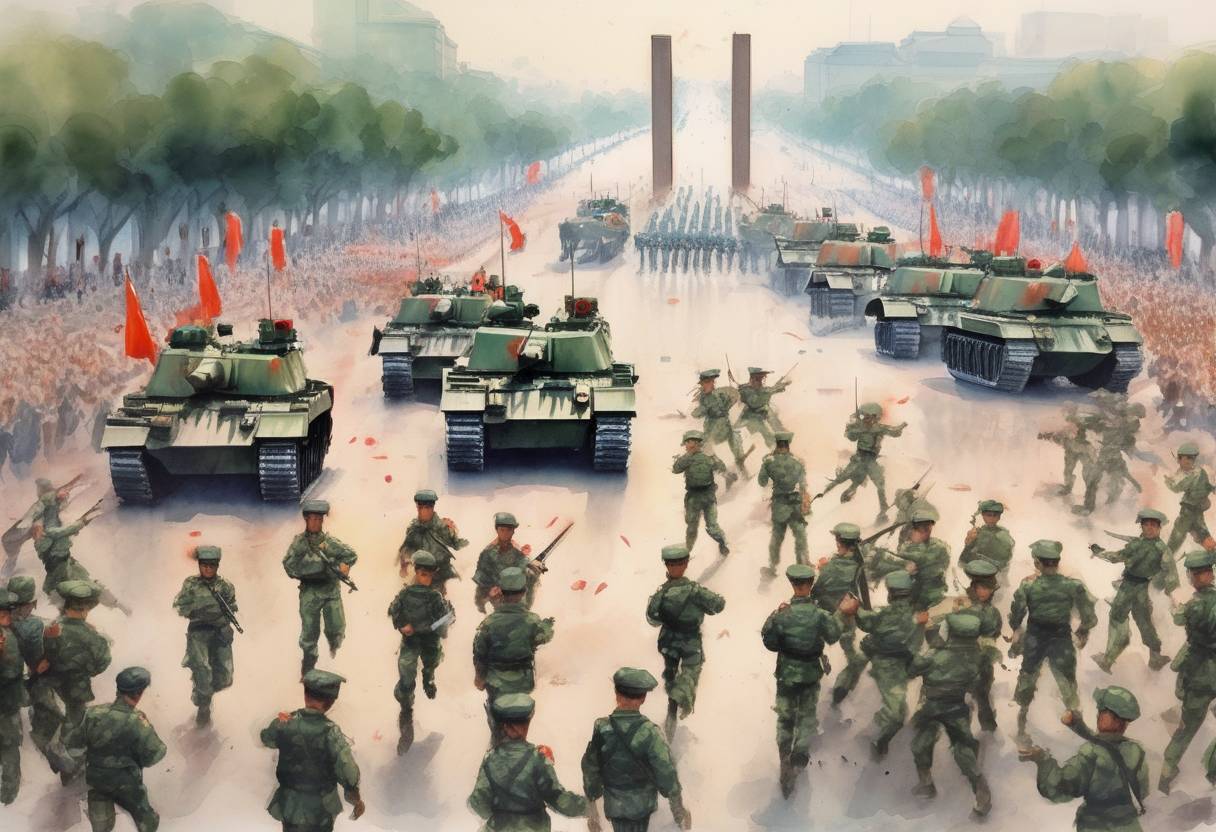
The Tiananmen Square Massacre - June 4, 1989
The Tiananmen Square Massacre, also known as the June Fourth Incident, was a pivotal and tragic event in Chinese history that took place on June 4, 1989. It marked the violent suppression of a pro-democracy movement by the Chinese government, resulting in a significant loss of life and widespread arrests.
Background
The roots of the Tiananmen Square protests can be traced back to growing discontent among Chinese citizens, particularly students and intellectuals, with the Chinese Communist Party’s (CCP) policies. In the 1980s, China was undergoing economic reforms under the leadership of Deng Xiaoping, which led to rapid economic growth but also increased corruption, inflation, and a growing gap between the rich and poor. Additionally, there was a demand for political reform and greater freedom of speech.
The protests began in April 1989, following the death of Hu Yaobang, a former CCP leader who was seen as a reformist. His death became a catalyst for students to gather in Tiananmen Square, Beijing, to mourn and call for political reform, freedom of the press, and an end to government corruption.
The Protests
Throughout April and May 1989, the protests grew in size and scope, drawing in students, intellectuals, and eventually workers and citizens from various walks of life. The movement was largely peaceful, with demonstrators organizing sit-ins, hunger strikes, and marches. Tiananmen Square became the focal point of the protests, with thousands of people camping out in the square.
The Chinese government, initially caught off guard, debated how to respond. While some leaders advocated for dialogue and reform, hardliners within the CCP pushed for a more forceful response.
The Crackdown
On the night of June 3 and into the early hours of June 4, the Chinese government declared martial law and ordered the People’s Liberation Army (PLA) to clear the square. Troops and tanks moved into Beijing, and by the morning of June 4, they had reached Tiananmen Square.
The military used live ammunition, tear gas, and armored vehicles to disperse the protesters. The exact number of casualties remains unknown, as the Chinese government has never released an official death toll. Estimates range from several hundred to several thousand deaths, with many more injured and arrested.
Aftermath and Consequences
The Tiananmen Square Massacre had profound and lasting impacts:
Domestic Repression: The Chinese government intensified its crackdown on dissent, tightening control over media, education, and political expression. Many activists were arrested, and some were executed or imprisoned.
International Reaction: The massacre drew widespread international condemnation. Many countries imposed economic sanctions and arms embargoes on China, although these were gradually lifted in the following years as economic interests took precedence.
Legacy: The Chinese government has maintained strict censorship over discussions of the Tiananmen Square Massacre. The event remains a sensitive and taboo subject in China, with efforts to commemorate or discuss it often suppressed.
Political Landscape: The crackdown effectively halted the momentum for political reform in China. The CCP reinforced its control, prioritizing economic development while maintaining strict political authority.
The Tiananmen Square Massacre remains a significant and somber chapter in China’s history, symbolizing the struggle for political freedom and the lengths to which the government would go to maintain control.