The Final Episode of "Friends" - May 7, 2004
2004 · New York, United States
The final episode of the television sitcom 'Friends' aired on NBC, concluding its ten-season run.
June 2, 1835
P. T. Barnum and his circus begin their first tour of the United States.
New York, United States | P. T. Barnum Circus
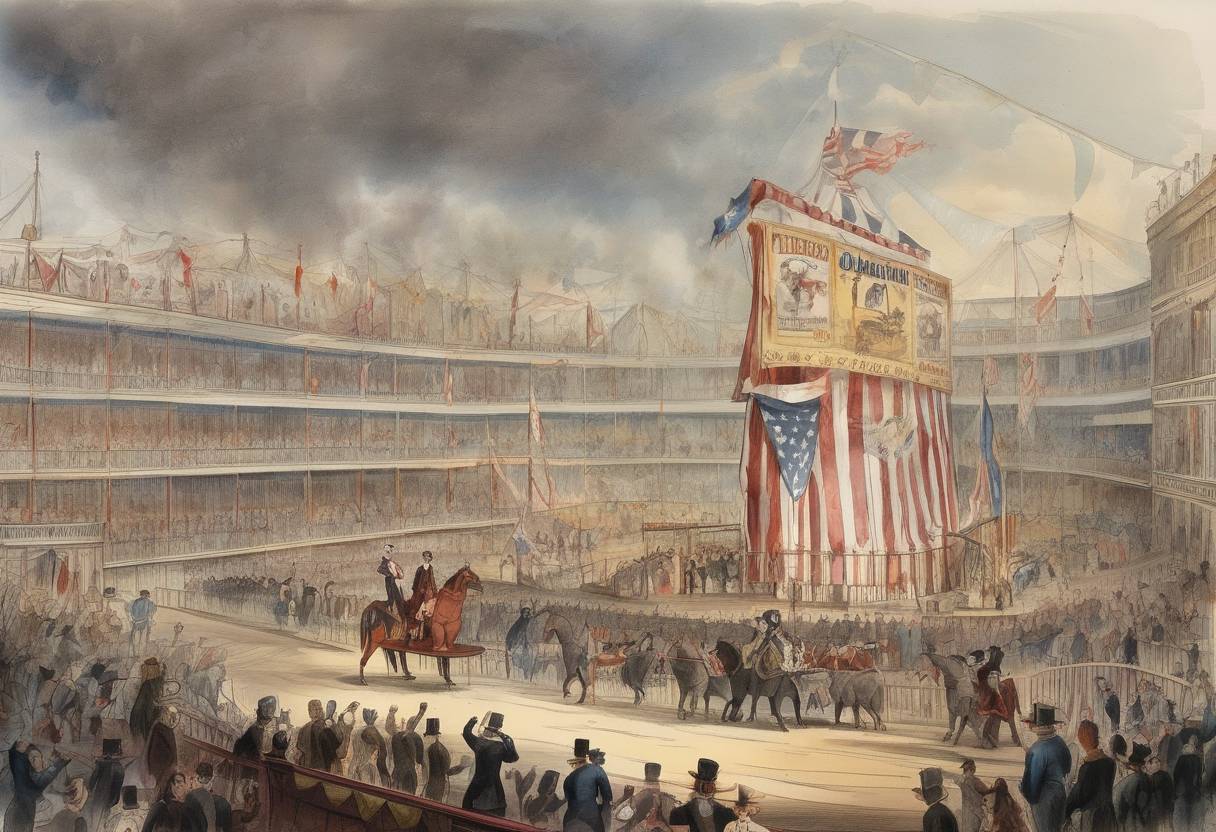
On June 2, 1835, Phineas Taylor Barnum, better known as P. T. Barnum, embarked on what would become a legendary journey in the world of entertainment. Although Barnum is often associated with the circus, his initial foray into show business began with a different kind of spectacle.
P. T. Barnum was born on July 5, 1810, in Bethel, Connecticut. Before his involvement in the circus, Barnum was a businessman with a keen eye for showmanship and publicity. His early ventures included a variety of businesses, but it was his purchase of Joice Heth, an elderly African American woman whom he claimed was the 161-year-old nurse of George Washington, that marked his entry into the world of entertainment.
Barnum’s first tour in 1835 was not a circus in the traditional sense but rather a traveling exhibition. He showcased Joice Heth as a curiosity, capitalizing on the public’s fascination with the extraordinary. This tour laid the groundwork for Barnum’s future endeavors in the entertainment industry, highlighting his ability to draw crowds and generate publicity.
While Barnum’s initial tour in 1835 did not involve a circus, it set the stage for his later ventures. In 1871, Barnum would go on to establish “P. T. Barnum’s Grand Traveling Museum, Menagerie, Caravan & Hippodrome,” which evolved into the famous Barnum & Bailey Circus. This circus became known as “The Greatest Show on Earth,” featuring a wide array of acts, including acrobats, clowns, and exotic animals.
Barnum’s early tours and subsequent circus enterprise had a profound impact on American culture and the entertainment industry. He was a pioneer in the art of promotion and spectacle, understanding the power of media and public relations long before they became standard practices. His legacy is a testament to the enduring appeal of live entertainment and the human fascination with the extraordinary.
P. T. Barnum’s first tour in 1835 marked the beginning of a career that would transform the entertainment landscape. While it was not a circus in the modern sense, it was a crucial step in Barnum’s journey toward creating a form of entertainment that captivated audiences across the United States and beyond. His influence is still felt today, as the circus remains a beloved form of entertainment worldwide.
Source: en.wikipedia.org