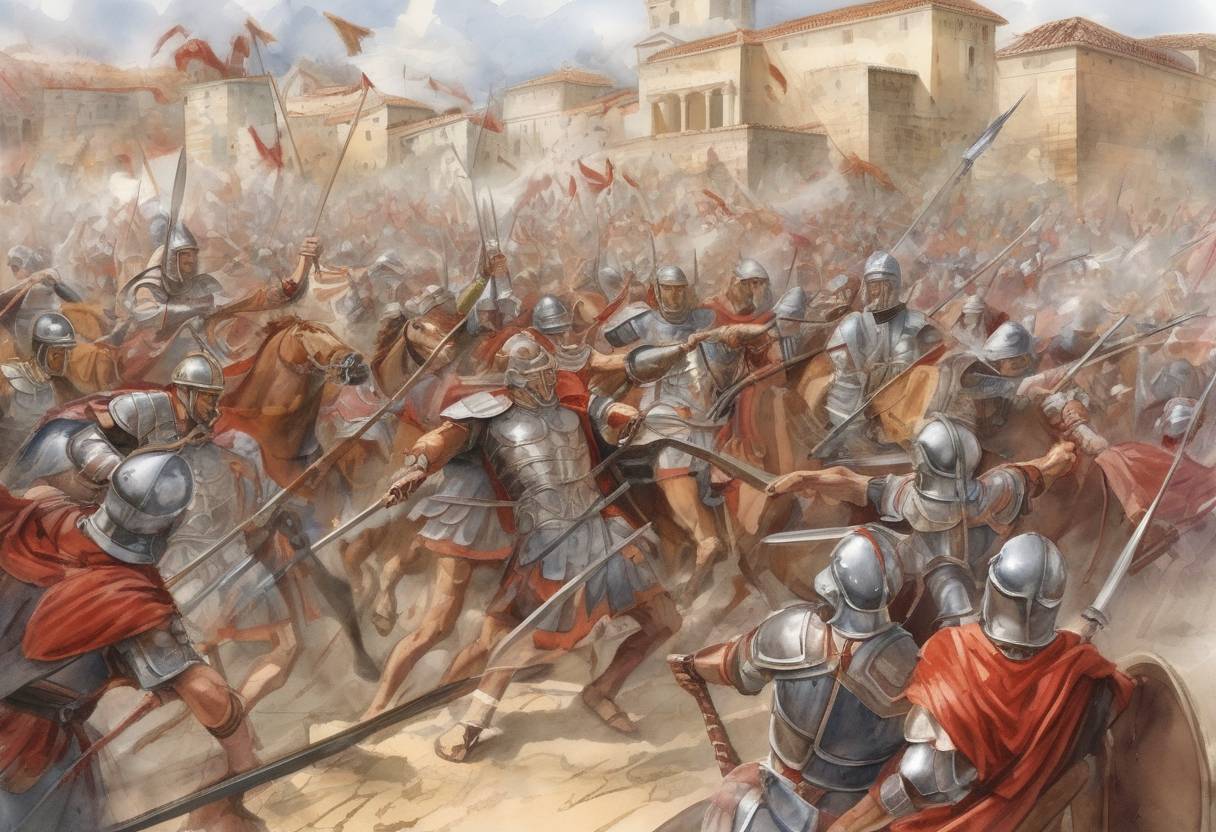
The Battle of Adrianople: July 3, 324
The Battle of Adrianople, fought on July 3, 324, was a pivotal conflict in Roman history that led to Constantine I becoming the sole ruler of the Roman Empire. This battle was a decisive moment in the civil war between Constantine I and Licinius, two powerful figures vying for control over the empire.
Background
- Constantine I: Known as Constantine the Great, he was the Western Roman Emperor. His rise to power began in 306 AD, and he was a key figure in the spread of Christianity within the Roman Empire.
- Licinius: Initially an ally of Constantine, Licinius was the Eastern Roman Emperor. Their relationship deteriorated over time, leading to a series of conflicts for supremacy.
Key Events Leading to the Battle
- Tensions and Alliances: The alliance between Constantine and Licinius was initially solidified through the marriage of Constantine’s sister, Constantia, to Licinius. However, political and religious differences, including Constantine’s support for Christianity, strained their relationship.
- Previous Conflicts: Prior to Adrianople, Constantine and Licinius had clashed in earlier battles, notably the Battle of Cibalae in 316 and the Battle of Mardia in 317, which ended inconclusively and led to a temporary peace.
The Battle
- Location: The battle took place near Adrianople, in present-day Edirne, Turkey.
- Forces: Constantine’s forces were well-trained and experienced, benefiting from his strategic acumen. Licinius’s army, though substantial, was less cohesive.
- Outcome: Constantine’s tactical superiority and the morale of his troops led to a decisive victory over Licinius. The defeat forced Licinius to retreat to Byzantium (modern-day Istanbul).
Aftermath and Significance
- Licinius’s Surrender: Following his defeat at Adrianople and subsequent losses, Licinius surrendered later in 324. He was initially spared but was executed the following year on charges of conspiracy.
- Constantine as Sole Emperor: With Licinius’s defeat, Constantine became the undisputed ruler of the Roman Empire, marking the end of the Tetrarchy system and the beginning of a new era of centralized imperial rule.
- Religious Impact: Constantine’s victory further solidified his support for Christianity, leading to significant religious transformations within the empire, including the establishment of Constantinople as a new imperial capital.
The Battle of Adrianople was not just a military victory but a turning point that shaped the future of the Roman Empire, influencing its political structure and religious orientation for centuries to come.