King Juan Carlos I Announces Abdication
2014 · Madrid, Spain
King Juan Carlos I of Spain announced his intention to abdicate the throne in favor of his son, Felipe VI.
June 19, 2014
Felipe VI was proclaimed King of Spain following the abdication of his father, King Juan Carlos I.
Madrid, Spain | Spanish monarchy
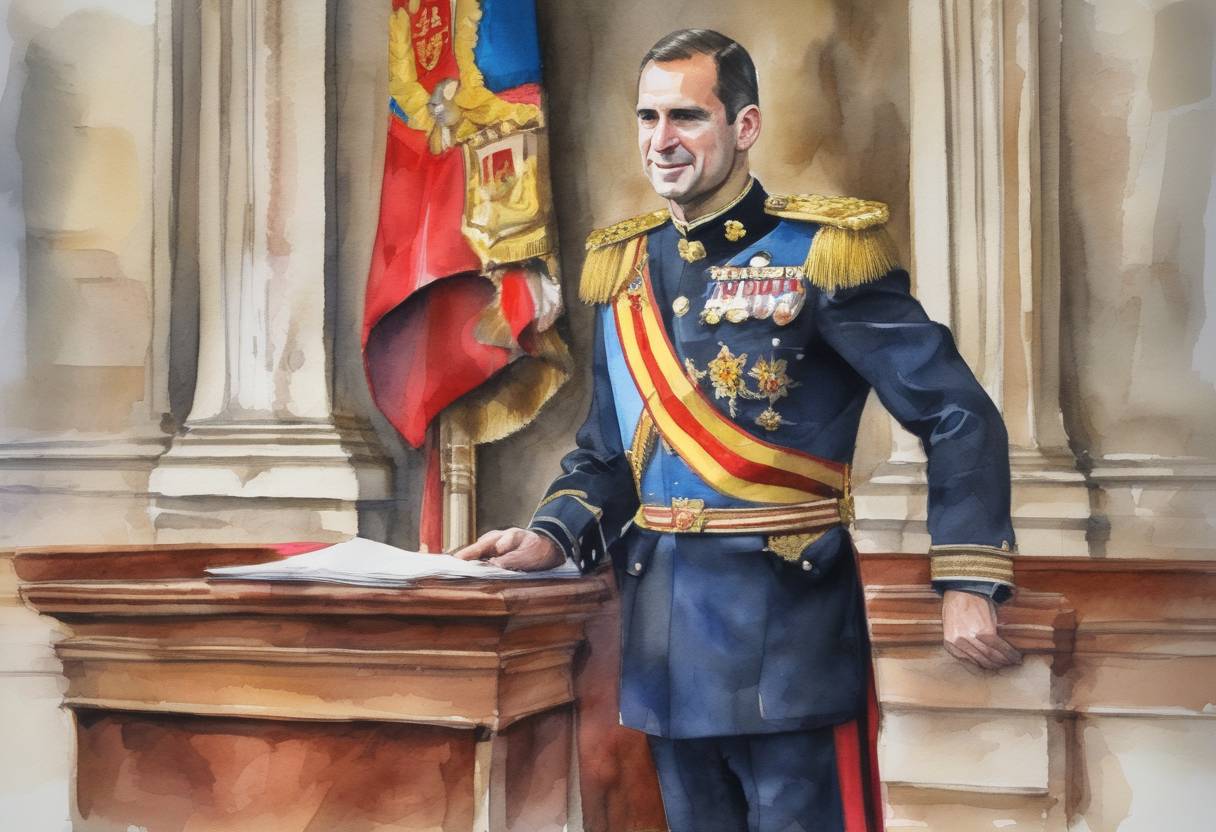
On June 19, 2014, Felipe VI was officially proclaimed King of Spain following the abdication of his father, King Juan Carlos I. This event marked a significant transition in the Spanish monarchy and was a moment of both continuity and change for the nation.
King Juan Carlos I had been a pivotal figure in Spain’s transition from dictatorship to democracy following the death of Francisco Franco in 1975. His reign began in 1975, and he played a crucial role in the establishment of a constitutional monarchy and the stabilization of democratic institutions in Spain. However, in the years leading up to his abdication, Juan Carlos faced declining popularity due to various controversies, including a high-profile corruption scandal involving his daughter and son-in-law, as well as criticism over a lavish elephant hunting trip during Spain’s financial crisis.
On June 2, 2014, King Juan Carlos I announced his decision to abdicate the throne in favor of his son, Crown Prince Felipe. This decision was seen as a move to rejuvenate the monarchy and restore its image amidst the challenges it faced. The abdication was formalized through a law passed by the Spanish Parliament, which was necessary to allow the transition of power, as Spain’s constitution did not initially provide a clear mechanism for abdication.
Felipe VI was proclaimed king in a ceremony held at the Spanish Parliament in Madrid. The event was marked by its simplicity and absence of foreign dignitaries, reflecting a desire for a low-key transition. Felipe VI took an oath to uphold the constitution and pledged to serve all Spaniards, emphasizing unity and the importance of the monarchy in modern Spain.
Felipe VI’s ascension to the throne was seen as an opportunity to modernize the monarchy and address the issues that had affected its reputation. As a well-educated and experienced figure, Felipe was expected to bring a fresh perspective to the role. His reign began with a focus on transparency, integrity, and connecting with the younger generation of Spaniards.
Since becoming king, Felipe VI has worked to maintain the monarchy’s relevance in a rapidly changing society, navigating challenges such as the Catalan independence movement and ongoing economic issues. His leadership style has been characterized by a commitment to constitutional values and a focus on national unity.
Overall, the proclamation of Felipe VI as King of Spain marked a new chapter for the Spanish monarchy, aiming to balance tradition with the demands of contemporary governance.
Source: www.bbc.com