Luna 10: The First Spacecraft to Orbit the Moon
1966 · Baikonur, Kazakhstan
The Soviet Union launched Luna 10, which later became the first spacecraft to orbit the Moon.
June 16, 1963
Valentina Tereshkova became the first woman to fly in space, aboard Vostok 6, marking a significant milestone in space exploration and gender equality.
Baikonur, Kazakhstan | Soviet space program
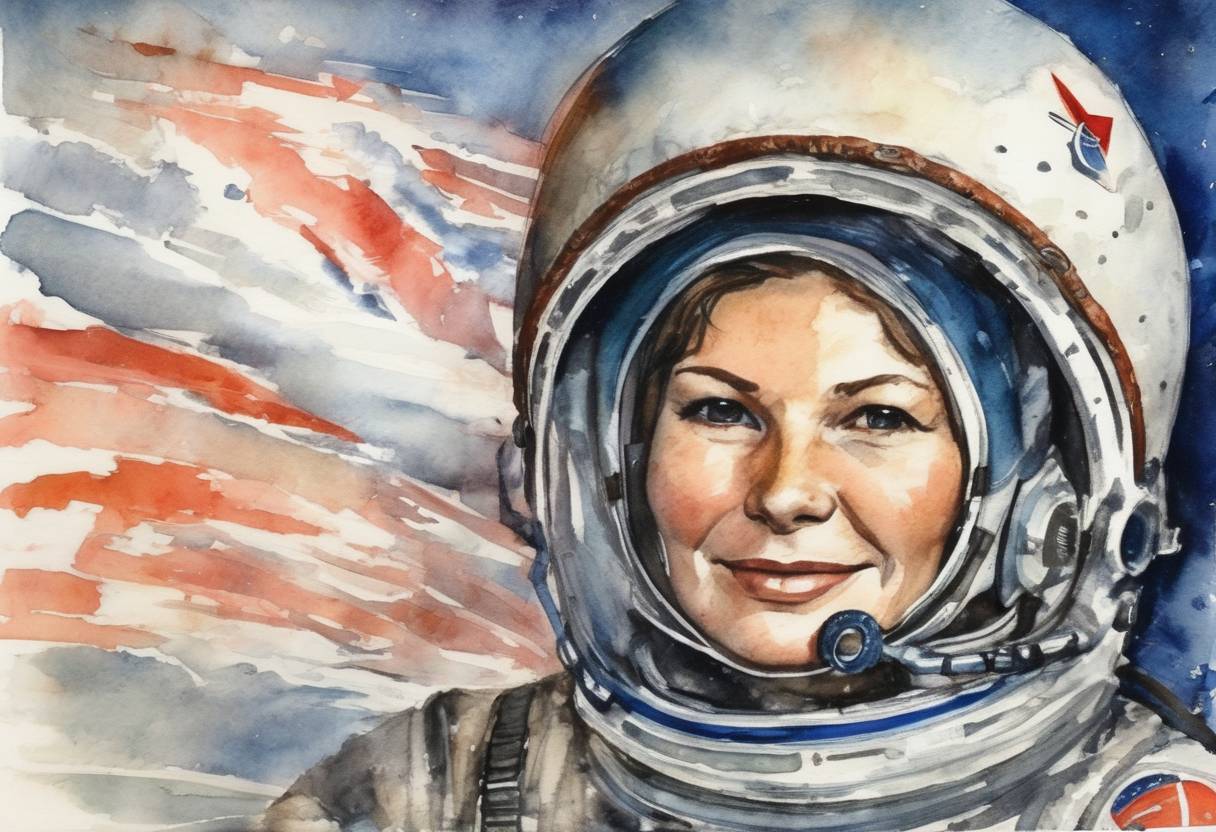
On June 16, 1963, Valentina Tereshkova made history by becoming the first woman to fly in space. She piloted the Vostok 6 spacecraft, marking a significant milestone in both space exploration and the advancement of gender equality.
The early 1960s were a period of intense competition between the United States and the Soviet Union, known as the Space Race. Following Yuri Gagarin’s historic flight as the first human in space in 1961, the Soviet Union sought to maintain its lead by sending the first woman into space. This decision was also influenced by the desire to demonstrate the equality of women in the Soviet Union, aligning with the broader ideological goals of the state.
Valentina Tereshkova was selected from over 400 applicants and five finalists to become the first female cosmonaut. Her background as a textile worker and amateur parachutist made her an ideal candidate. The selection process emphasized not only physical fitness and technical skills but also the ability to endure the psychological stresses of space travel.
Tereshkova underwent rigorous training, which included weightless flights, isolation tests, centrifuge tests, rocket theory, spacecraft engineering, and parachute jumps. Her training was similar to that of her male counterparts, underscoring the Soviet commitment to gender equality in this high-profile mission.
During her mission, Tereshkova conducted various tests to collect data on the female body’s reaction to spaceflight. She communicated with ground control and with Valery Bykovsky, who was simultaneously orbiting Earth in Vostok 5. This dual mission was a demonstration of the Soviet Union’s advanced capabilities in space.
Valentina Tereshkova’s successful mission was a landmark achievement in the history of space exploration. It not only demonstrated the feasibility of human spaceflight for women but also served as a powerful symbol of gender equality. Her flight inspired generations of women to pursue careers in science, technology, engineering, and mathematics (STEM).
In the broader context of the Cold War, Tereshkova’s mission was a propaganda victory for the Soviet Union, showcasing its commitment to gender equality and technological prowess. Her legacy continues to be celebrated, and she remains an influential figure in the history of space exploration.
Following her historic flight, Tereshkova became a prominent public figure and advocate for space exploration and women’s rights. She received numerous awards and honors, including the title of Hero of the Soviet Union. Tereshkova later pursued a career in politics and continued to promote science and technology education.
Valentina Tereshkova’s journey into space remains a testament to human achievement and the breaking of gender barriers, paving the way for future generations of female astronauts.
Source: en.wikipedia.org