Coordinated Airstrikes on Syrian Government Sites - April 14, 2018
2018 · Damascus, Syria
The United States, United Kingdom, and France launch coordinated airstrikes against Syrian government sites in response to a chemical weapons attack in Douma.
April 7, 2017
The United States launched 59 Tomahawk cruise missiles at a Syrian airbase in response to a chemical weapons attack in Khan Shaykhun.
Shayrat, Syria | United States Armed Forces
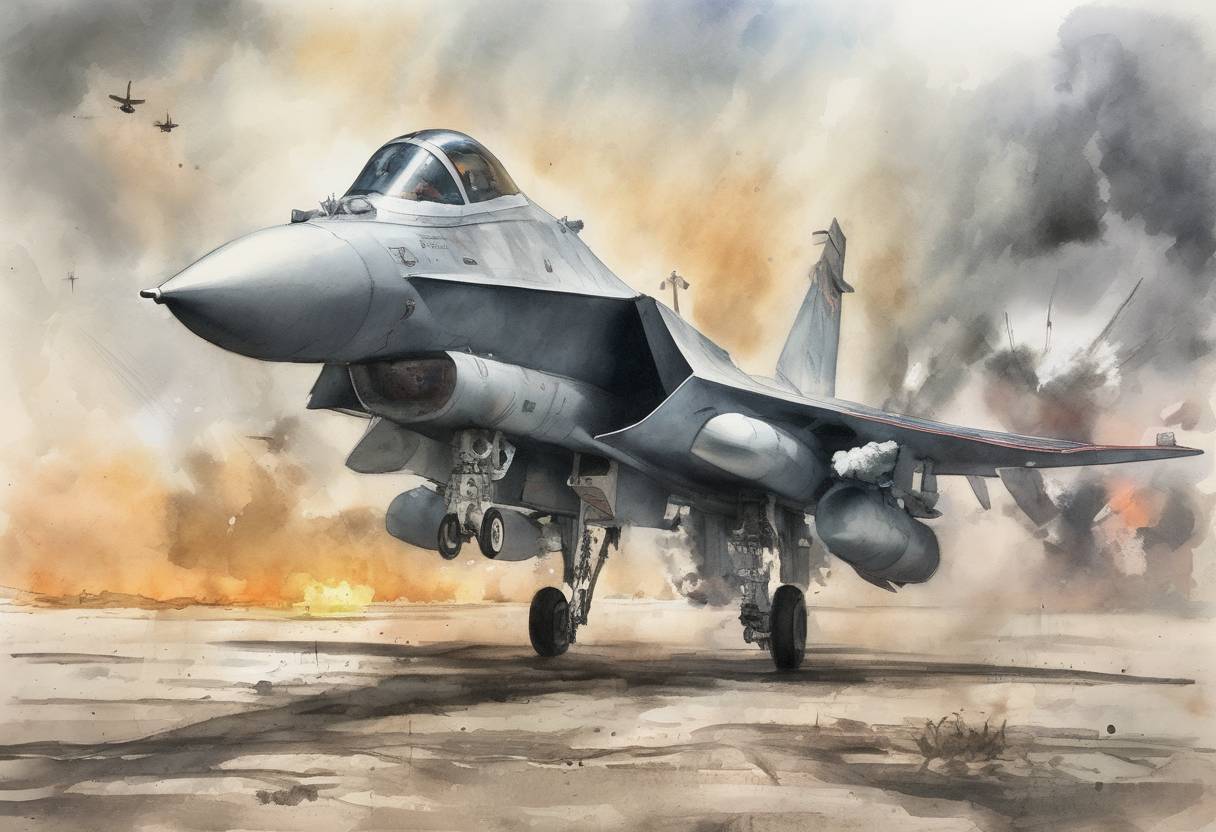
On April 7, 2017, the United States launched 59 Tomahawk cruise missiles at the Shayrat Airbase in Syria. This military action was a direct response to a chemical weapons attack that occurred three days earlier in the town of Khan Shaykhun, located in the Idlib Governorate of Syria.
Chemical Attack on Khan Shaykhun: On April 4, 2017, a chemical attack was carried out in Khan Shaykhun, resulting in the deaths of at least 80 people, including many children. The attack involved the use of sarin gas, a potent nerve agent. The Syrian government, led by President Bashar al-Assad, was widely blamed for the attack, although it denied responsibility.
International Reaction: The attack drew widespread international condemnation. The images and reports from Khan Shaykhun prompted calls for action from various global leaders and organizations. The United Nations Security Council held emergency meetings to discuss the situation, though resolutions condemning the attack faced opposition.
Decision to Strike: The U.S. government, under President Donald Trump, decided to take unilateral military action against the Syrian regime. The decision marked a significant shift in U.S. policy, as it was the first direct American assault on Syrian government forces during the Syrian Civil War.
Target and Execution: The Shayrat Airbase was chosen as the target because it was believed to be the launch site of the chemical attack. The U.S. Navy launched 59 Tomahawk cruise missiles from two destroyers, the USS Ross and USS Porter, positioned in the Mediterranean Sea. The strike targeted aircraft, hardened aircraft shelters, petroleum and logistical storage, ammunition supply bunkers, air defense systems, and radars.
Immediate Impact: The strike reportedly damaged or destroyed several Syrian aircraft and infrastructure at the airbase. However, the runway was left intact, and the base resumed operations shortly after the attack.
International Reactions: The U.S. strike received mixed reactions globally. Allies such as the United Kingdom, France, and Germany expressed support, viewing it as a necessary response to the use of chemical weapons. Conversely, Russia and Iran, key allies of the Assad regime, condemned the strike, with Russia suspending a military communication line with the U.S. designed to prevent mid-air incidents over Syria.
Broader Implications: The strike raised questions about the future of U.S. involvement in Syria and its broader strategy in the Middle East. It also highlighted the complexities of the Syrian conflict, involving multiple state and non-state actors with competing interests.
The April 7, 2017, missile strike marked a pivotal moment in the Syrian Civil War and U.S. foreign policy. It underscored the international community’s challenges in addressing the use of chemical weapons and the ongoing humanitarian crisis in Syria. The event also illustrated the potential for rapid escalation in a region already fraught with tension and conflict.
Source: www.britannica.com