1555 · Augsburg, Holy Roman Empire
The Peace of Augsburg was signed, ending the conflict between Catholic and Lutheran rulers in the Holy Roman Empire.
June 22, 1527
The Schmalkaldic League, a defensive alliance of Lutheran princes within the Holy Roman Empire, was formed to protect their religious and political interests against the Catholic Emperor Charles V.
Schmalkalden, Holy Roman Empire | Schmalkaldic League
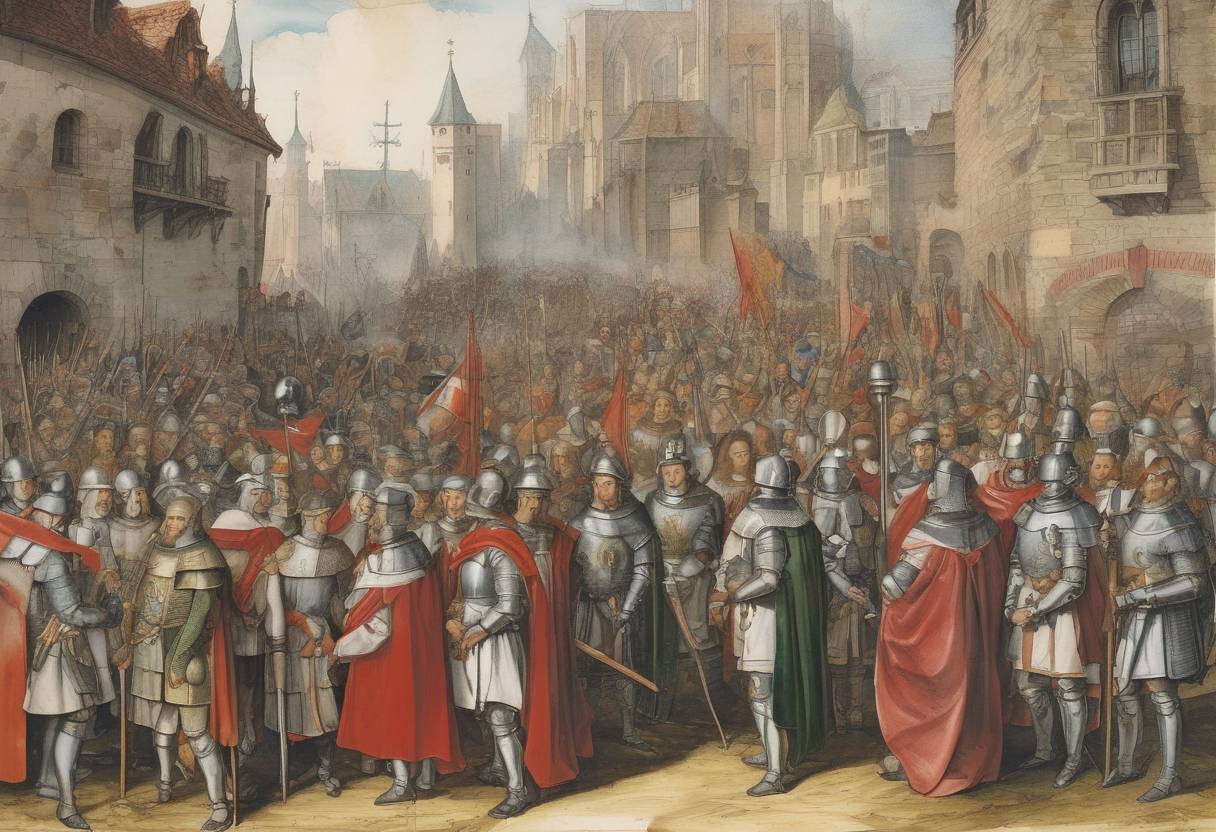
The Schmalkaldic League was a significant defensive alliance formed on June 22, 1527, by Lutheran princes and cities within the Holy Roman Empire. This coalition was established to protect their religious and political interests against the Catholic Emperor Charles V, who was determined to maintain Catholic orthodoxy throughout his realm.
The Protestant Reformation: Initiated by Martin Luther’s 95 Theses in 1517, the Protestant Reformation rapidly spread across Europe, challenging the Catholic Church’s authority and leading to religious fragmentation within the Holy Roman Empire.
Religious Tensions: As Lutheranism gained followers, tensions between Protestant and Catholic states increased. The Catholic Emperor Charles V sought to suppress the Protestant movement and reinforce Catholicism, leading to fears among Protestant rulers of potential military action against them.
Key Figures: The Schmalkaldic League was spearheaded by notable Lutheran leaders such as Philip I of Hesse and John Frederick I of Saxony. These leaders recognized the need for a united front to defend their religious reforms and political autonomy.
Objectives: The primary aim of the League was to provide mutual defense against any imperial attempts to enforce Catholic orthodoxy by military means. It also sought to promote the interests of Protestant states within the Empire.
Conflict with Charles V: The formation of the League set the stage for the Schmalkaldic War (1546–1547), a conflict between the Protestant League and the forces of Charles V. The war ended with the defeat of the Schmalkaldic League at the Battle of Mühlberg in 1547.
Aftermath: Despite their military defeat, the religious and political tensions persisted, eventually leading to the Peace of Augsburg in 1555. This treaty allowed for the legal coexistence of Lutheranism and Catholicism within the Empire, establishing the principle of “cuius regio, eius religio” (whose realm, his religion).
The Schmalkaldic League was pivotal in the history of the Reformation, representing the first major organized resistance against imperial authority in favor of religious reform. It highlighted the growing power of Protestant states and set a precedent for future religious and political alliances in Europe. The League’s formation and subsequent conflict underscored the deep divisions within the Holy Roman Empire, which would continue to shape European politics and religion for decades.
Source: en.wikipedia.org