The Battle of the Solent: July 21, 1545
1545 · Solent, England
The French forces attempted to invade England during the Italian War of 1542–1546, leading to the Battle of the Solent. The English navy successfully repelled the French fleet.
July 19, 1545
The Mary Rose, a warship of the English Tudor navy of King Henry VIII, sank in the Solent during an engagement with the French fleet.
Solent, England | English Tudor Navy
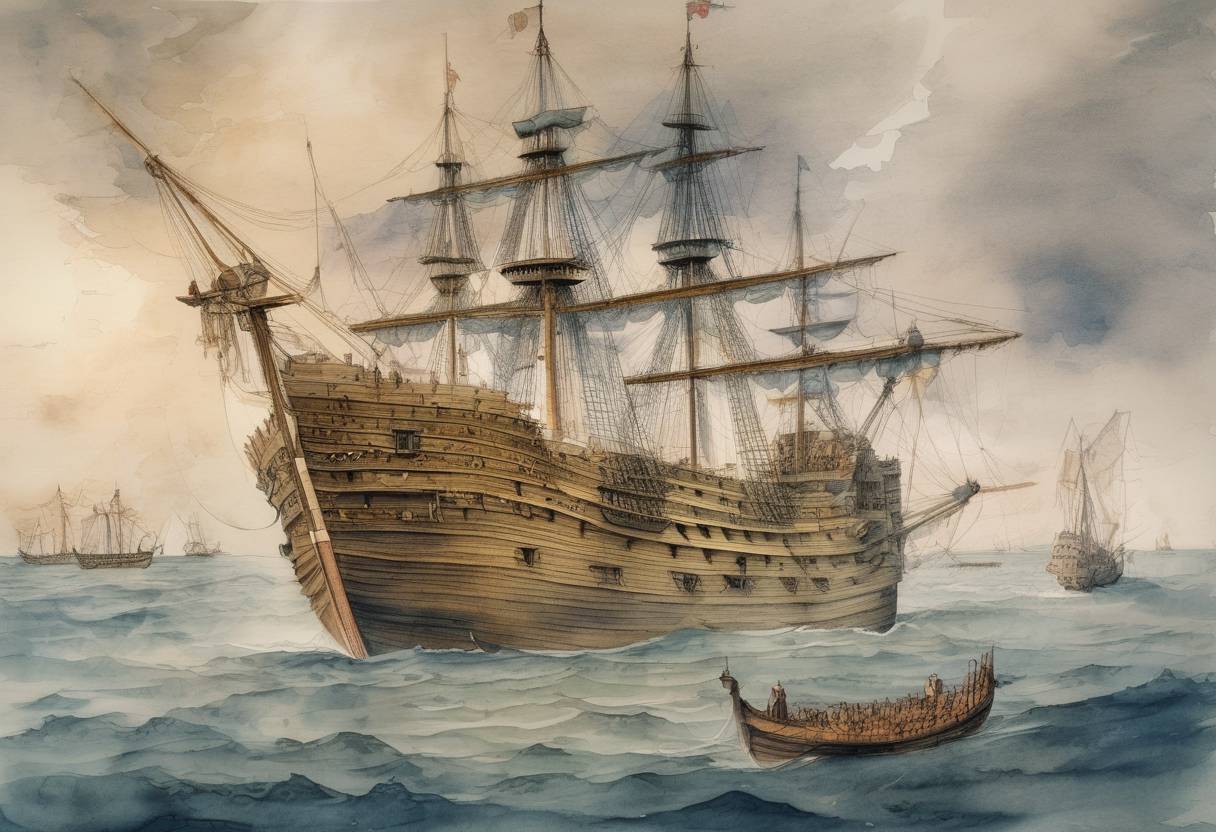
On July 19, 1545, the Mary Rose, a prominent warship of the English Tudor navy under King Henry VIII, met its tragic end in the Solent, a strait separating the Isle of Wight from the mainland of England. This event occurred during a naval engagement with the French fleet, part of the broader conflict known as the Italian War of 1542–1546.
The Mary Rose was constructed between 1509 and 1511 and was one of the first ships capable of firing a broadside, a significant advancement in naval warfare. Named possibly after Henry VIII’s sister Mary and the Tudor emblem of the rose, the ship served as a flagship in the English navy for over three decades. It participated in numerous battles, including engagements against the French and Scottish fleets.
The sinking of the Mary Rose occurred during the Battle of the Solent, a confrontation between the English and French navies. The French, under King Francis I, sought to invade England, capitalizing on the absence of Henry VIII, who was campaigning in France. The English fleet, commanded by Admiral George Carew, was tasked with defending the coast.
On the morning of July 19, 1545, the Mary Rose set sail to engage the French fleet. Accounts of the sinking vary, but several factors likely contributed to the disaster:
As the Mary Rose heeled over, it quickly filled with water and sank, taking with it approximately 500 men, including Admiral Carew.
The loss of the Mary Rose was a significant blow to the English navy, but it did not alter the outcome of the conflict. The French invasion was ultimately unsuccessful, and the war concluded with the Treaty of Ardres in 1546.
The wreck of the Mary Rose lay undiscovered for centuries until it was located in 1971. In 1982, a major archaeological effort successfully raised the ship from the seabed. The Mary Rose now resides in a dedicated museum in Portsmouth, offering invaluable insights into Tudor maritime history and life aboard a 16th-century warship.
The Mary Rose remains a symbol of England’s naval heritage and a poignant reminder of the perils faced by sailors in the age of sail.
Source: en.wikipedia.org