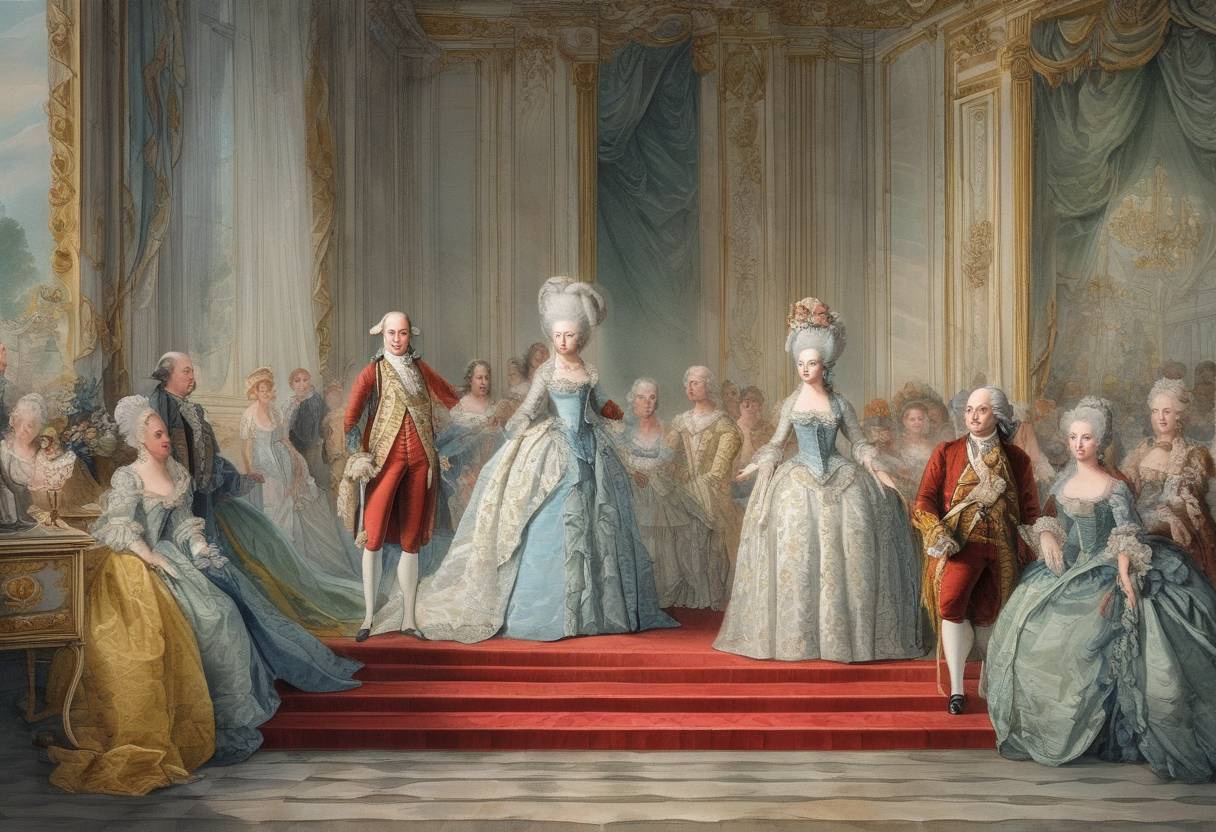
Marie Antoinette Marries Louis-Auguste
On May 16, 1770, a significant royal marriage took place that would have profound implications for the history of France and Europe. Marie Antoinette, the Archduchess of Austria, married Louis-Auguste, the Dauphin of France, who would later ascend to the throne as King Louis XVI.
Context and Background
Political Alliance
- Austro-French Alliance: The marriage was primarily a political alliance orchestrated to strengthen ties between two powerful dynasties: the Habsburgs of Austria and the Bourbons of France. This alliance was part of the Diplomatic Revolution of 1756, which saw traditional enemies, Austria and France, become allies against Prussia and Great Britain.
- Marie Antoinette: Born on November 2, 1755, in Vienna, she was the fifteenth child of Empress Maria Theresa and Emperor Francis I. Known for her beauty and charm, she was groomed from a young age for her role in this political marriage.
- Louis-Auguste: Born on August 23, 1754, he was the grandson of King Louis XV. Shy and reserved, he was not initially seen as a strong leader, a perception that would follow him into his reign.
The Wedding
Ceremony
- Location: The wedding took place at the Palace of Versailles, a symbol of French royal opulence and power.
- Celebrations: The event was marked by lavish celebrations, including a grand banquet and fireworks, reflecting the importance of the union.
Public Reception
- The marriage was met with mixed feelings among the French populace. While it was celebrated as a diplomatic success, there was also skepticism and concern over the influence of Austria on French affairs.
Aftermath and Historical Significance
Reign as King and Queen
- Louis XVI: Ascended to the throne in 1774, four years after their marriage. His reign was marked by financial turmoil and increasing unrest, leading to the French Revolution.
- Marie Antoinette: Became a controversial figure, often criticized for her extravagant lifestyle and perceived indifference to the plight of the French people. Her infamous (though likely apocryphal) quote, “Let them eat cake,” epitomized this perception.
The French Revolution
- The marriage, initially a symbol of political unity, became a focal point of revolutionary anger. Both Louis XVI and Marie Antoinette were executed during the Revolution, in 1793, marking the end of the French monarchy.
Legacy
- The marriage of Marie Antoinette and Louis-Auguste is remembered as a pivotal moment in European history. It highlights the complexities of dynastic politics and the eventual downfall of the French monarchy, setting the stage for modern democratic movements.
In summary, the marriage of Marie Antoinette and Louis-Auguste was not just a personal union but a significant political event with lasting historical consequences.