Operation Essential Harvest Authorized
2001 · Brussels, Belgium
Operation Essential Harvest is authorized by NATO, with the aim of disarming ethnic Albanian insurgents in Macedonia and reducing their arms supply.
June 9, 1999
NATO suspends its air strikes after Slobodan Milošević agrees to withdraw Yugoslav forces from Kosovo.
Brussels, Belgium | NATO
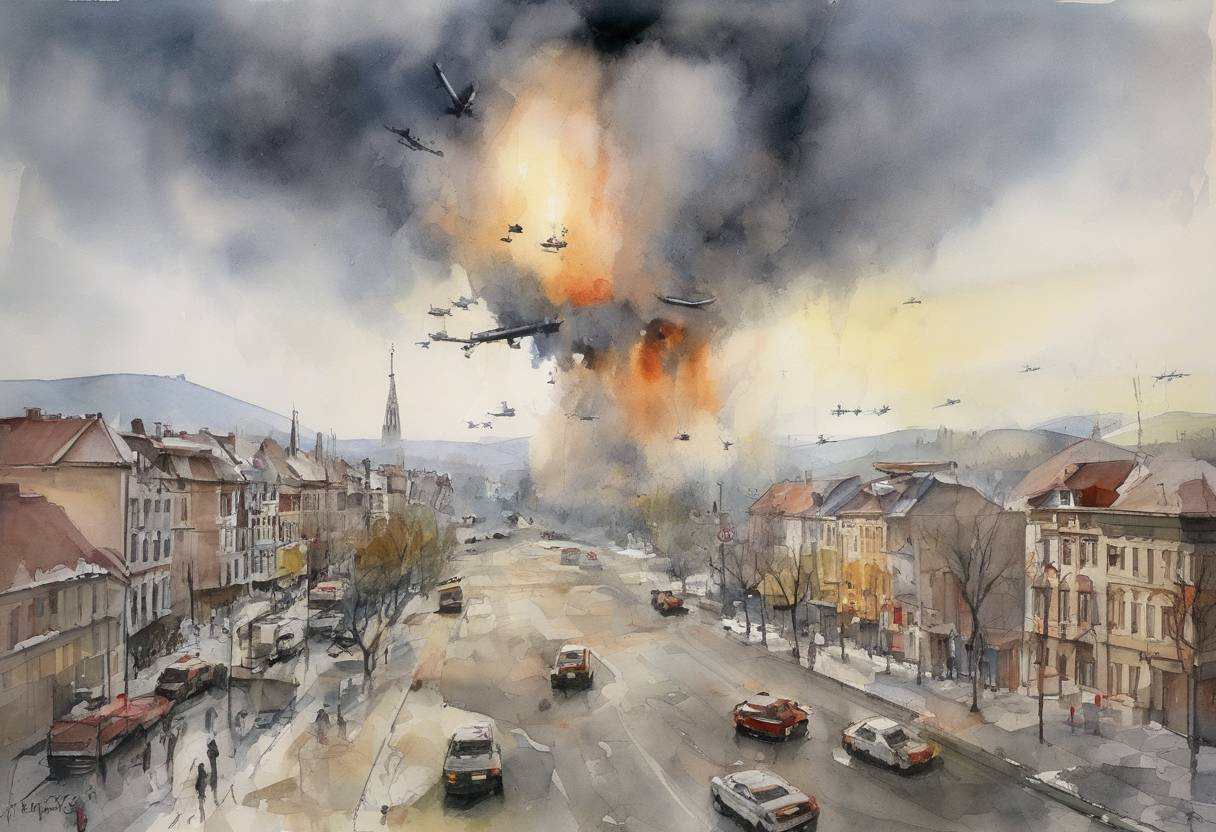
On June 9, 1999, a significant turning point occurred in the Kosovo conflict when NATO suspended its air strikes following the agreement by Yugoslav President Slobodan Milošević to withdraw Yugoslav forces from Kosovo. This decision marked the beginning of the end of a brutal conflict that had significant humanitarian and geopolitical implications.
The Kosovo conflict was rooted in the long-standing ethnic tensions between the Albanian majority and the Serbian minority in the region. Kosovo, an autonomous province within Serbia, had been a flashpoint for ethnic strife, particularly after the revocation of its autonomy by Milošević in 1989. The situation escalated in the late 1990s as the Kosovo Liberation Army (KLA) began an armed insurgency against Serbian forces, seeking independence for Kosovo.
In response to the escalating violence and reports of ethnic cleansing against Kosovar Albanians, NATO launched an aerial bombing campaign against Yugoslavia on March 24, 1999. The campaign aimed to halt the humanitarian crisis and force Milošević to comply with international demands for a ceasefire and withdrawal of his forces.
Intensified NATO Bombing: Over 78 days, NATO conducted a sustained bombing campaign targeting Yugoslav military infrastructure, which significantly weakened Milošević’s military capabilities and increased international pressure on his regime.
Diplomatic Efforts: Intense diplomatic negotiations were conducted by international actors, including the United Nations and the European Union, to find a peaceful resolution to the conflict. The involvement of Russia, a traditional ally of Serbia, was crucial in mediating the peace talks.
Humanitarian Crisis: The conflict resulted in a massive humanitarian crisis, with hundreds of thousands of Kosovar Albanians displaced from their homes. The international community was increasingly concerned about the reports of atrocities and ethnic cleansing.
On June 9, 1999, after weeks of negotiations, an agreement was reached in Kumanovo, Macedonia. The terms included:
The resolution of the Kosovo conflict was a pivotal moment in the Balkans, highlighting the role of international intervention in regional conflicts. It underscored the complexities of ethnic conflicts and the challenges of post-conflict reconstruction and reconciliation. The events in Kosovo also had lasting implications for NATO’s role in international peacekeeping and humanitarian interventions.
The suspension of air strikes on June 9, 1999, thus marked a crucial step towards peace and stability in the Balkans, although the path to lasting peace and reconciliation in the region remained fraught with challenges.
Source: en.wikipedia.org