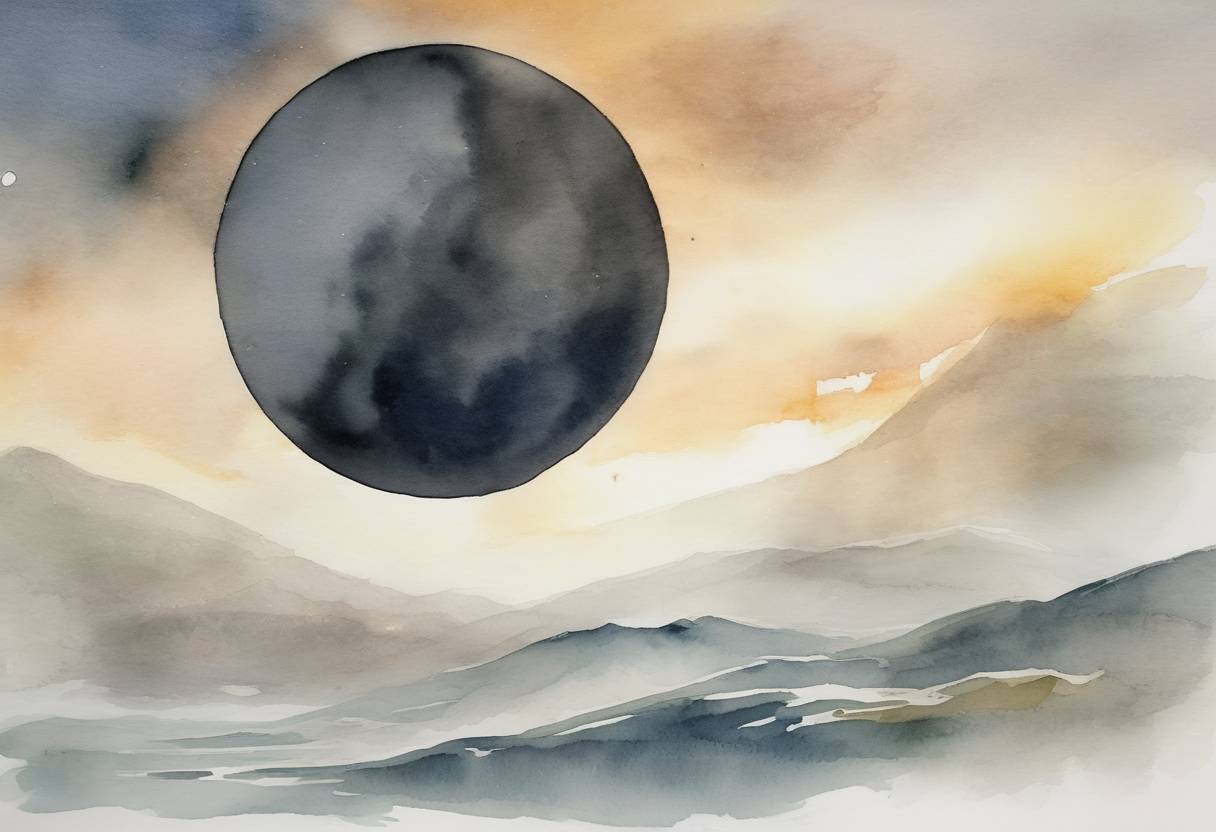
Total Solar Eclipse of March 20, 2015
On March 20, 2015, a total solar eclipse occurred, captivating observers across parts of Europe, North Africa, and Asia. This astronomical event was particularly notable for its visibility in the Faroe Islands and Svalbard, where the Moon completely covered the Sun, creating a total eclipse.
Key Details
- Date: March 20, 2015
- Type of Eclipse: Total Solar Eclipse
- Path of Totality: The path of totality, where the total eclipse was visible, passed over the North Atlantic Ocean, including the Faroe Islands and Svalbard.
- Partial Eclipse Visibility: The eclipse was visible as a partial eclipse across a wide area, including parts of Europe, North Africa, and Asia.
Context and Significance
- Astronomical Context: A solar eclipse occurs when the Moon passes between the Earth and the Sun, blocking the Sun’s light either partially or completely. A total solar eclipse is a rare event where the Moon’s apparent diameter is larger than the Sun’s, blocking all direct sunlight and turning day into night for a brief period.
- Geographical Impact: The Faroe Islands and Svalbard were among the few land areas where the total eclipse could be observed. These locations experienced a dramatic drop in temperature and a brief period of darkness during the day.
- Cultural and Scientific Interest: Solar eclipses have historically been significant for both cultural and scientific reasons. They provide opportunities for scientific study, particularly in understanding the Sun’s corona, and have been the subject of myths and legends in various cultures.
Observations and Aftermath
- Public Interest: The eclipse attracted significant attention from both amateur and professional astronomers, as well as tourists who traveled to the path of totality to witness the event.
- Scientific Observations: Scientists used the opportunity to study the solar corona and other phenomena associated with eclipses. The event contributed to ongoing research in solar physics.
- Cultural Events: Various cultural and educational events were organized around the eclipse, promoting public interest in astronomy and science.
The total solar eclipse of March 20, 2015, was a remarkable event that highlighted the beauty and complexity of celestial mechanics, offering a unique experience for those fortunate enough to witness it in its totality.