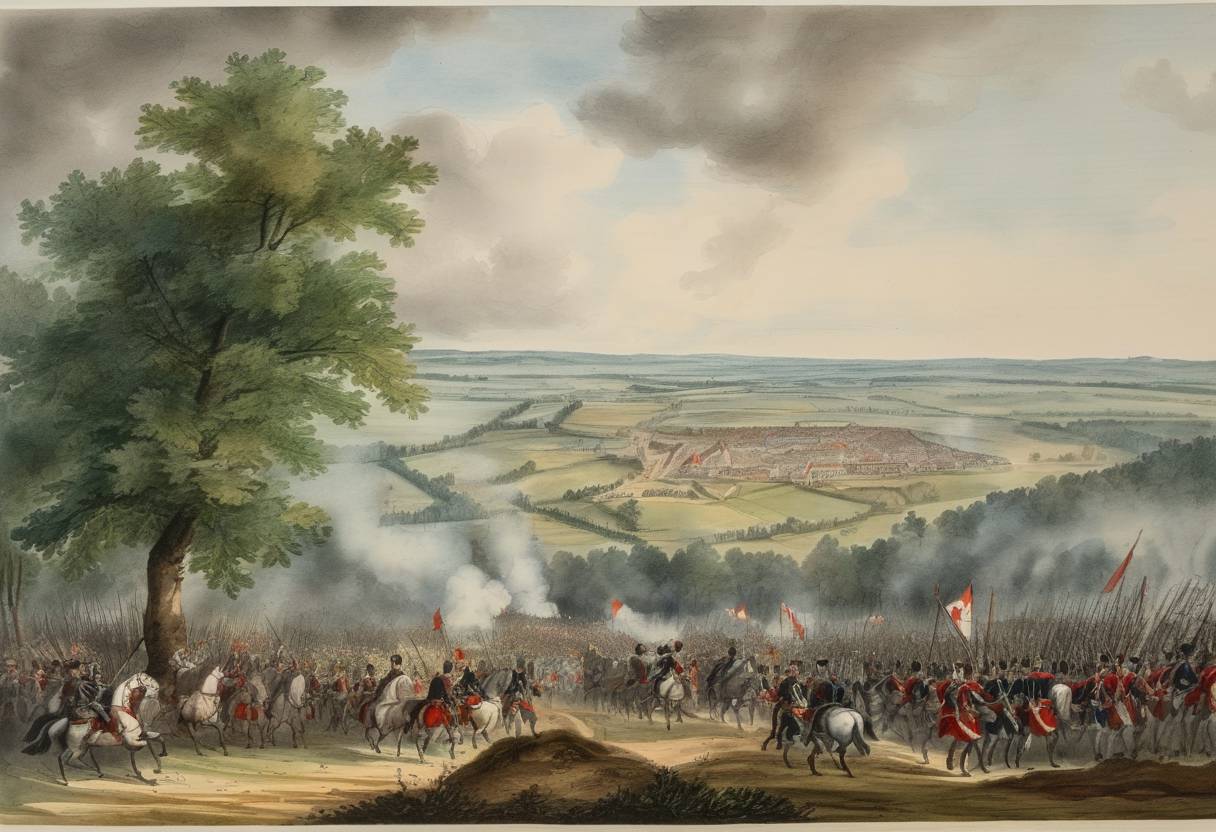
The Battle of Hochkirch (October 14, 1758)
The Battle of Hochkirch was a significant conflict during the Seven Years’ War, fought on October 14, 1758. This pivotal battle witnessed the Austrian army under the command of Field Marshal Leopold Josef Graf von Daun securing a decisive victory against the Prussian forces led by Frederick the Great. The battle took place near the village of Hochkirch, in Saxony, which was part of Prussia at the time.
Context and Prelude to the Battle
- The Seven Years’ War (1756-1763): A global conflict marked by battles on several continents, primarily involving major European powers. The war’s complex alliances saw Prussia and Great Britain opposed by a coalition including Austria, France, and Russia, among others.
- Prelude: By 1758, Frederick the Great of Prussia had gained a reputation for tactical brilliance. He sought to weaken Austria and consolidate his dominance over Saxony. Meanwhile, Austrian Marshal von Daun aimed to halt Frederick’s advances and reclaim lost territories.
Course of the Battle
- Austrian Strategy: Marshal von Daun meticulously planned a surprise attack on the Prussian forces encamped at Hochkirch. His strategy involved utilizing the element of surprise and leveraging superior numbers.
- Surprise Attack: In the early hours of October 14, von Daun executed his plan by launching a stealthy dawn assault. The Austrians managed to exploit the dense fog, which concealed their movements, catching the Prussian troops off guard.
- Prussian Response: Despite the unexpected assault, Frederick the Great quickly attempted to organize a defense. However, the surprise and disarray severely compromised Prussian efforts to effectively counter the Austrian offensive.
Outcome and Aftermath
- Austrian Victory: The Austrians inflicted a decisive defeat on Frederick’s army, capturing significant military assets including artillery. The Prussians suffered substantial casualties, including several high-ranking officers.
- Strategic Consequences: Despite the tactical loss, Frederick’s forces managed to retreat in an organized manner, demonstrating his resilient leadership. The victory bolstered Austrian morale and temporarily shifted the momentum of the war against Prussia.
- Long-term Impact: The battle highlighted the vulnerability of Frederick’s forces to well-coordinated surprise attacks and influenced subsequent military tactics on both sides. Although the Austrians seized the immediate initiative, the war continued for several more years with fluctuating fortunes for all parties involved.
The Battle of Hochkirch remains a critical study in military strategy and tactics, showcasing the importance of intelligence, surprise, and terrain in determining the outcome of battles during the Seven Years’ War.