The First Sino-Japanese War Begins on July 25, 1894
1894 · Seoul, Korea
The First Sino-Japanese War began, marking the start of a military conflict between the Qing Dynasty of China and the Empire of Japan over influence in Korea.
October 8, 1895
Korean Empress Myeongseong, also known as Queen Min, was assassinated at Okhoru Pavilion inside Gyeongbok Palace by Japanese agents, an event that sparked outrage and significantly influenced Korean-Japanese relations.
Seoul, Korea | Japanese Government
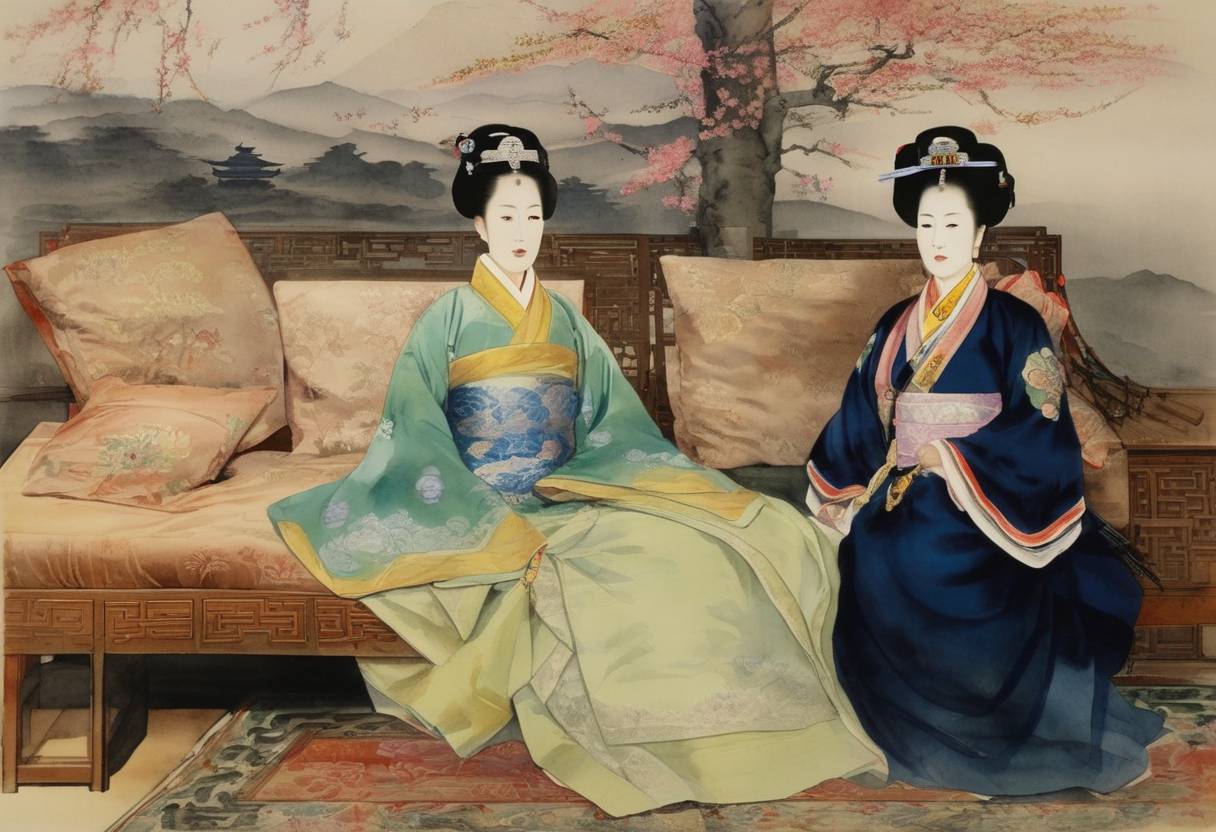
On October 8, 1895, Empress Myeongseong of Korea, also known as Queen Min, was brutally assassinated by Japanese agents at the Okhoru Pavilion inside Gyeongbok Palace in Seoul. This event marked a significant turning point in Korean history and had profound implications for Korean-Japanese relations.
Empress Myeongseong, wife of King Gojong, was a politically astute and influential figure in late 19th-century Korea. During a time when Korea faced increasing pressures from foreign powers, particularly Japan, she was known for her opposition to Japanese influence and her efforts to seek diplomatic ties with Russia and China to balance the foreign presence in Korea.
In the years leading up to her assassination, Korea was a battleground for regional dominance as Japan sought to expand its influence over the Korean Peninsula. The first Sino-Japanese War (1894-1895) resulted in a Japanese victory, further increasing Japanese political influence in Korea. Empress Myeongseong’s efforts to engage with Russia and other powers were perceived as direct threats to Japanese interests.
The assassination plot was orchestrated by Japanese minister to Korea, Miura Gorō, who viewed Empress Myeongseong as an obstacle to Japan’s control over Korea. Early in the morning of October 8, a group of mixed Japanese nationals and Korean collaborators forcefully entered Gyeongbok Palace. They attacked and killed several palace guards before locating Empress Myeongseong, who was murdered shortly after being found.
The assassination was part of an effort to eliminate Korean elements hostile to Japan and consolidate pro-Japanese power within the Korean court. The brutality of the act, combined with its execution within the royal palace itself, shocked many and underscored the deepening crisis in Korean-Japanese relations.
Following the assassination, King Gojong and the Korean royal family were placed under intense pressure from Japan. The public outrage in Korea was monumental, leading to further instability and resistance against Japanese influence.
Internationally, the assassination drew widespread condemnation and sympathy for Korea. Russia, in particular, saw an opportunity to counter Japan’s influence, leading to increased tensions that would later contribute to the Russo-Japanese War of 1904-1905.
The death of Empress Myeongseong galvanized Korean nationalistic movements and laid the groundwork for future resistance against Japanese imperialism. Her assassination has remained a potent symbol of Korean sovereignty and the struggle against external domination.
In summary, the murder of Empress Myeongseong on October 8, 1895, was a pivotal moment in East Asian history. It not only altered the course of Korean history but also had lasting ramifications for regional politics in East Asia.
Source: en.wikipedia.org