Execution of John Brown: December 2, 1859
1859 · Charles Town, United States
Militant abolitionist John Brown was executed for his role in the raid on Harpers Ferry.
October 15, 1859
A Harper's Weekly editor was attacked during the Baltimore slave riot, sparking tensions between pro-slavery and abolitionist groups.
Baltimore, United States | Harper's Weekly
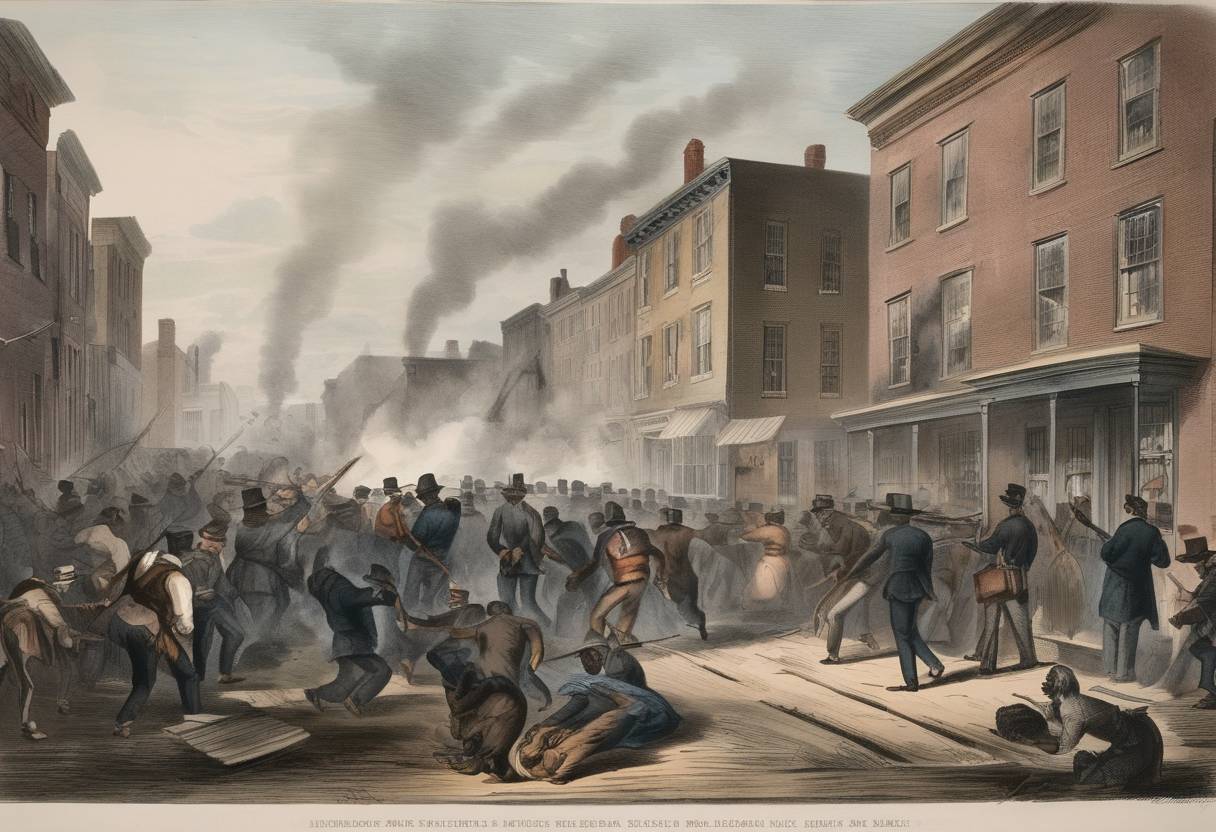
On October 15, 1859, in Baltimore, Maryland, a Harper’s Weekly editor was attacked amidst rising tensions between pro-slavery and abolitionist groups. This incident occurred during an era of significant unrest and division within the United States, as debates over slavery intensified.
During this period, Harper’s Weekly was an influential publication known for its wide circulation and its role in shaping public opinion on contemporary issues, including slavery. The United States was teetering on the brink of Civil War, with sharp divisions between Northern abolitionists who were campaigning against the institution of slavery and Southern pro-slavery advocates who sought its continuation and expansion.
In the broader context, 1859 was marked by growing hostility and a series of violent events that reflected the national tension over slavery. Just days after the attack on the editor, on October 16, abolitionist John Brown would lead his infamous raid on the federal armory at Harpers Ferry, aiming to incite a slave rebellion.
The attack on the Harper’s Weekly editor in Baltimore was a manifestation of the mounting local tensions. Baltimore, a border city with divided loyalties, was a hotbed of conflict between different political and social factions. The precise details of the assault involve the editor being targeted due to perceived abolitionist leanings or sympathies expressed in the publication.
This act of violence was not just an isolated event but rather part of a broader pattern of aggression expressed towards individuals and entities perceived as threats by pro-slavery interests. The incident further heightened the already strained atmosphere in Maryland and across states where slavery was a contentious issue.
The attack on the editor added to the perception of insecurity and fear among both abolitionist advocates and those who opposed them. It underscored the dangers faced by journalists and others who dared to express opinions contradicting the majority sentiment in slave-holding areas.
This incident, though overshadowed by the larger event of John Brown’s raid soon after, contributed to the growing narrative of a nation increasingly divided. It was indicative of how volatile the political and social climate had become, setting the stage for the impending Civil War.
Ultimately, such acts of violence against individuals associated with abolitionist sentiments illustrated the explosive nature of the national discourse surrounding slavery as the 1850s came to a close.
Source: en.wikipedia.org