Siege of Mafeking: April 9, 1900
1900 · Mafeking (now Mafikeng), South Africa
British forces under Major-General Robert Baden-Powell successfully relieve the Siege of Mafeking during the Second Boer War.
December 23, 1899
The Battle of Magersfontein concluded during the Second Boer War, marking a significant victory for the Boer forces over the British Army.
Magersfontein, South Africa | Second Boer War British and Boer forces
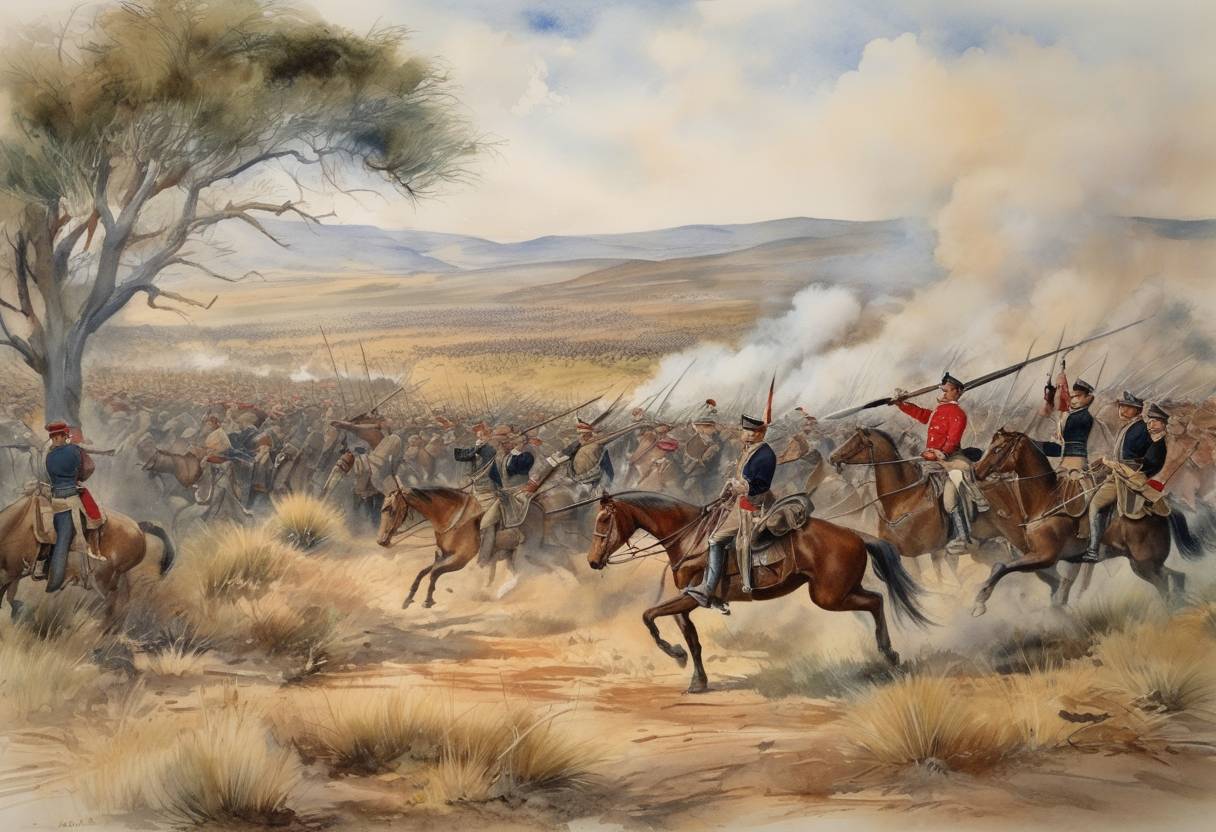
The Battle of Magersfontein, part of the Second Boer War, concluded on December 11, 1899. It was a pivotal engagement between the British forces, commanded by Lieutenant General Lord Methuen, and the Boer forces, led by General Piet Cronjé, reinforced by Commandant Koos de la Rey. This battle is notable for its tactical implications and significant Boer victory over the British Army.
The Second Boer War (1899–1902) was fought between the British Empire and two Boer states: the South African Republic (Transvaal) and the Orange Free State. The war was prompted by the British desire to consolidate its control over South Africa, which the independent Boer republics resisted vehemently. By late 1899, Lord Methuen was advancing his forces towards Kimberley, a strategically important town under siege by the Boers.
Methuen’s previous engagements included victories at Belmont and Graspan, but the Boers’ defensive strategies slowed his progress. The Boer forces, anticipating British movements, fortified themselves in a series of trenches and prepared well-camouflaged defenses at Magersfontein, near the Kimberley railway line.
Initial Movements: On the night of December 10, 1899, Methuen attempted a night march with his troops, intending to launch a surprise dawn attack against Boer positions.
Challenges: The approach was hampered by a lack of coordination and poor visibility, disorienting the British infantry. The Black Watch, the leading British regiment, accidentally stumbled into well-prepared Boer trenches.
Boer Defense: The Boer forces employed tactics that capitalized on the terrain and their knowledge of the landscape. They utilized well-placed and masked trenches, allowing them to resist and repel the British advance effectively.
Outcome: The British forces faced intense gunfire upon their approach, which resulted in severe disarray and heavy casualties. In the face of such unexpected resistance, coupled with heat and exhaustion, British troops could not maintain their offensive and retreated in disarray.
British Casualties: The British suffered significant losses, with around 22 officers and 188 men killed, and over 600 wounded.
Impact: The outcome at Magersfontein severely impacted British morale and highlighted the effectiveness of Boer guerrilla tactics. This battle, along with others like it during Black Week (a series of British losses), led to widespread public criticism of British military leadership and tactics in South Africa.
Long-term Consequences: The battle underscored the need for significant strategic and logistical adjustments by the British, ultimately contributing to changes in leadership and tactics during the war.
The Battle of Magersfontein remains a critical example of how terrain, preparation, and tactical innovation can decisively influence battle outcomes. It is remembered as part of Black Week, marking a series of British setbacks early in the Second Boer War, and underscored the complexities of colonial wars, where traditional military strategies were challenged by flexible and adaptive defensive tactics.
Source: www.britannica.com