Germany Invades Poland: The Beginning of World War II
1939 · Warsaw, Poland
Germany invades Poland, marking the beginning of World War II as Britain and France prepare to declare war on Germany.
September 26, 1939
Warsaw's surrender in World War II is demanded by Germany, but the city refuses to surrender.
Warsaw, Poland | Nazi Germany
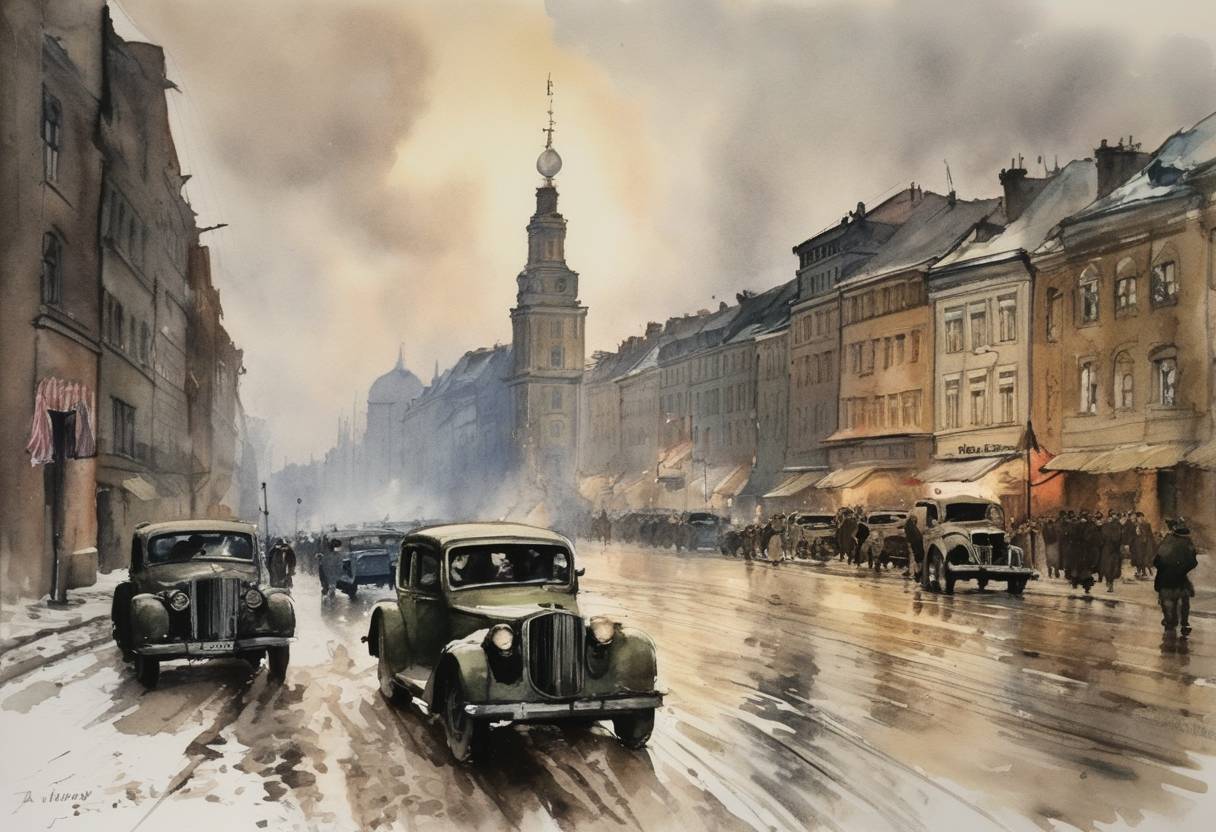
On September 26, 1939, during the early stages of World War II, the siege of Warsaw by German forces reached a critical juncture. The German military, having encircled and heavily bombarded the Polish capital since September 8, demanded the unconditional surrender of the city. Despite the intense pressure and constant bombardment, the Polish defense, led by Mayor Stefan Starzyński and military commander General Walerian Czuma, rejected the German ultimatum to surrender.
The invasion of Poland by Germany began on September 1, 1939, marking the start of World War II. The German strategy, known as Blitzkrieg or “lightning war,” aimed for a rapid victory through fast-moving and overwhelmingly powerful armed forces. Warsaw, as the capital of Poland, became a symbolic and strategic target for the German offensive.
The city was bombarded relentlessly by the Luftwaffe and ground artillery, leading to significant civilian casualties and destruction of infrastructure. However, the Polish military and civilian population remained resolute under dire circumstances, organizing a determined but ultimately hopeless defense.
By late September, the situation in Warsaw was becoming increasingly desperate. Supplies were running low, and many parts of the city lay in ruins due to constant shelling and air raids. Despite facing insurmountable odds, the Polish defenders exhibited remarkable tenacity. The refusal to surrender reflected not just a military decision but also a national resolve to maintain sovereignty and resist occupation.
Despite Warsaw’s refusal to surrender on September 26, 1939, the city’s defenders could not hold out indefinitely against the superior German forces. Finally, on September 28, an agreement was reached for the city’s capitulation. The official surrender took place on September 28, marking the end of resistance in the capital and subsequently concluding the Invasion of Poland by early October.
The fall of Warsaw and Poland had severe consequences. It resulted in the division and occupation of Polish territory by Germany and the Soviet Union per the Molotov-Ribbentrop Pact. The refusal to surrender, however, became an enduring symbol of Polish resistance and nationalism, influencing Poland’s subsequent resistance efforts throughout the war.
The events surrounding Warsaw’s refusal to surrender highlighted the brutality and devastation of the early stages of World War II. This refusal and the ensuing fall of Warsaw marked a poignant episode of heroic defense amidst overwhelming adversity. It demonstrated the resilience and determination of the Polish people, setting the stage for Poland’s ongoing struggle under occupation and its significant contributions to the Allied efforts during the remainder of the war.
Source: www.britannica.com