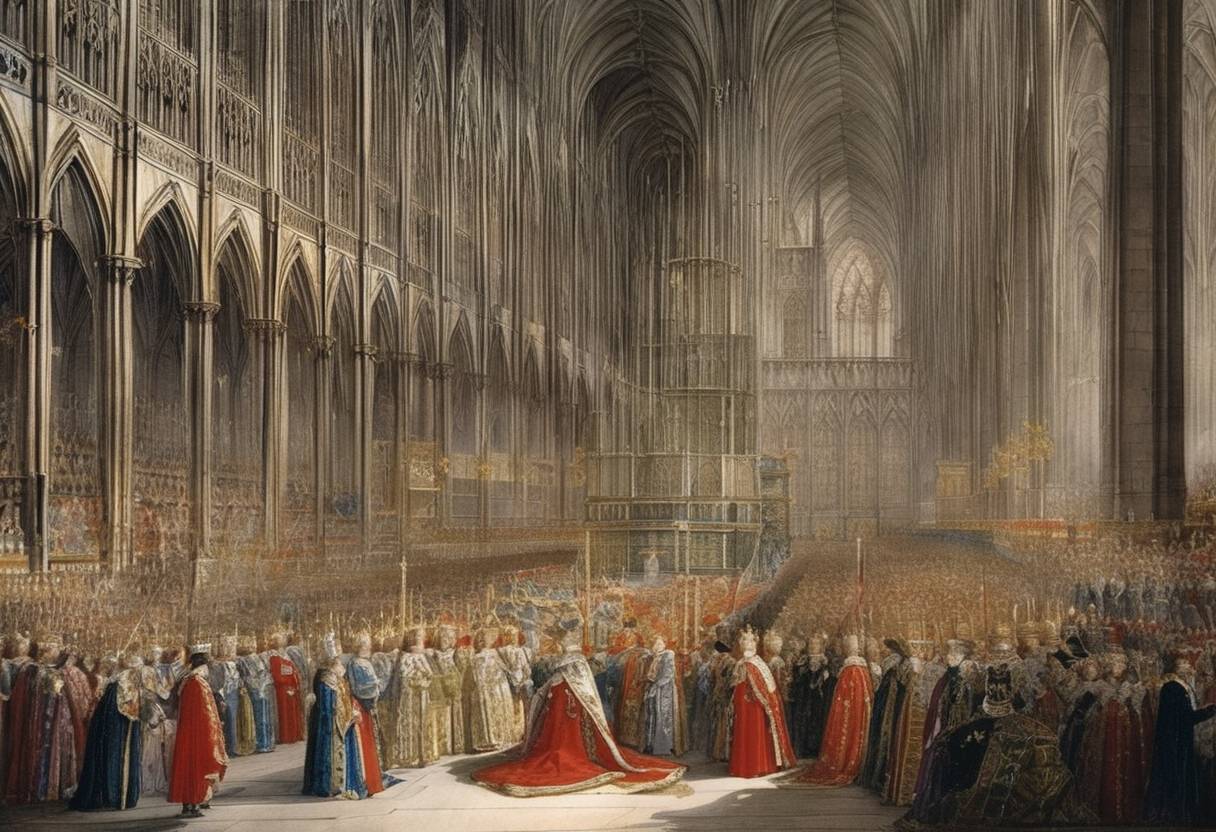
Coronation of George I of Great Britain
The coronation of King George I took place on October 20, 1714, at Westminster Abbey in London. This event marked the beginning of a new era as it inaugurated the rule of the House of Hanover over Great Britain.
Background
George I ascended the throne following the death of Queen Anne on August 1, 1714. His accession was the result of the Act of Settlement 1701, which aimed to secure Protestant succession and bypassed several Catholic relatives in favor of the Elector of Hanover. Despite being 52nd in line in terms of proximity of blood, he was the closest Protestant heir.
Coronation Ceremony
The coronation ceremony at Westminster Abbey was a traditional affair, rich in symbolism and pageantry. The Archbishop of Canterbury, Thomas Tenison, officiated the ceremony, which involved several rituals including the anointing, crowning, and homage. The event was attended by a plethora of British nobility and dignitaries, reflecting George’s new status as king.
Significance
The coronation of George I was a pivotal moment that underscored the peaceful transition of power under the constitutional and religious stipulations of the time. It marked the beginning of the Hanoverian Dynasty, which would reign until 1837, and it reinforced the Protestant succession established by the Act of Settlement.
Aftermath
Initially, George I’s reign was characterized by political instability, given his foreign origins and limited English. However, it eventually led to strengthened parliamentary power and set the stage for the modern constitutional monarchy. This era saw the gradual establishment of a more stable political system, contributing significantly to shaping modern Britain.