The Knesset Affirms Jerusalem as the Capital of Israel - January 23, 1950
1950 · Jerusalem, Israel
The Knesset passes a resolution affirming Jerusalem as the capital of Israel.
November 30, 1947
The 1947–48 Civil War in Mandatory Palestine erupted following the United Nations General Assembly's approval of the United Nations Partition Plan for Palestine, which aimed to create separate Jewish and Arab states. The first violence broke out, marking the beginning of a conflict that would eventually lead to the first Arab-Israeli war.
Jerusalem, Mandatory Palestine | United Nations
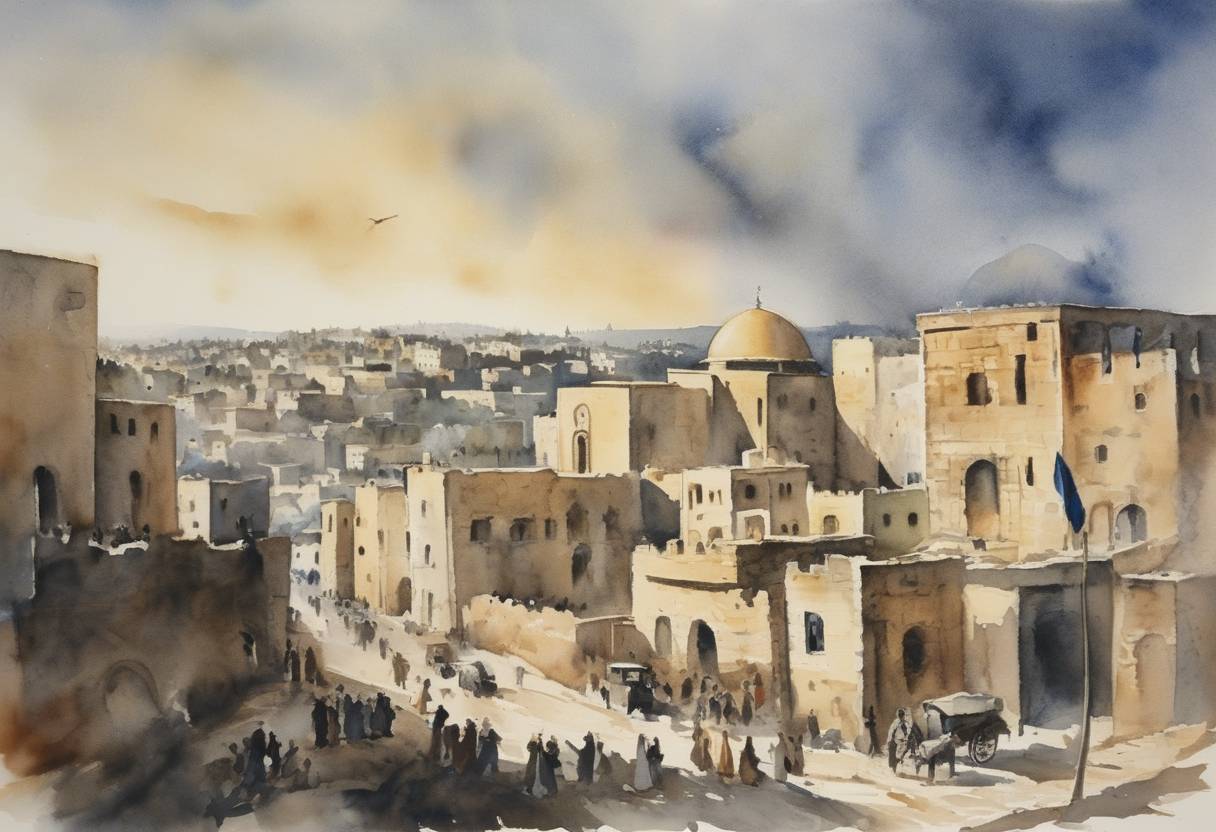
On November 29, 1947, the United Nations General Assembly adopted Resolution 181, commonly known as the United Nations Partition Plan for Palestine. This plan proposed the termination of the British Mandate for Palestine and the partitioning of the territory into independent Arab and Jewish states, with an international regime for Jerusalem. The Jewish Agency for Palestine accepted the plan, whereas the Arab leadership and neighboring Arab states rejected it, opposing any form of partition.
The approval of the UN Partition Plan on November 29 immediately heightened tensions in Mandatory Palestine. On November 30, 1947, violence erupted as news of the resolution spread throughout the region. This marked the beginning of the civil war phase of the 1947–48 conflict, which ultimately transitioned into the broader Arab-Israeli War following the end of the British Mandate and the declaration of the State of Israel on May 14, 1948.
Road Ambushes: The first acts of violence occurred with Arab armed groups attacking Jewish transportation. This included ambushes on convoys and vehicles, resulting in deaths and injuries. The roads between key Jewish settlements and areas such as Tel Aviv and Jerusalem became focal points for these early hostilities.
Communal Clashes: In mixed towns and cities throughout Palestine, communal violence broke out between Jewish and Arab populations. The cities of Jerusalem, Haifa, and Jaffa witnessed significant skirmishes as both communities mobilized in response to the partition plan.
The violence that began on November 30, 1947, set the stage for a sustained civil war in Palestine. It catalyzed a series of retaliatory attacks and counterattacks, escalating the conflict between Jewish and Arab communities. This period saw the mobilization of various paramilitary groups, including the Jewish Haganah and the Arab Liberation Army, each seeking to secure strategic areas and defend their respective populations.
Demographic Impact: The civil war led to significant demographic shifts within Palestine, as communities sought safety by relocating to areas controlled by their respective ethnic groups.
Foundation for the Arab-Israeli War: The initial civil conflict transitioned into a full-scale war between the newly declared State of Israel and neighboring Arab states in May 1948, following the British withdrawal and the declaration of Israeli independence.
Ongoing Conflict: The hostilities of 1947–48 laid the groundwork for the enduring Arab-Israeli conflict, influencing regional dynamics and geopolitics for decades to come.
This outbreak of violence underscored the deep-seated tensions and unresolved issues surrounding national identity, territorial claims, and self-determination that continued to shape the Middle East conflict landscape.
Source: www.britannica.com