Publication of J.R.R. Tolkien's "The Hobbit"
1937 · London, United Kingdom
J.R.R. Tolkien's 'The Hobbit' was published, introducing readers to Middle-earth.
September 23, 1939
Signalman Harry Colebourn donates a bear named Winnipeg, or 'Winnie,' to the London Zoo. This bear would later inspire the character of Winnie the Pooh.
London, United Kingdom | London Zoo
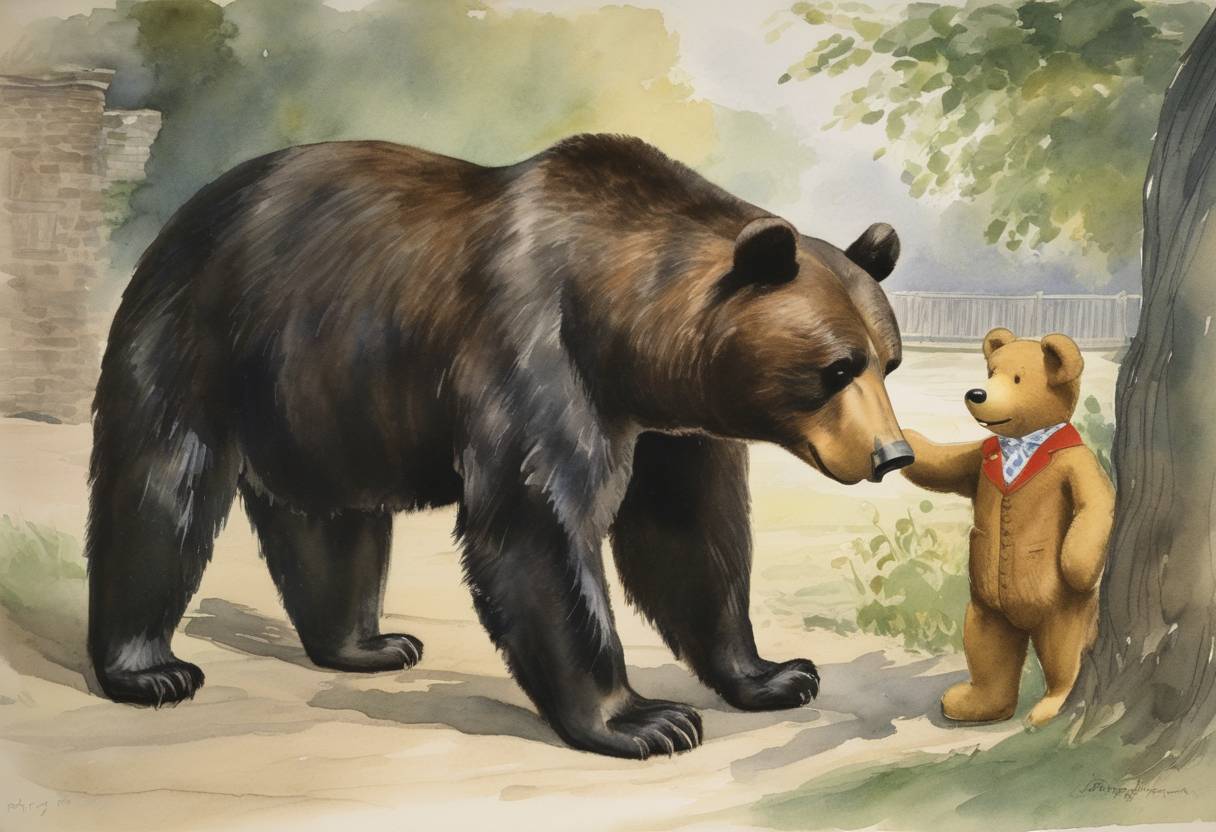
On September 23, 1939, marked the donation of a bear named Winnipeg, affectionately known as ‘Winnie,’ to the London Zoo by Canadian veterinarian and military officer Lieutenant Harry Colebourn. This donation occurred amidst the backdrop of World War II, bringing a sense of continuity to a beloved story bridging decades and continents.
Harry Colebourn purchased the black bear cub for $20 in 1914 from a hunter in White River, Ontario, as he was on his way to Europe to serve in World War I. Naming her Winnipeg, after his hometown in Canada, the bear soon became the unofficial mascot of Colebourn’s regiment, The Fort Garry Horse. ‘Winnie’ traveled with Colebourn to England, where she was beloved by the soldiers.
When Colebourn was deployed to France, he made the difficult decision to temporarily house Winnie at the London Zoo, intending to reclaim her after the war. However, understanding the zoo’s superior facilities and recognizing the joy she brought to countless visitors, Colebourn ultimately decided to leave Winnie in the zoo’s care permanently.
Winnie quickly became a favorite at the London Zoo, adored for her gentle nature, which allowed children to directly interact with her—an unusual trait for a bear. Among her young admirers was Christopher Robin Milne, whose visits inspired his father, author A.A. Milne, to create the classic children’s stories featuring Winnie-the-Pooh.
Winnie’s contribution to popular culture endures through these tales, transforming a chance purchase by a Canadian soldier into an enduring symbol of childhood imagination and adventure. The London Zoo provided a sanctuary where Winnie lived until her death in 1934, a testament to the enduring legacy of one bear’s remarkable journey from Canada to the hearts of millions worldwide.
Source: en.wikipedia.org