Emperor Akihito's Abdication: April 30, 2019
2019 · Tokyo, Japan
Emperor Akihito of Japan formally abdicated the Chrysanthemum Throne, the first Japanese monarch to do so in over two centuries. His son, Naruhito, succeeded him as emperor.
December 17, 1586
Go-Yōzei became the Emperor of Japan.
Kyoto, Japan | Imperial House of Japan
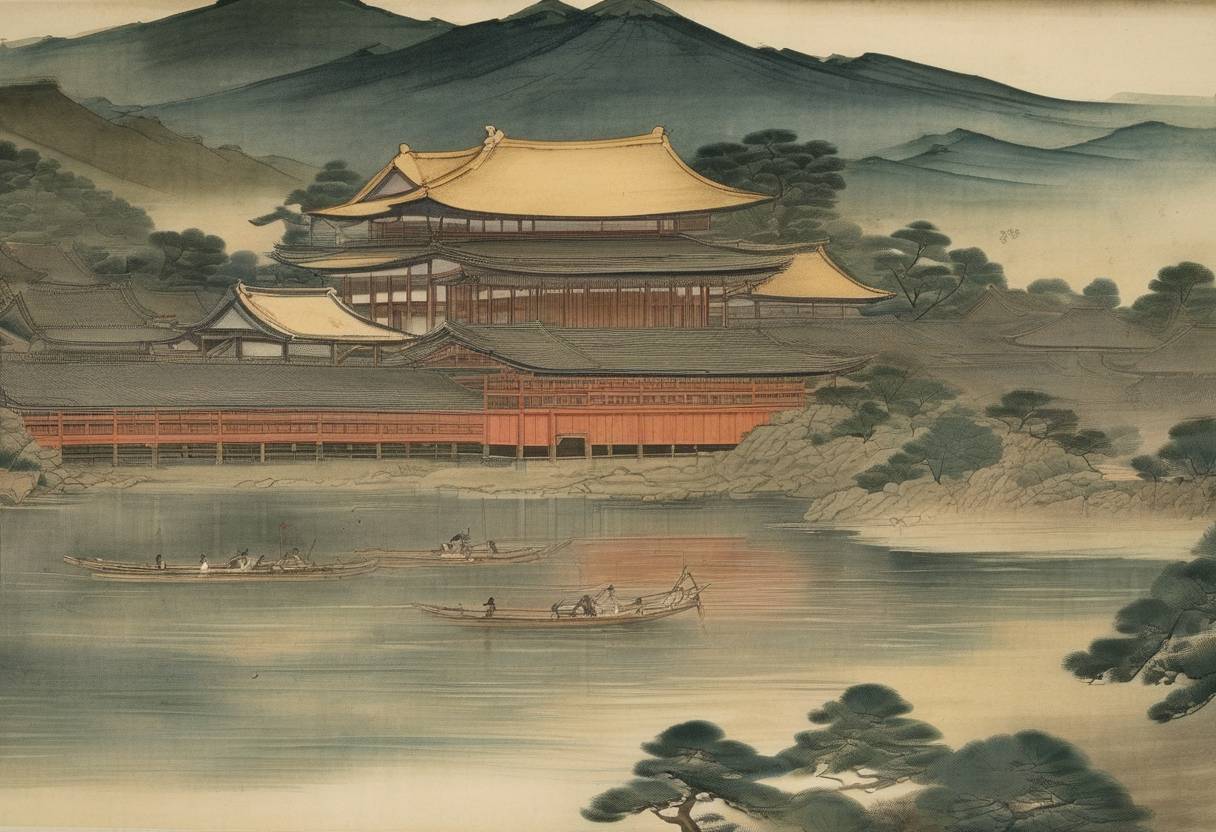
On December 17, 1586, Go-Yōzei ascended to the Chrysanthemum Throne, becoming the 107th Emperor of Japan. His rise to power marked a pivotal moment in Japanese history during the tumultuous Sengoku period—a time characterized by social upheaval, political intrigue, and near-constant military conflict among rival daimyo (feudal lords).
Born as Prince Katahito on December 31, 1571, to Emperor Ōgimachi and Fujiwara no Haruko, his early life was deeply influenced by the political climate of late 16th century Japan. The Sengoku period was drawing to a close thanks to the efforts of key figures such as Oda Nobunaga and Toyotomi Hideyoshi, who worked toward unifying the fractious nation.
Go-Yōzei’s succession followed the abdication of his grandfather, Emperor Ōgimachi, who had reigned during a time of significant power struggles between the imperial court and the military shogunate. Emperor Ōgimachi’s resignation was partly facilitated by Toyotomi Hideyoshi, who sought to solidify his own power by stabilizing the imperial line. This support from Hideyoshi allowed for a relatively smooth transition and reaffirmed the symbolic importance of the imperial institution, even as real power lay with the shogunate.
During Go-Yōzei’s nearly 36-year reign, the Emperor had limited political power due to the ongoing influence of military leaders. Nevertheless, his tenure saw the continuation of Japan’s consolidation under Toyotomi Hideyoshi and later Tokugawa Ieyasu, whose efforts culminated in the peaceful Edo period after Go-Yōzei’s reign.
Despite the limited political authority, Go-Yōzei focused on revitalizing the cultural and religious aspects of the imperial court. He was a patron of the arts and religious projects, contributing to the aesthetics of the era.
Go-Yōzei’s reign overlapped with the crucial transitional phase of Japan from a fractured medieval society to the centralized governance of the Edo period. His symbolic role as Emperor helped maintain continuity and legitimacy during a time of significant transformation in Japanese society.
Go-Yōzei’s leadership ultimately exemplified the enduring nature of the Japanese imperial institution, which provided a semblance of unity and continuity across a period marked by rapid and often violent change.
Source: en.wikipedia.org