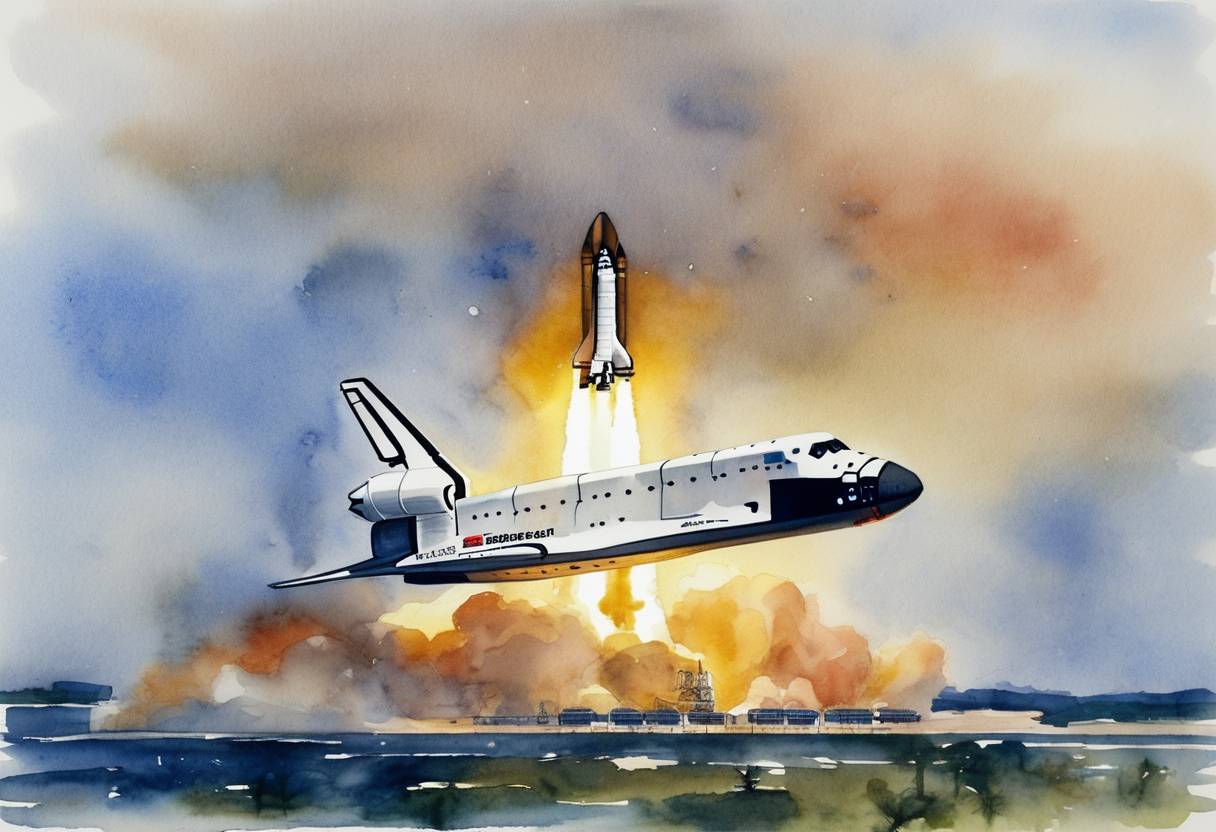
Launch of the Unity Module
On December 4, 1998, the Space Shuttle Endeavour launched from Kennedy Space Center, Florida, carrying the Unity Module, also known as Node 1, marking the first American component of the International Space Station (ISS). The mission, designated STS-88, was a pivotal moment in the development of the ISS and exemplified international cooperation in space exploration.
Context and Background
The Unity Module was a critical piece in the construction of the ISS, serving as a connecting point that would eventually be linked to other modules launched subsequently. The name “Unity” was symbolically chosen to represent the partnership between the various nations involved in the ISS project, including the United States, Russia, Canada, European countries, and Japan.
Launch and Installation
Endeavour, on its 13th flight, carried a crew of six astronauts. The mission was commanded by Robert D. Cabana and included pilot Frederick W. “Rick” Sturckow and mission specialists Nancy J. Currie, Jerry L. Ross, James H. Newman, and Russian cosmonaut Sergei K. Krikalev. After the successful launch, Endeavour entered orbit and prepared for docking with the already orbiting Russian module, Zarya, which had been launched two weeks earlier.
On December 6, the Unity Module was successfully connected to the Zarya module, effectively symbolizing the first two components of the ISS coming together in space. This operation required precise coordination and multiple spacewalks conducted by the crew members, specifically by Ross and Newman, to complete the connections and attachment work.
Aftermath and Significance
The mission concluded with Endeavour’s return to Earth on December 15, 1998. The successful docking and installation of the Unity Module expanded the ISS and set the stage for future additions and the eventual accommodation for a permanent human presence aboard the station.
The installation of Unity not only demonstrated the technical capabilities and collaboration between countries but also represented a commitment to peaceful scientific endeavors in space. The continued construction and expansion of the ISS have facilitated numerous scientific experiments and technological advancements and have served as a model for future collaborative space ventures.
Conclusion
The launch and integration of the Unity Module on December 4, 1998, was a landmark achievement in aerospace history. It underscored a new era of cooperative international space exploration, contributing to the creation of a facility that has brought together nations in the pursuit of knowledge and discovery beyond Earth.