Treaty of Brétigny: April 14, 1360
1360 · Brétigny, France
The Treaty of Brétigny was ratified between England and France, marking the end of the first phase of the Hundred Years' War.
December 5, 1360
The Treaty of Brétigny, which concluded the first phase of the Hundred Years' War, was formally ratified and went into effect. This treaty was signed between King Edward III of England and King John II of France. As part of the treaty, England was granted extensive lands in France, greatly expanding its territories.
Brétigny, France | Monarchies of England and France
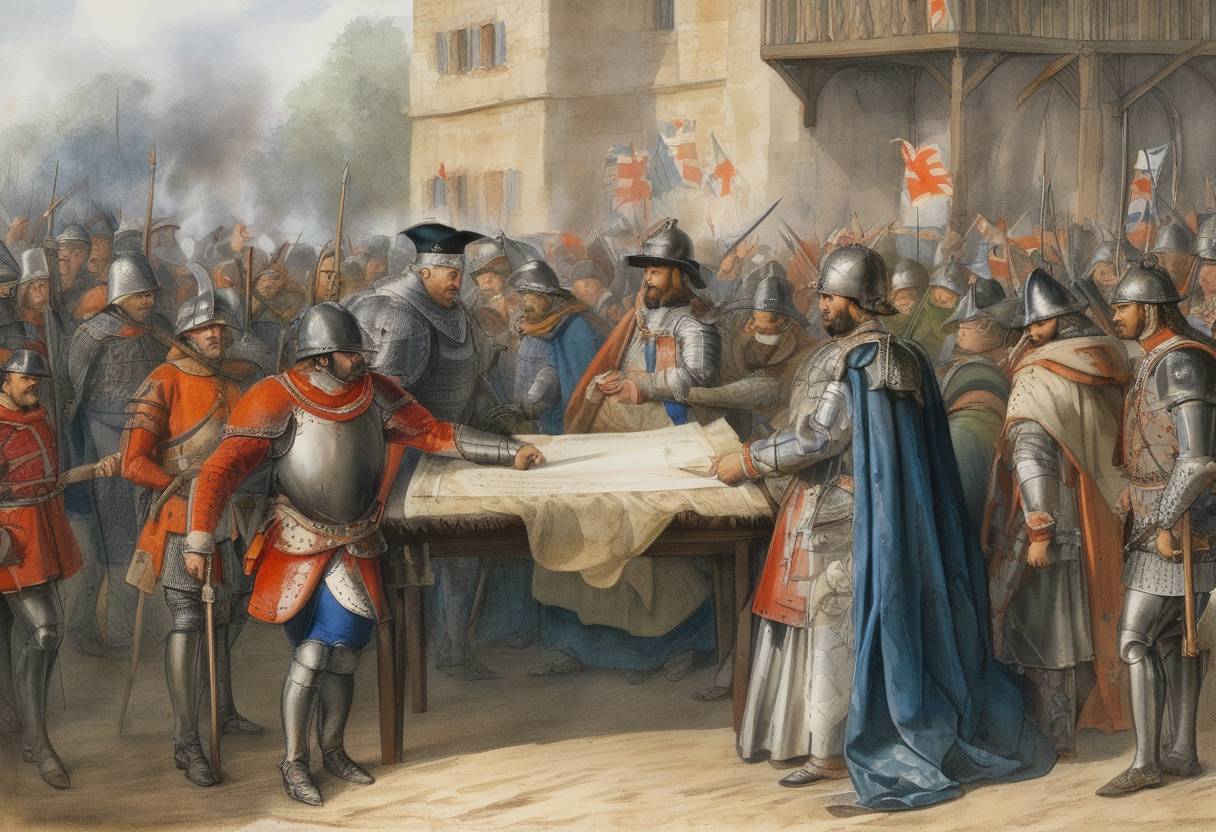
On May 12, 1360, the Treaty of Brétigny was formally ratified, marking a pivotal moment in the Hundred Years’ War between England and France. This treaty concluded the first phase of the long and complex conflict between the two kingdoms, significantly redrawing the political landscape of medieval Europe.
The Hundred Years’ War began in 1337, primarily from disputes over territorial claims and succession rights in France. By the late 1350s, both England and France were exhausted from prolonged combat. King Edward III of England had orchestrated a series of successful campaigns, including the famous victory at the Battle of Poitiers in 1356, where King John II of France was captured. The French sought to negotiate a peace settlement to secure the release of their king.
The Treaty of Brétigny was negotiated and agreed upon in Brétigny, near Chartres, on May 8, 1360, but it was officially ratified on May 12, 1360. The key terms included:
Territorial Concessions: France ceded significant territories to England. Notably, these included the counties of Poitou, Périgord, and Anjou, among others, significantly expanding English lands in southwestern France.
Ransom for King John II: In exchange for his release, King John II’s ransom was set at three million gold écus, an immense sum at the time, emphasizing the strain on French resources.
Sovereignty Changes: The treaty granted Edward III full sovereignty over his new French territories, eliminating any feudal homage to the French crown, thus marking significant autonomy and enhancement of English prestige in their expanded territories.
The Treaty of Brétigny brought a temporary pause to hostilities, inaugurating a nine-year truce. However, the terms planted seeds for renewed conflict; the territorial allocations were contentious and difficult to enforce, sowing discord among the French nobility. The treaty failed to offer a permanent solution to the deeper issues of national identity and sovereignty, which continued to fuel the protracted struggle.
While the treaty’s peace offered fleeting relief from warfare, it was ultimately only a lull. By 1369, tensions reignited, and the war resumed as the Second Phase of the Hundred Years’ War, driven by the impracticality of the territorial arrangements and the unfulfilled ambitions of the involved parties. The Treaty of Brétigny remains a significant example of medieval diplomacy that temporarily reshaped European geopolitics but hardly quelled the century-long conflict between England and France.
Source: en.wikipedia.org