Joseph Stalin Becomes Premier of the Soviet Union - May 6, 1941
1941 · Moscow, Soviet Union
Joseph Stalin became the Premier of the Soviet Union, consolidating his power and marking a significant moment in Soviet history.
June 1, 1929
The 1st Conference of the World Communist Parties was held in Moscow, aiming to discuss strategies among communist parties globally and solidify the Communist International's role.
Moscow, Soviet Union | Communist International
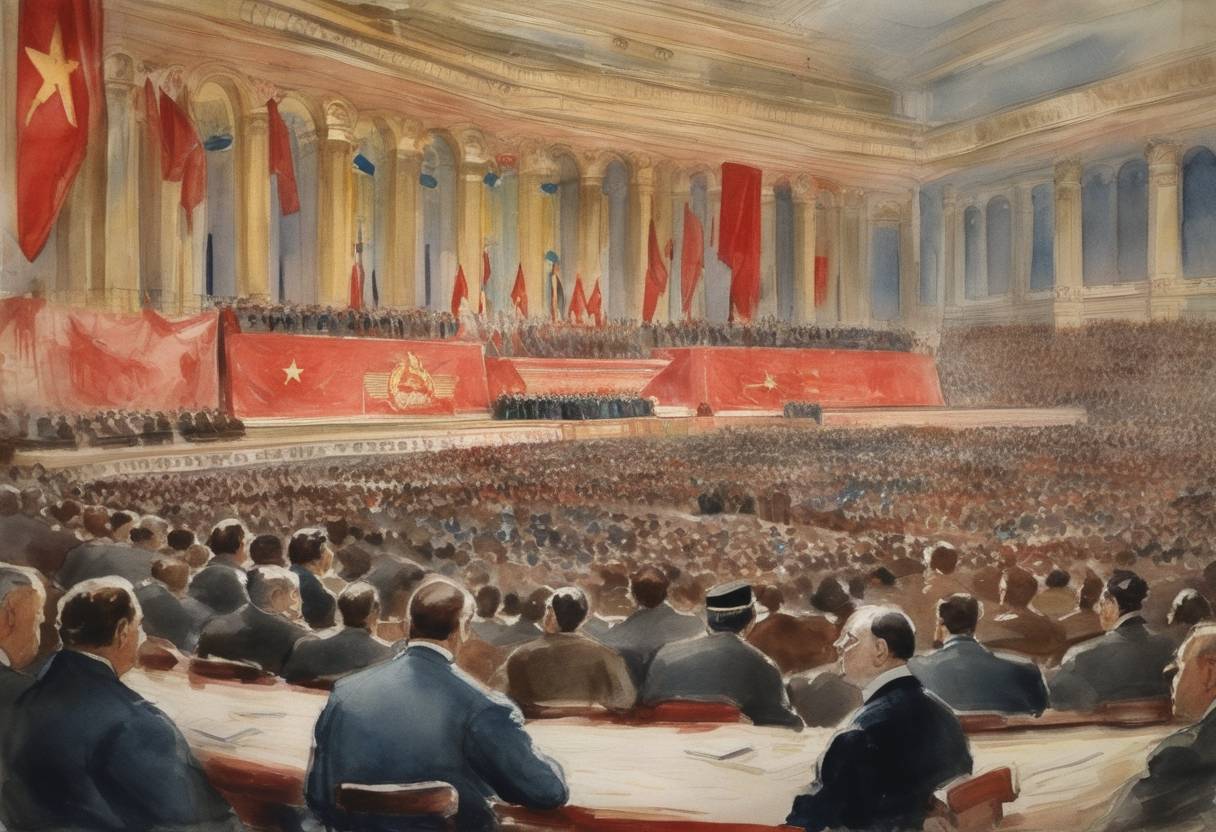
On June 1, 1929, the 1st Conference of the World Communist Parties convened in Moscow, a significant assembly aimed at discussing strategies among global communist parties and reinforcing the influence and leadership of the Communist International, also known as the Comintern.
The conference took place during a period marked by political and economic upheaval. The 1920s witnessed the aftermath of World War I, the Russian Revolution of 1917, and the early years of the Soviet Union under Joseph Stalin’s leadership. The global communist movement was in transition, striving to navigate the challenges posed by capitalism in various countries, while consolidating efforts to expand communist ideology beyond Soviet borders.
Strengthening the Communist International: The central aim was to solidify the role of the Comintern as the leading authority and coordination body for communist parties globally. The conference addressed the need for a unified strategy to confront global capitalism and imperialism.
Coordinating International Tactics: Delegates discussed the adaptation of Marxist-Leninist principles to different national contexts, emphasizing the importance of supporting working-class struggles worldwide and fostering revolutionary movements.
Responses to Capitalist Crises: Attendees examined the ongoing economic instability in Western countries, predicting that capitalist crises presented opportunities to advance communist ideologies and revolutionary actions.
Combating ‘Social Fascism’: This was a term used at the time to describe socialist and social-democratic parties that communists accused of hindering revolutionary progress through their association with capitalist systems.
The conference reinforced the role of the Soviet Union as the epicenter of the communist movement, exerting greater influence over communist parties around the world. It also emphasized ideological conformity and strict adherence to Moscow’s directives, which shaped the subsequent strategies and policies of affiliated parties. This gathering contributed to the centralization of communist activities and heightened the global profile of the movement, setting the stage for future international collaborations.
The decisions and discussions from this conference would resonate through the following decades as the Cold War era unfolded, influencing international relations and the global political landscape.
Source: www.britannica.com