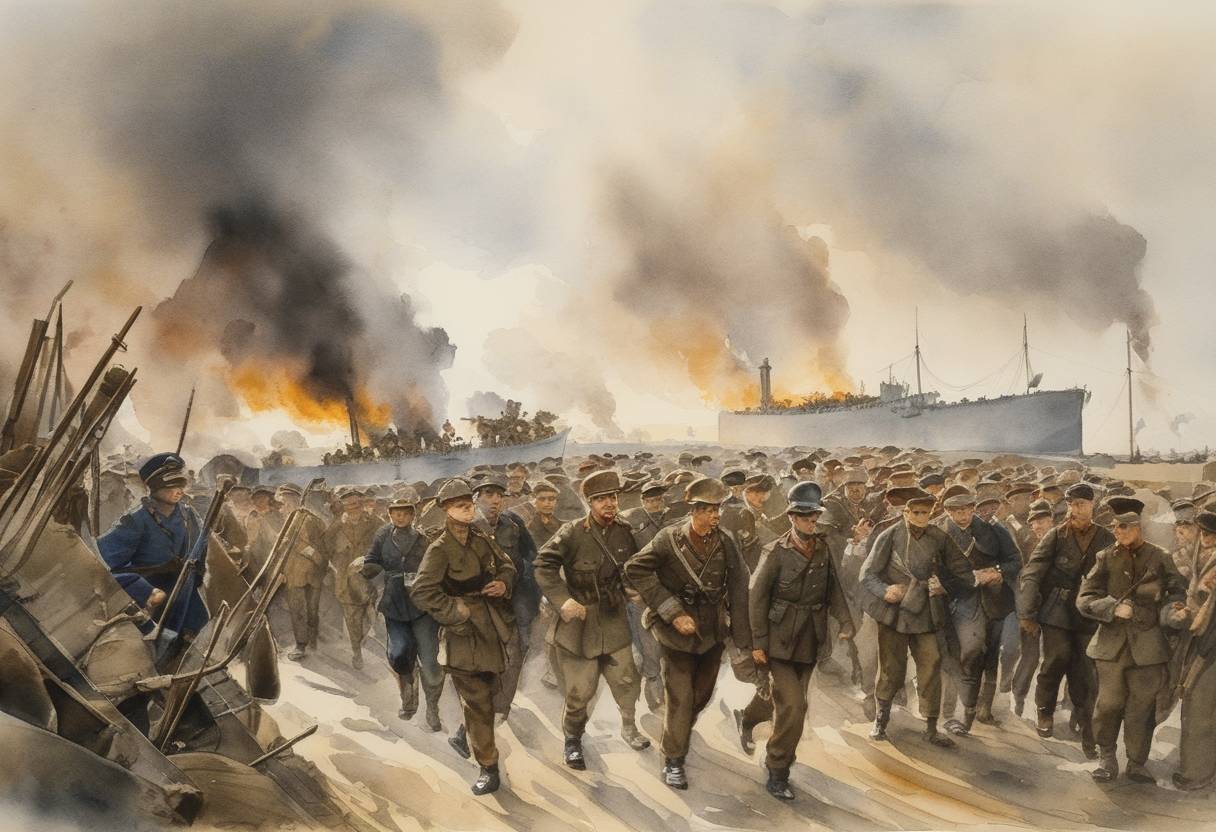
Arrival of the First American Troops in France - June 26, 1917
On June 26, 1917, the first contingent of the American Expeditionary Forces (AEF) arrived in France, marking a significant moment in World War I as the United States actively entered the conflict on the side of the Allies.
Context
- The United States declared war on Germany on April 6, 1917, after repeated provocations, including Germany’s unrestricted submarine warfare and the interception of the Zimmermann Telegram.
- Prior to their entry into the war, the U.S. military was relatively small compared to the seasoned forces of Europe. As such, a massive mobilization effort was required to train and transport American troops to the Western Front.
Arrival in France
- The first wave of American troops arrived in the French port of Saint-Nazaire. This deployment was primarily the 1st Division, which was part of a larger plan to provide U.S. military support to weary Allied forces fighting against Germany.
- Upon arrival, American troops were greeted with enthusiasm by the French public, who saw their presence as a vital infusion of manpower and morale.
Significance
- The deployment reconfirmed the United States’ commitment to supporting the Allies both materially and militarily, boosting Allied morale at a critical time in the war.
- This arrival marked the beginning of an increasing American military presence in Europe, which would grow to over two million troops by the end of the war.
Impact
- The presence of fresh American forces helped to tip the balance in favor of the Allies. Their involvement in key battles, including the Second Battle of the Marne and the Meuse-Argonne Offensive, would prove crucial in the eventual defeat of the Central Powers.
- The successful integration and performance of the AEF under General John J. Pershing laid the foundations for future U.S. involvement in international military operations.
Aftermath
- The participation of the AEF in World War I established the United States as a significant military power and a key player on the international stage.
- This entry into the war also accelerated social and political changes within the U.S., including shifts in industry, finance, and civil rights movements that would continue to evolve after the war’s conclusion.