Execution of King Charles I of England
1649 · London, England
King Charles I of England was executed for treason after being convicted by a High Court of Justice.
January 15, 1649
The trial of King Charles I of England began at the High Court of Justice in London. Charles I was charged with treason against England, marking the beginning of a pivotal moment in English history, leading to his eventual execution.
London, England | High Court of Justice
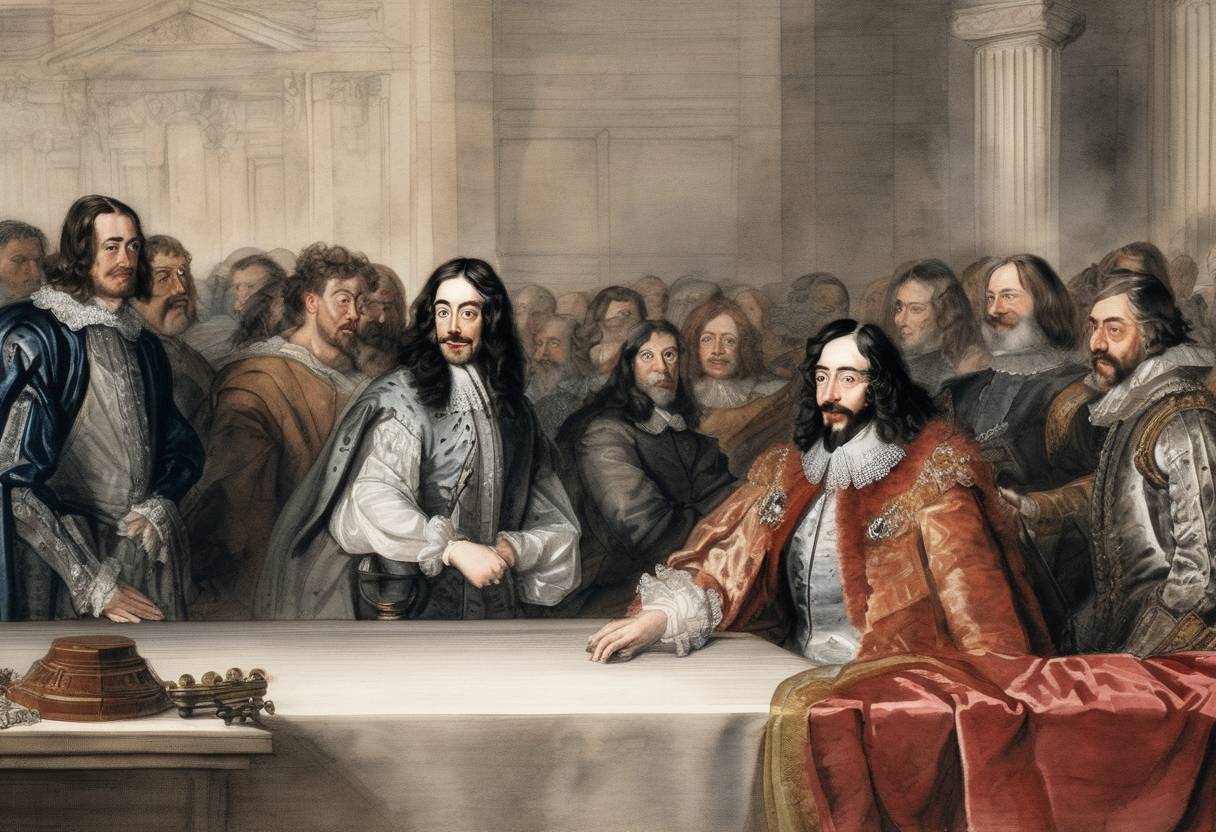
The trial of King Charles I commenced on January 15, 1649, in the High Court of Justice, specially established for this purpose at Westminster Hall in London. This event marked a significant turning point in English history, emphasizing the growing tension and power struggle between the monarchy and Parliament.
The trial was the culmination of a series of conflicts known as the English Civil Wars, which were primarily fought between the royalist forces loyal to Charles I and the Parliamentarians who sought greater say in governance. The conflict resulted from Charles I’s authoritarian rule, his dissolution of Parliament multiple times, and his attempt to govern without it, which deeply divided the nation and led to widespread unrest.
Tensions escalated with Charles’ attempts to impose religious and taxation policies without parliamentary consent, eventually leading to full-blown civil war. After being defeated in the second civil war and captured by parliamentary forces, Charles I faced growing demands for accountability for his actions.
The High Court, composed of 135 commissioners, convened under the authority granted by the Rump Parliament. Despite the immense historical and legal implications, the court itself was controversial, summoning only limited legitimacy as it lacked the precedent of trying a sitting monarch.
At his trial, Charles I was charged with high treason and other high crimes “against the realm of England.” Specifically, he was accused of pursuing a personal interest over the common good, resulting in substantial loss of life and hardship across the nation through initiating and perpetuating the civil wars.
Notably, Charles refused to recognize the authority of the court, arguing that no authority could lawfully judge a king. He maintained that his rule was sanctioned by divine right, a notion that the court categorically rejected, reflecting Parliament’s determination to project sovereignty and accountability as national principles.
The trial proceedings continued, culminating in a guilty verdict. Charles I was found guilty of being “a tyrant, traitor, murderer, and public enemy” on January 27, 1649, leading to his execution by beheading on January 30, 1649. This act fundamentally altered the English political landscape, temporarily abolishing the monarchy and establishing the Commonwealth of England under Oliver Cromwell.
The trial and execution of King Charles I were watershed moments, signaling the decline of the divine right of kings and prompting reflections on governance and sovereignty that echoed throughout English history and influenced future constitutional developments.
Source: www.britannica.com