King Henry VIII Declares Himself Head of the Church of England
1535 · London, England
King Henry VIII declares himself head of the Church of England, beginning the English Reformation.
May 28, 1533
The Archbishop of Canterbury, Thomas Cranmer, declares the marriage between King Henry VIII and Anne Boleyn to be valid.
London, England | Church of England
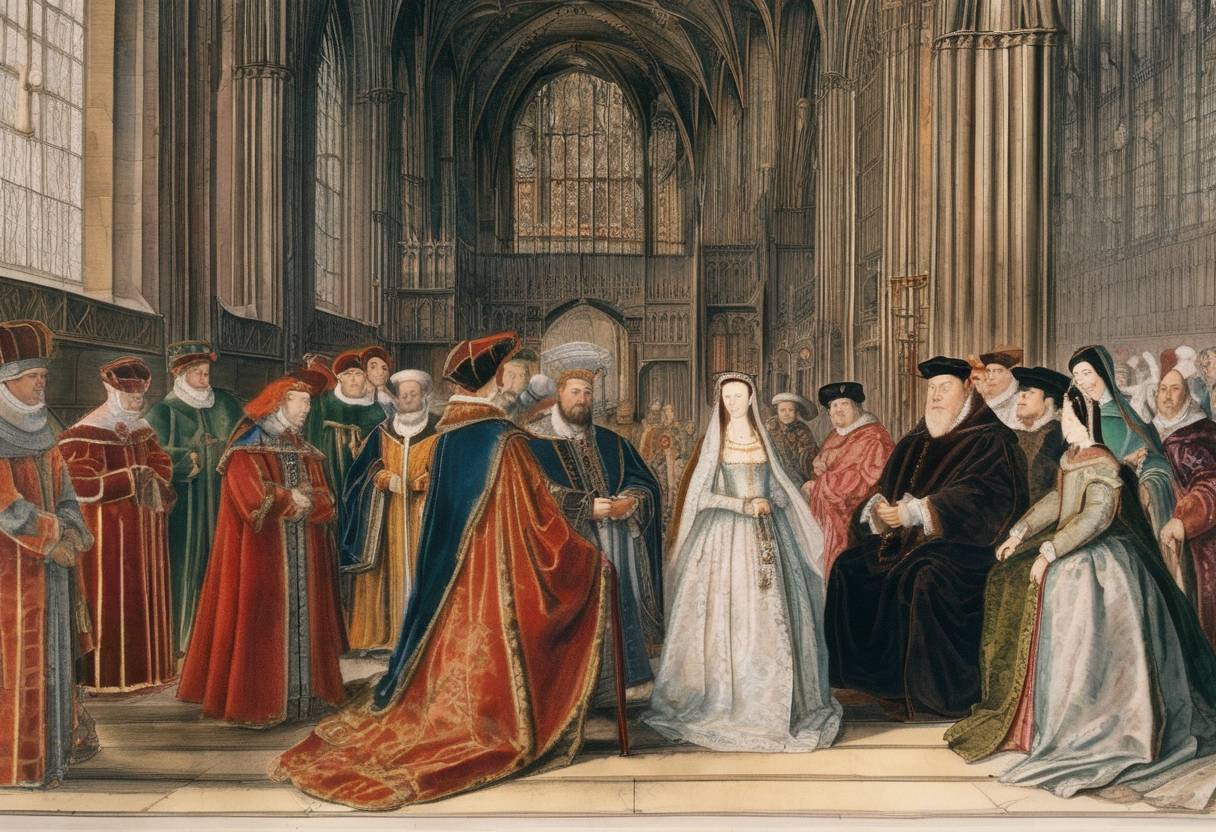
On May 28, 1533, Thomas Cranmer, the Archbishop of Canterbury, officially declared the marriage between King Henry VIII and Anne Boleyn valid. This pivotal decision played a critical role in the English Reformation and altered the religious and political landscape of England.
King Henry VIII’s desire to annul his marriage with Catherine of Aragon was driven by his obsession with securing a male heir and his infatuation with Anne Boleyn. By early 1533, Anne was pregnant, increasing the urgency for Henry to legitimize their union. The Pope’s refusal to annul Henry’s marriage to Catherine led Henry to challenge papal authority, setting the stage for a major religious schism.
Thomas Cranmer had been appointed the Archbishop of Canterbury in March 1533 due to his sympathy towards the king’s cause and his reformist motives. Cranmer, a key figure in the English Reformation, supported the break from Rome. His ascendancy to the archbishopric allowed Henry to circumvent papal authority. Cranmer quickly declared the king’s previous marriage to Catherine null and void before affirming the legitimacy of Henry’s marriage to Anne.
Religious Implications: This declaration was a catalyst for the English Reformation. It directly led to England’s break from the Roman Catholic Church, prompting the establishment of the Church of England, with Henry VIII as its Supreme Head.
Political Repercussions: Henry’s actions solidified his control over religious and political matters in England, significantly reducing the influence of Rome.
Effect on England: The legitimization of his marriage to Anne Boleyn and the subsequent birth of their daughter, Elizabeth, had lasting impacts on the English monarchy. Elizabeth I would later become one of England’s most influential rulers.
The declaration underscores the intertwining of personal desires, religious reform, and political strategy in shaping historical events. Thomas Cranmer’s decree underscored the shifting power dynamics of 16th-century Europe and marked a profound transformation within the English realm.
Source: en.wikipedia.org