The Slavery Abolition Act of 1833
1833 · London, United Kingdom
The Slavery Abolition Act receives Royal Assent, abolishing slavery throughout the British Empire.
July 2, 1843
An act to reorganize the Indian Administration was passed in British India, aiming to improve efficiency in administration and justice.
London, United Kingdom | British Parliament
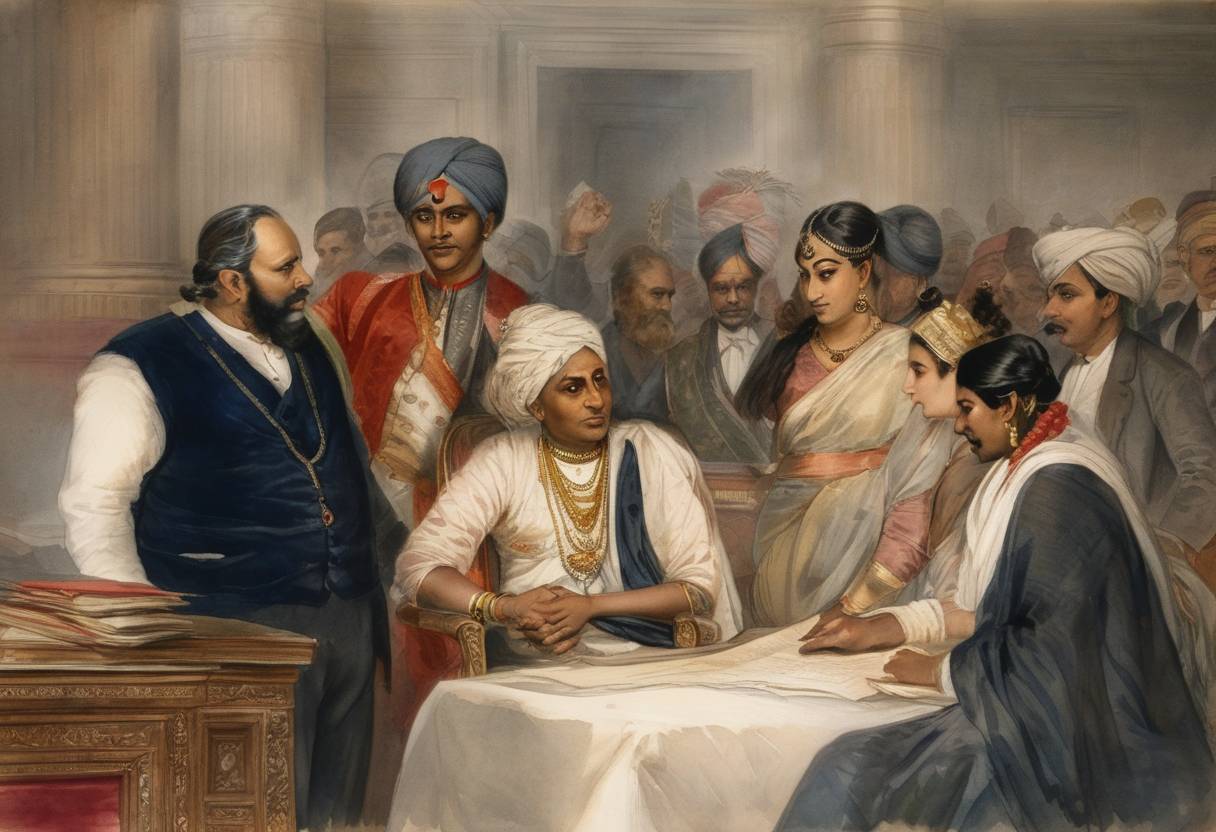
On February 7, 1843, the British Parliament passed significant legislation aimed at restructuring the administrative framework of British India. This act sought to improve the efficiency of governance and judicial processes within the Indian subcontinent, making the colonial administration more streamlined in response to growing complexities and challenges of managing vast territories.
By the early 19th century, the British East India Company had established a substantial presence across India, following a series of military conquests and annexations. The company’s governance structure, initially designed for a commercial enterprise, struggled to effectively manage burgeoning administrative and legal demands across diverse regions with distinct cultural, social, and economic conditions.
The reorganizational act of 1843 encompassed several pivotal changes:
Centralization of Authority: The act aimed to centralize administrative power, reducing the bureaucratic redundancy present in the Company’s governance structures. This allowed for more cohesive decision-making and a uniform approach to administrative processes.
Judicial Reforms: It overhauled the legal framework to make the judiciary more independent and efficient. Steps were taken to simplify legal proceedings to ensure quicker dispensation of justice and to mitigate the backlog of cases in Indian courts at the time.
Administrative Efficiency: The act introduced measures to standardize procedures across different territories. It sought to simplify the bureaucracy, minimize delays, and reduce corruption within the administrative ranks.
Increased Imperial Control: The reorganization of 1843 seemingly reinforced British control over the Indian administration. By instituting centralized governance, the British aimed to tighten their grip on the Indian territories, which also paved the way for further integration of India into the British Empire.
Impact on Local Governance: The local Indian populace encountered significant changes in how their regions were governed, and while administrative efficiency improved, the centralization often overlooked local customs and needs, potentially adding to local discontent over colonial rule.
The reorganization act of 1843 signaled the British Empire’s commitment to establishing a more robust and structured colonial governance system in India. It served as a precursor to subsequent acts and reforms that continued to reshape the Indian administrative and judicial landscape, ultimately influencing the trajectory of colonial governance up until India’s independence in 1947.
Source: www.cambridge.org