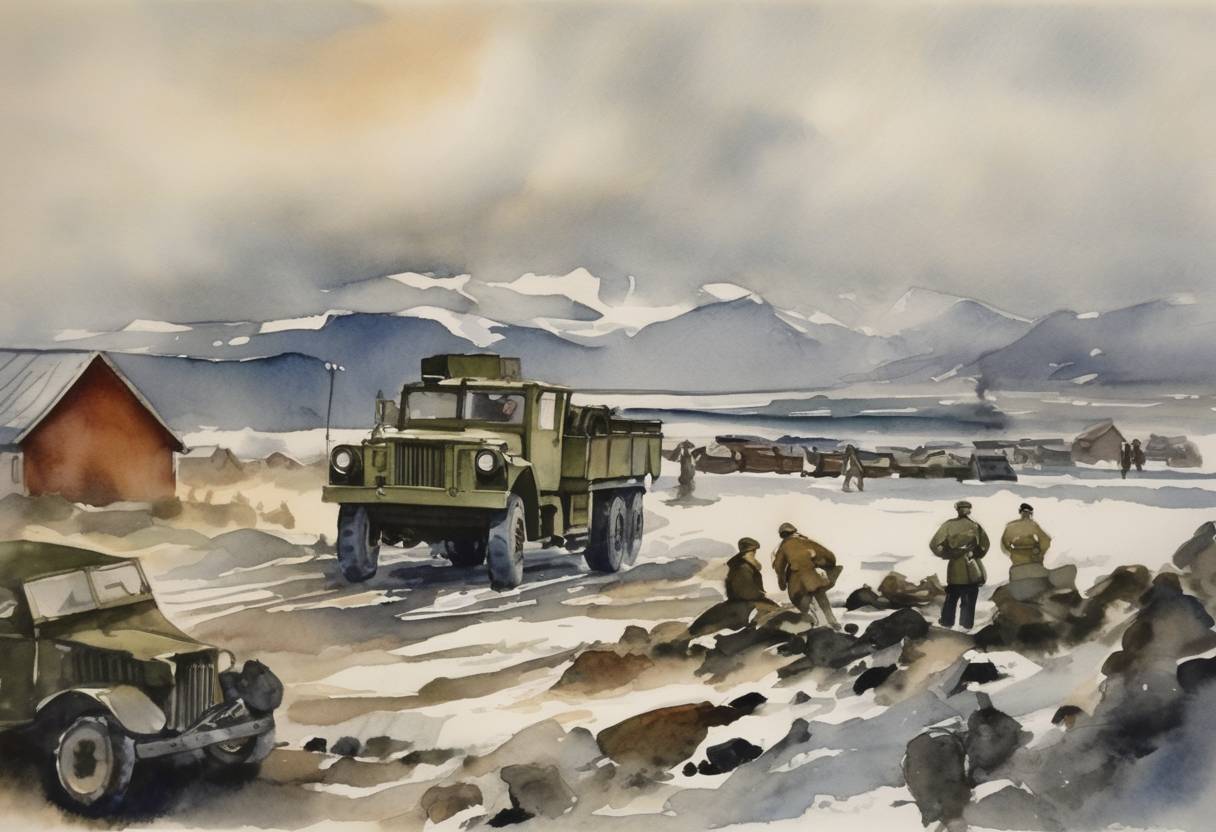
U.S. Occupation of Iceland - July 7, 1941
On July 7, 1941, American troops began their occupation of Iceland during World War II, a strategic initiative aimed at ensuring the island’s security and enhancing Allied defenses in the North Atlantic. This move followed the earlier British invasion of Iceland on May 10, 1940, orchestrated to preempt a potential German invasion after Denmark was occupied by Germany.
Context and Significance
Precedence and Planning
- British Occupation (1940): The British had initially occupied Iceland to prevent Germany from gaining a foothold. However, with Britain’s resources stretching thin due to engagements across Europe, a decision was made to transfer responsibilities to the United States, which was still officially neutral at the time.
- Strategic Value: Iceland’s geographical location between North America and Europe provided a critical base for controlling North Atlantic sea lanes, essential for maintaining supply lines and detecting German naval activities, especially U-boat movements.
Diplomatic Arrangements
- U.S.-Iceland Agreement: Prior to the arrival of U.S. forces, diplomatic negotiations occurred to ensure Icelandic consent. The Icelandic government accepted U.S. protection with conditions preserving Iceland’s sovereignty and neutrality.
Arrival and Operations
- Troop Landing: The initial contingent of about 4,000 U.S. Marines landed in Reykjavik, Iceland’s capital, marking one of the early demonstrations of U.S. military deployment abroad during the war. By the end of World War II, around 40,000 American servicemen were stationed there.
- Infrastructure and Defense: U.S. forces undertook significant construction projects, building airfields and radar stations that bolstered aerial and naval reconnaissance capabilities. These infrastructure enhancements played a crucial role in controlling the Atlantic and protecting Allied convoys.
Consequences
- Enhanced Defense: The U.S. presence considerably improved the defense against Axis threats in the North Atlantic, helping to secure critical shipping routes.
- Neutral Relations: Iceland maintained its formal neutrality; however, the U.S. occupation meant that it aligned more closely with Allied interests theoretically.
Long-term Implications
- U.S.-Iceland Relations: The occupation forged stronger post-war ties between Iceland and the United States, transitioning Iceland into a Cold War ally with the establishment of a permanent NATO base at Keflavik in 1951.
- Regional Stability: The U.S. occupation underscored the strategic importance of Iceland in transatlantic security frameworks, a consideration that persists in contemporary military and geopolitical strategies.
The occupation of Iceland by U.S. forces was a pivotal step in the broader strategy of ensuring Allied dominance in the Atlantic and exemplified the preemptive measures taken during World War II to curb Axis power expansions.