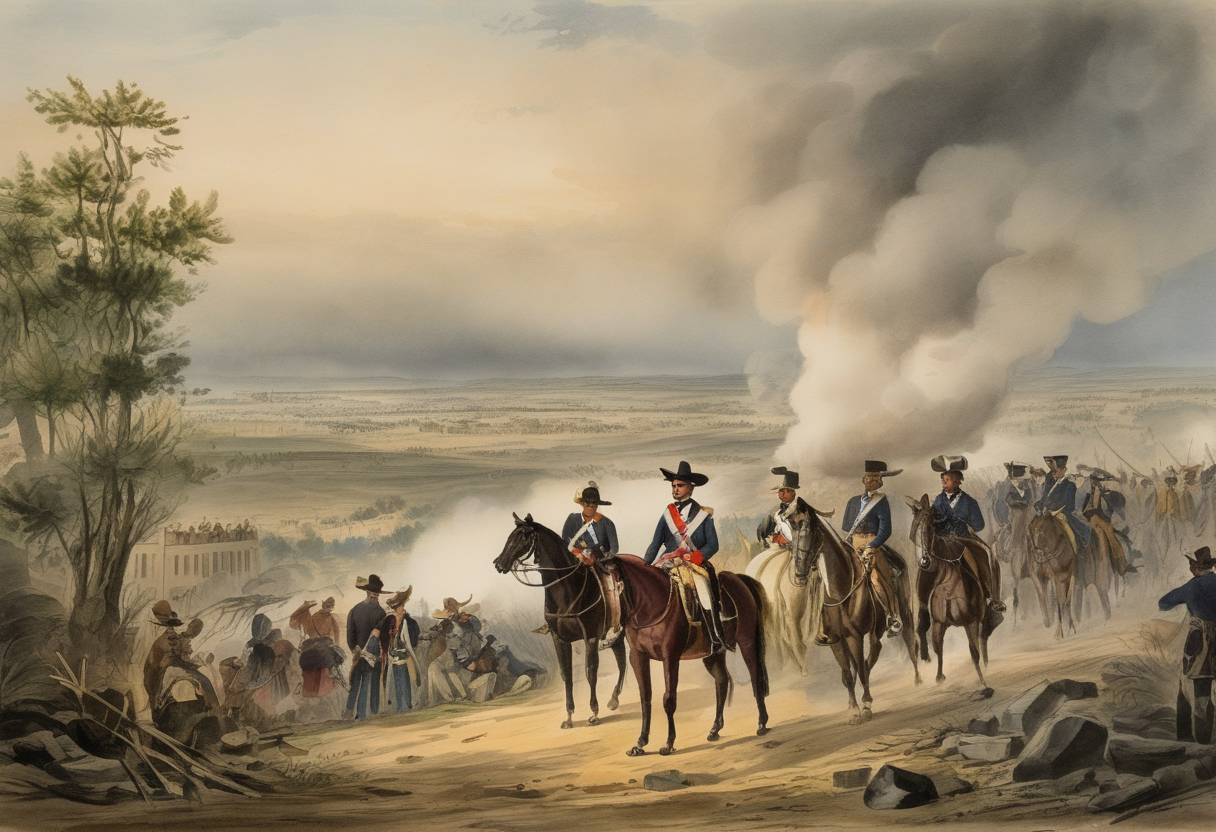
The U.S. Declaration of War on Mexico: May 12, 1846
On May 12, 1846, the United States Congress formally declared war on Mexico, marking an official commencement of the Mexican-American War. This decision stemmed from escalating tensions over territorial disputes, particularly concerning the annexation of Texas and broader ambitions for expansion across the North American continent.
Background
The roots of the conflict trace back to the 1836 Texas Revolution, where Texas gained independence from Mexico. The subsequent annexation of Texas by the United States in 1845 exacerbated tensions, as Mexico had never recognized Texas’s independence and considered its annexation a hostile act.
Additionally, the U.S. had expansionist desires, epitomized by the belief in “Manifest Destiny,” which held that the nation was destined to expand across the continent. President James K. Polk, a fervent proponent of this ideology, sought to extend U.S. territories further by acquiring California and New Mexico, regions controlled by Mexico.
Conflict Escalation
Before the formal declaration, a series of confrontations along the Rio Grande River intensified hostilities. In April 1846, a skirmish between Mexican and American troops unfolded, providing President Polk with the justification needed to request a declaration of war from Congress. He asserted that Mexico had “shed American blood upon American soil,” although the accuracy of this claim regarding territorial boundaries was contested.
Congressional Action
On May 11, 1846, President Polk addressed Congress, emphasizing the urgent need to secure and protect U.S. interests and citizens. The following day, May 12, Congress, responding to Polk’s call and prevailing public sentiment—which strongly supported territorial expansion—passed the war resolution with substantial majorities in both chambers.
Broader Implications
The declaration of war set the stage for a conflict that would last until 1848. The war’s consequences were significant, leading to the Treaty of Guadalupe Hidalgo, which formally ended the hostilities and resulted in the U.S. acquiring vast territories, including present-day California, Nevada, Utah, and portions of several other states.
The conflict and its outcomes would leave lasting impacts on U.S.-Mexico relations and contribute to domestic debates over the expansion of slavery into newly acquired territories—issues that continued to shape American politics in the years leading up to the Civil War.