The Battle of Puebla: May 5, 1862
1862 · Puebla, Mexico
The Battle of Puebla takes place during the French intervention in Mexico, leading to a Mexican victory over French forces.
November 21, 1847
The Siege of Puebla during the Mexican-American War begins.
Puebla, Mexico
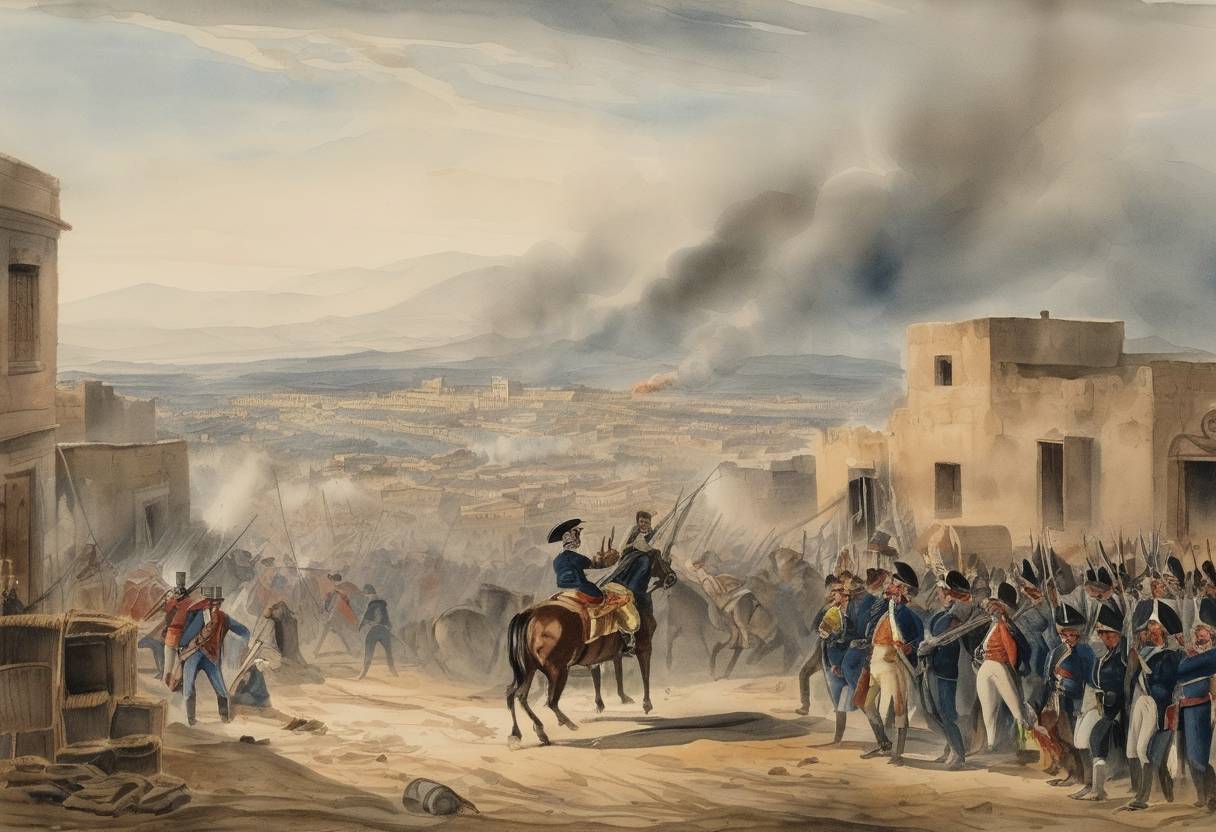
The Siege of Puebla, a notable confrontation during the Mexican-American War, began on November 21, 1847. Fought in the aftermath of the American capture of Mexico City, this engagement signified ongoing Mexican resistance despite significant American advances.
After the pivotal Battle of Mexico City in September 1847, American forces occupied the Mexican capital. However, their supply lines were vulnerable, and maintaining control over central routes became crucial. More than 200 miles from the capital, the city of Puebla had earlier fallen to American troops. In October 1847, a large Mexican guerrilla force, spearheaded by General Joaquín Rea and later supported by General Antonio López de Santa Anna, began harassing American supply lines and garrisons.
By November 21, 1847, Mexican forces were positioned around Puebla, aiming to recapture it and sever the American logistical stream. This effort was part of a broader Mexican strategy to reconsider defenses and capitalize on the thinly stretched American forces. Despite previously securing Puebla, American troops, under the command of Major General Joseph Lane, faced a concerted challenge as Mexican forces laid siege.
The Siege of Puebla encapsulates the resilience of Mexican forces during the protracted war. Though the siege would eventually be lifted in December 1847 as American forces successfully broke through and relieved the garrison, it underscored the persistent challenge the U.S. military faced in holding and supplying extended lines of occupation.
In a broader context, the events at Puebla reflected the difficulties of wartime logistics and the ferocity of local resistance. Despite achieving significant victories, the strain on American resources and the enduring Mexican resistance highlighted the complexities of the Mexican-American War, setting a precedent for the continuation of hostilities and underscoring the contested nature of occupation.
Source: www.history.com